


Caleb Downs’ Red Zone Breakup Shows Cowboys’ Bigger Plan
Updated: Sep 8
Confirmed facts
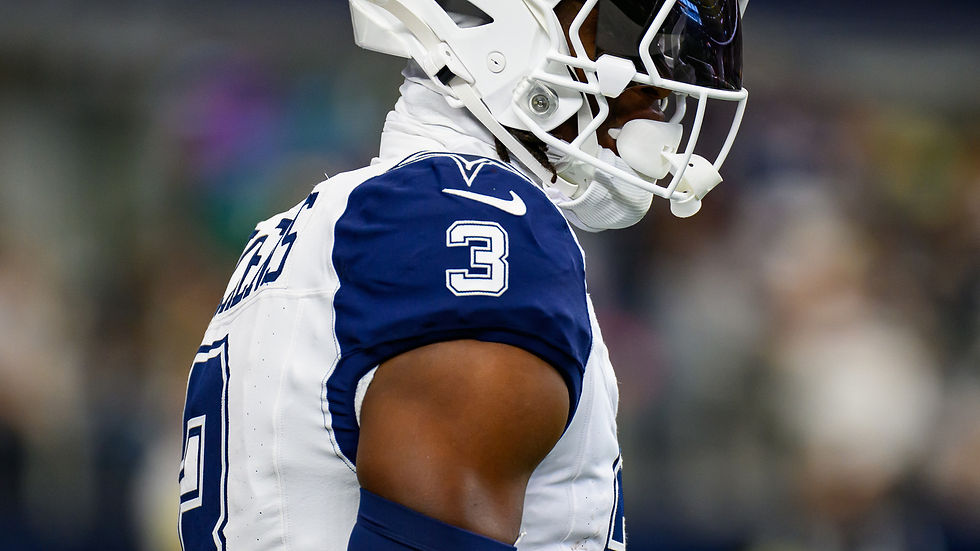
Caleb Downs produced one of Dallas’ best defensive plays during Saturday’s practice in Oxnard. DallasCowboys.com reported that the rookie knocked the ball out of CeeDee Lamb’s hands in the back of the end zone, preventing a toe-tap touchdown.
The play came during a no-pads practice after a player day off. Head coach Brian Schottenheimer stopped the team about 20 minutes into the session to demand more intensity. The practice later featured red-zone work, line play and several rookie flashes.
Downs and Lamb have competed repeatedly in camp, with the veteran receiver winning his share of early reps. Saturday’s breakup was valuable because Downs finished through the catch point against an elite target instead of merely being close in coverage.

Football Nation analysis
Dallas drafted Downs to solve more than one problem. His range allows him to play deep, but his anticipation and tackling profile can also support underneath coverage. The red-zone rep matters because condensed space removes some of the athletic advantage and turns the play into technique, timing and hand placement.
A safety who can survive against Lamb near the boundary gives the coordinator options. Dallas can rotate late, disguise man coverage or use Downs as a matchup defender without announcing the call. That flexibility is more valuable than chasing a dramatic interception total in August.
It also strengthens the daily offense. Lamb has been working on finishing catches, a theme Football Nation examined in the star receiver’s net-drill routine. A rookie who contests every catch forces sharper details on both sides.
What to watch next
Watch Downs’ communication when Dallas changes the picture after the snap. Versatility only helps if every defender understands the resulting gap and coverage responsibility. His ability to play fast without creating uncertainty for teammates will determine how expansive the role becomes.
The larger test is whether the defense can improve enough to change Dallas’ ceiling. Football Nation’s Cowboys 2026 outlook identified that side of the ball as the swing factor. One excellent red-zone rep does not settle the question, but it shows why Downs is central to the answer.
Bottom line
Bottom line: Downs did not win a starting job with one breakup, but the play illustrated a translatable skill. He recognized the catch point, closed space and finished against Dallas’ best receiver. If he communicates as well as he moves, the Cowboys can use him as a true formation-changing defender.
Why this matters in real games
Downs’ versatility can also change the math for the front seven. If Dallas trusts him to cover a tight end, rotate into the box or protect the middle, the defense can present the same personnel and run several answers. That makes protection identification harder for an offense and can create favorable rush matchups without constant substitution. The rookie will still have coverage errors, but the Cowboys can live with growth if his rules remain clear. The red-zone breakup showed the finishing skill. The next stage is demonstrating that teammates can anticipate where he will be on every call.
That communication will be tested most when motion forces a late exchange between Downs, a corner and a linebacker.
Video evidence
Current Cowboys camp video shows Caleb Downs moving between deep, box and edge alignments.

Comments