


Why Can’t an NFL Punt Returner Advance After a Fair-Catch Signal?
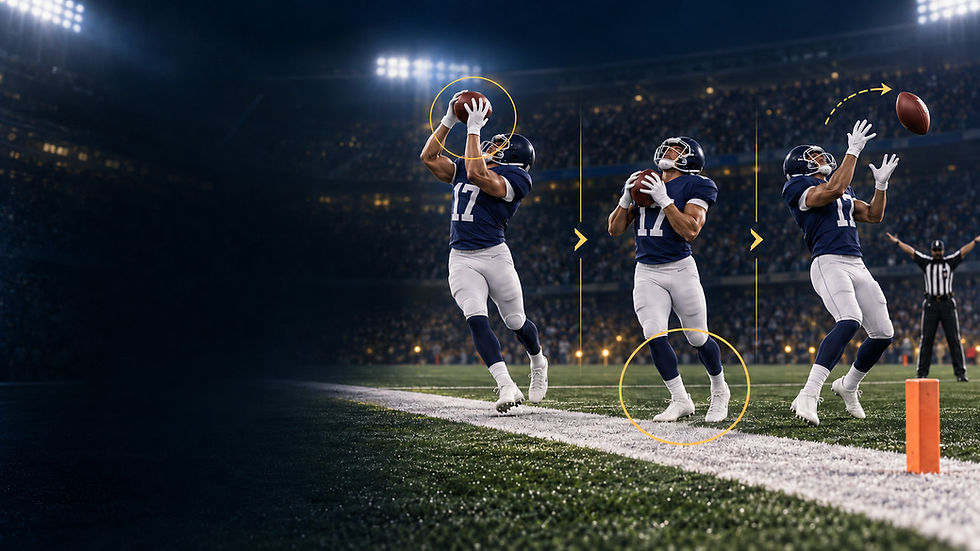
An NFL punt returner cannot advance after a fair-catch signal because the signal trades the receiving team’s return opportunity for a controlled end to the kick. Once any receiving-team player catches or recovers the ball after a valid or invalid signal, the ball is dead—unless an opponent touched the kick first.
The rule in plain English
Rule 7, Section 2, Article 1(n) says the down ends when a receiving-team player catches or recovers a kick after a valid or invalid fair-catch signal, as long as an opponent has not touched the ball before or after it hits the ground. Rule 10, Section 2 supplies the details officials use to classify the signal and enforce the result.
A valid signal requires one arm fully extended above the helmet and waved from side to side while the kick is in flight. It can create a fair catch if the signaler catches the ball before it touches the ground. An invalid signal is another hand or arm motion above the shoulders. It does not award a fair catch, but it normally makes the ball dead when the receiving team gains possession and carries a five-yard penalty.
Valid signal, invalid signal, or no signal?
Valid signal and airborne catch
When the ball dies: immediately on the catch. Result: fair catch; no advance.
Valid signal after the ball hits the ground
When the ball dies: immediately on the recovery. Result: dead ball, but not a fair catch.
A teammate possesses after any valid or invalid signal
When the ball dies: immediately on possession, if no opponent touched the kick. Result: dead ball; it is not a fair catch for the teammate.
Invalid above-shoulder signal
When the ball dies: immediately when Team B possesses, if no opponent touched the kick. Result: no fair catch and normally a five-yard invalid-signal penalty.
An opponent touches the kick first
When the ball dies: the signal alone does not end the play. Result: Team B may catch, recover and advance under the opponent-touch exception.

How officials enforce the signal
Officials decide whether the signal was valid or invalid, then track possession, ground contact and any kicking-team touch.
If the signaler makes a valid signal and completes an airborne catch, an official marks the fair-catch spot and kills the play immediately. If the signal was invalid, officials still shut the return down when the receiving team possesses the ball, then enforce five yards from the signal spot. A special previous-spot enforcement applies when an invalid signal occurs in the receiving team’s end zone during a free kick or during an onside kick.
The whistle communicates the ruling; it does not create the dead ball. That distinction is the same principle explained in Football Nation’s guide to when an NFL play becomes live. The rulebook determines the instant the play ends even if the whistle arrives a beat later.
What if the returner muffs the kick?
A muff is touching the ball without possessing it. After a valid signal, the signaler keeps a reasonable opportunity to complete the catch until the kick hits the ground. The coverage team may recover a loose kick when the ordinary kicking rules permit, but the signal still affects what happens if the receiving team eventually possesses it.
If the signaler catches his own muff before the ball reaches the ground, it is a fair catch. If he recovers after the ball hits the ground, the ball is dead immediately but the result is not a fair catch. If a teammate recovers, the ball is also dead immediately when the opponent-touch exception does not apply.
That is why officials do not treat every rolling punt as instantly dead. The loose ball can remain available for recovery until possession or another dead-ball condition occurs. Football Nation’s explanation of why officials wait on loose balls shows the same officiating discipline in a different setting.
The opponent-touch exception
Rule 7-2-1(n) expressly requires that the kick has not been touched by an opponent. If a kicking-team player touches it before or after it reaches the ground, a receiving-team player may catch or recover and advance. Even the signaler may advance; if the signaler catches it before it hits the ground and elects not to run, the play may instead be treated as a fair catch.
On replay, one fingertip can therefore change a dead recovery into a returnable ball.
Example 1: the teammate fields the muff
A punt returner gives a valid signal at his 25, lets the ball glance off his hands, and a teammate recovers at the 22 before any opponent touches it.
Ruling: dead immediately at the 22. The teammate cannot advance. Because the teammate—not the signaler—possessed the ball, this is not a fair catch. The receiving team keeps the ball at the dead-ball spot unless another rule or accepted penalty changes it.
Example 2: a gunner touches the bouncing punt
A returner gives an invalid above-shoulder motion. The punt bounces, a coverage player brushes it at the 10, and a receiving-team player recovers at the 8 with open field ahead.
Ruling: the opponent’s touch removes the dead-ball condition created by the signal, so the receiver may advance. Officials still administer any applicable invalid-signal penalty. Fans should separate the ball’s live status from penalty enforcement; both can matter on the same play.
The common misunderstanding
The most common mistake is saying, “Only the player who waved is barred from returning it.” Rule 7-2-1(n) reaches any receiver who catches or recovers after the signal when no opponent touched the kick. A teammate cannot pick up the muff and steal a return.
The opposite overstatement is that every hand motion instantly kills the ball. The receiving team must possess it, or another dead-ball rule must intervene. A valid signal also carries privileges an invalid signal does not: a true fair catch can produce protection, a fair-catch spot, and even the rare fair-catch kick shown in the NFL video above.
Other restrictions after the signal
The signaler cannot block or initiate contact with a kicking-team player until the kick touches a teammate or opponent. After a valid or invalid signal, that foul costs 15 yards.
Separate rules protect the free kicker, keep kickoff coverage players in bounds, and restrict early onside-kick blocks. None changes the fair-catch dead-ball trigger.
Why it matters during a game
This rule protects players and removes deception. Coverage players must throttle down when they see a signal; the receiving team cannot exploit that reaction by transferring the ball to a teammate for a surprise return. It also gives replay a precise checklist when a return appears to continue after a questionable wave.
The difference between “fair catch” and “dead after a signal” matters for field position and options. Only a valid fair catch can support a fair-catch kick. A ground recovery after a signal may be dead without being a fair catch. And an invalid signal adds penalty yardage rather than granting the signaler full fair-catch status.
What fans should watch for
Watch the returner’s hand while the ball is still in flight. Is one arm fully above the helmet and moving side to side? Then watch the ball: did it hit the ground, did an opponent touch it, and who finally possessed it? Those four frames usually answer the ruling.
Do not use the returner’s sprint or the timing of the whistle as the first clue. Like an incomplete pass that ends a down, the controlling event can occur before everyone on the field reacts.
FAQ
Can a returner change his mind after signaling? No. If the receiving team possesses the kick without an opponent touching it first, the signal’s dead-ball consequence applies.
Does an invalid signal give fair-catch protection? It does not create a fair catch. It normally kills the ball when Team B possesses it and draws five yards; ordinary kick-catch interference rules can still apply independently.
Can the kicking team recover a muffed fair catch? Yes, when the kick remains recoverable under the kicking rules. The fair-catch signal does not guarantee possession to the receiving team.
The exact authority is the 2026 NFL Rulebook, Rule 7, Section 2, Article 1(n), supported by Rule 10, Section 2, Articles 1 through 5. Football Nation’s bottom line: after any fair-catch signal, identify possession and opponent touch before asking who can run. Without an opponent’s touch, the receiving team’s possession ends the play.


Comments