


Dolphins Stadium Practice 2026: Malik Willis and Chop Robinson Set the Tone
The Miami Dolphins moved training camp into Hard Rock Stadium on Saturday, August 8, and the change of setting produced the clearest snapshot yet of two players who could shape their 2026 season. Quarterback Malik Willis created explosive plays when the pocket moved. Edge rusher Chop Robinson showed the power counters Miami has asked him to add.
Those are not anonymous camp whispers. They come from the Dolphins’ official Practice 9 training-camp notebook, which documented the stadium session and identified the plays and players involved. The team’s account is the factual baseline below; Football Nation’s conclusions are labeled as analysis.
One practice never settles a quarterback competition or guarantees a pass-rusher’s leap. It can, however, reveal whether the work emphasized through camp is beginning to appear in a more game-like environment. On that narrower question, Miami received encouraging evidence from both sides of the ball.
What Malik Willis showed at Hard Rock Stadium
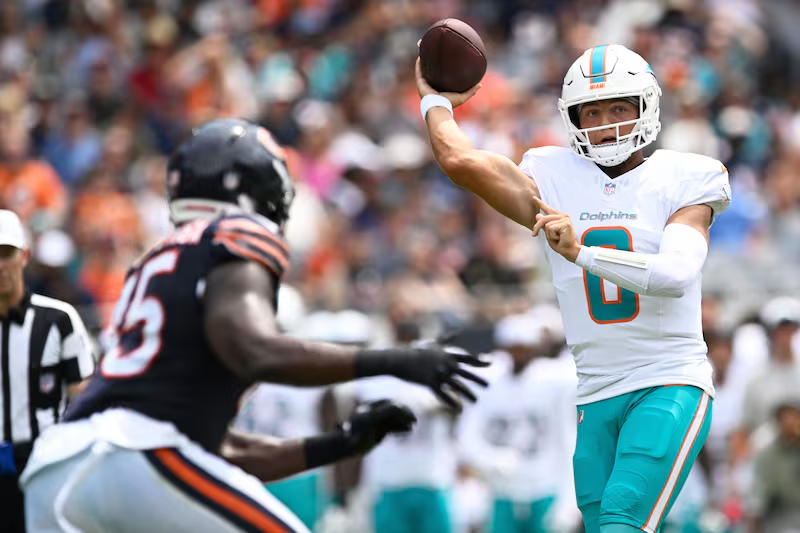
Miami’s official notebook credited Willis with two completions of more than 20 yards while moving outside structure, one to Tutu Atwell and another to tight end Seydou Traore. It also described a red-zone scramble for a touchdown after the coverage held up and Willis worked through his reads.
The distinction matters. Athletic quarterbacks always generate eye-catching camp clips, but the useful question is why they left the pocket. A designed movement throw, an escape forced by pressure and an early bail-out are not the same thing. The Dolphins’ description points to Willis extending plays after the original picture changed, not simply abandoning the concept at the first sign of trouble.
Football Nation analysis: Willis’ value to Miami is not limited to scrambling. The larger opportunity is to combine his movement ability with repeatable decisions in Mike McDaniel’s offense. Our earlier Dolphins training-camp report focused on the support structure around him. The stadium practice added evidence that he can create after that structure breaks down.

The rest of Miami’s quarterback room also pushed the ball
The practice was not a one-quarterback showcase. According to the same official notebook, Quinn Ewers connected on passes of more than 50 yards to Terrace Marshall Jr. and Tahj Washington. Cam Miller also found Donavon McCulley deep. Those completions are important context because they show that explosive passing plays appeared across Miami’s quarterback rotation rather than belonging to one isolated series.
That does not erase the importance of Willis’ reps. His best plays were described as movement plays, which tests a different skill than a clean-pocket vertical completion. The useful preseason question is whether Miami can preserve those explosive improvisations while reducing the negative plays that often accompany extended snaps.
Chop Robinson’s power development may be the bigger story
The Dolphins’ notebook credited Robinson with two sacks during the stadium practice, including one that ended a half-ending drive. It also reported that he has been working on speed-to-power and inside counters, additions designed to punish tackles who set too aggressively for his first-step burst.
How sacks are assigned in a live game is more specific than the loose language sometimes used at practice; Football Nation’s sack rules and statistics guide explains that distinction. These were team-reported practice sacks, not official game statistics. The encouraging part is the method: Robinson is trying to turn respect for his speed into openings for power and inside moves.
Football Nation analysis: That is the progression Miami needs. Pure speed can win immediately, but NFL tackles adapt when they know an edge rusher’s preferred path. If Robinson can force a heavier outside set and then cross the blocker’s face—or drive through a softened base—he becomes harder to solve on third down.
Miami’s defense supplied more than two splash plays
The official practice report also highlighted veteran defensive tackle Jordan Phillips for a stout performance and linebacker Jacob Rodriguez for repeatedly finding the football. In the secondary, Jason Marshall Jr. recorded multiple pass breakups, while Ethan Robinson intercepted Cam Miller.
Those details matter because a pass rush is rarely an individual event. Interior firmness can prevent the quarterback from stepping away from edge pressure. Tight coverage can create the extra half-second an outside rusher needs. Miami’s defensive flashes at the stadium therefore fit together more convincingly than a standalone sack total would.
Why the stadium setting matters
The Dolphins’ previously announced 2026 training-camp schedule made the Hard Rock session part of the team’s public camp plan. A stadium practice cannot reproduce regular-season speed, but it changes sightlines, communication and the emotional rhythm of a session. Coaches can evaluate how players reset after a big play and how efficiently units move through game-like situations.
For Willis, that environment increases the value of command: getting aligned, handling the clock and keeping the offense functional when the original play changes. For Robinson, it creates longer competitive sequences in which tackles can adjust, forcing him to answer with a second move rather than winning only with surprise.
The official Miami Dolphins X video above shows the team taking the field for the August 8 stadium practice. It documents the exact event discussed here and is embedded from the club’s verified account.
What it means before preseason games
The Dolphins currently list Malik Willis and Chop Robinson on the official roster. The next step is translation. Willis must show that his movement creates efficient offense against live tackling rules and disguised coverage. Robinson must demonstrate that his new counters hold up when an opponent can study and plan for him.
The stadium practice did not answer those questions. It sharpened them. Willis produced when structure loosened; Robinson produced with the complementary moves Miami wants him to develop. Both developments are meaningful precisely because they point toward repeatable skills rather than one spectacular clip.
Football Nation takeaway
Miami left Hard Rock Stadium with a useful two-sided camp signal. Willis gave the offense a source of controlled improvisation, while Robinson showed signs that his pass-rush plan is expanding beyond speed. The preseason will determine whether either trend is durable, but August 8 provided verified evidence that both players are moving in the direction the Dolphins need.

Comments