


What Is Encroachment in Football? Offside and Neutral Zone Infraction Explained
Updated: Sep 13
Encroachment, offside, and neutral zone infraction are three different NFL defensive presnap fouls. All three involve the neutral zone or the line of scrimmage, and all appear in Rule 7 of the 2026 NFL rulebook, but the reason for each flag is different.
This is one of the easiest officiating areas for fans to mix up because all three can begin with the same visual: a defender moves too early.
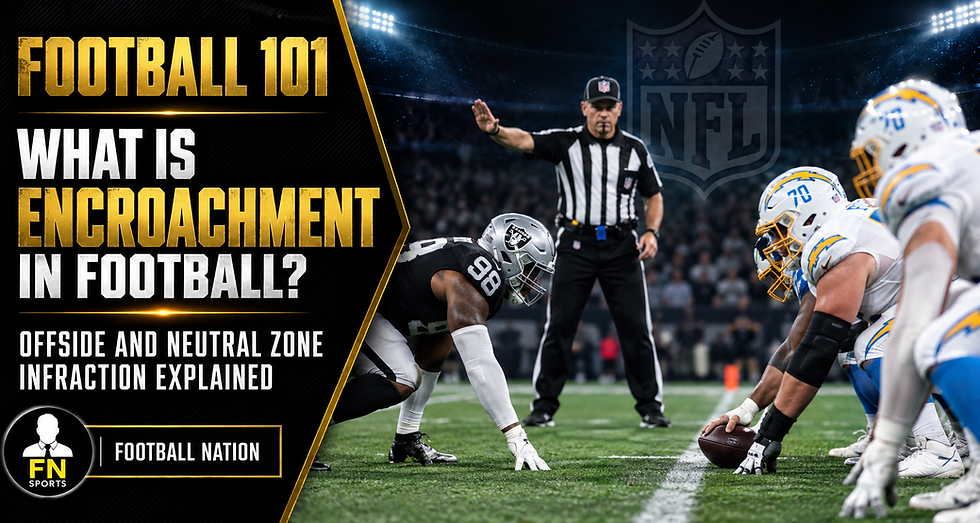
What is encroachment?
Encroachment occurs when a defensive player enters the neutral zone before the snap and makes contact with an offensive player or the ball.
The important word is contact.
If a defensive lineman jumps forward and touches an offensive tackle before the ball is snapped, officials can shut the play down and call encroachment. The NFL lists encroachment under Rule 7, Section 4, Article 3 and assigns a five yard penalty.
Before reading the defender, make sure you understand the neutral zone. It is the space created by the length of the football between the two lines before the snap.
What is a neutral zone infraction?
A neutral zone infraction can happen without the defender physically touching an opponent.
One common example is a defender entering the neutral zone and causing a nearby offensive player to react immediately. Another is a defender getting such a clear path toward the quarterback or kicker that officials stop the play rather than allow a dangerous free run.
That is why you may hear an official or broadcaster use language such as "unabated to the quarterback." The defender's movement created a dead ball situation even though the center never snapped the football.
The NFL lists neutral zone infraction under Rule 7, Section 4, Article 4. It is also a five yard penalty.
What is offside?
Offside is usually the live ball version fans recognize. A defensive player is in or beyond the neutral zone when the ball is snapped, but the action did not already create a dead ball foul such as encroachment or a neutral zone infraction.
The center snaps the ball, the play continues, and a flag appears. That is why quarterbacks sometimes believe they have a "free play" when they see a defender across the line at the snap.
The NFL lists defensive offside under Rule 7, Section 4, Article 5. It carries a five yard penalty.
Why does the whistle sometimes blow and sometimes not?
The official is deciding whether the foul happened before the snap in a way that requires the play to be killed, or whether the defender was simply offside when the ball became live.
Encroachment involves early contact. A neutral zone infraction can involve a forced offensive reaction or a dangerous clear path. Offside can remain a live ball foul if neither of those dead ball conditions occurs first.
That distinction is why two plays that look almost identical from the television angle can be officiated differently.
How is this different from a false start?
A false start is an offensive foul. It generally involves an offensive player making a movement that simulates the start of the play before the snap.
The key question when both sides move is who created the illegal action first. If a defender enters the neutral zone and causes a nearby offensive lineman to react, the defense can be responsible. If the offensive lineman moves on his own, it can be a false start.
This is why officials often gather after a chaotic presnap sequence instead of announcing the flag immediately.
How the line of scrimmage helps you read the call
Football Nation's line of scrimmage guide gives you the best viewing shortcut.
Watch the ball first. The neutral zone is tied to the football. Then watch the defender's relationship to that space.
If he crosses early, ask what happens next:
Does he touch an offensive player? Think encroachment.
Does his movement force an immediate reaction or create a dangerous path? Think neutral zone infraction.
Does the ball get snapped while he is still across without either dead ball condition? Think offside.
Why edge players get caught so often
Edge rushers are trying to time the snap closely enough to beat the offensive tackle. A fraction of a second can decide whether they reach the quarterback.
That aggressive timing is also why players in Jack, Wolf, or traditional defensive end roles can be vulnerable to presnap penalties. They are often staring at the ball and trying to explode forward at exactly the right moment.
The defense can also disguise pressure with movement. A defensive stunt occurs after the snap, but the threat of movement and pressure before the snap adds to the mental battle between the offensive line and defensive front.
Football Nation takeaway
Encroachment means the defender crosses early and makes contact. A neutral zone infraction involves another prohibited presnap action, such as causing an offensive player to react or creating an unabated path. Offside generally means the defender is illegally in or beyond the neutral zone when the ball is snapped. All three can cost five yards, but they are not the same foul.
Comments