


Jeremiyah Love Fantasy Outlook 2026: Is He Worth a Round 2 Pick?
- Football Nation
- Aug 12
- 4 min read

Jeremiyah Love has become one of the sharpest decisions in the second round of 2026 fantasy drafts. The Arizona Cardinals rookie owns rare draft capital, explosive college production and a path to three-down work. He also enters a crowded backfield without a single NFL carry, which makes his price more important than his highlight reel.
The useful question is not whether Love is talented. It is whether the combination of role uncertainty and a top-25 fantasy cost leaves enough room for profit. The answer depends on where Round 2 turns, how aggressively a manager wants to chase running-back upside and what Arizona shows before Week 1.
Where Jeremiyah Love is going in fantasy drafts
The latest FantasyPros consensus ADP places Love at No. 21 overall in PPR formats and RB12. That is a late-second-round price in a 12-team league, although individual platforms range from the middle of Round 2 to the early third. ADP is a market snapshot, not a projection, so it should guide price discipline rather than replace it.
That range tells us the market already expects an immediate starting role. Fantasy managers are not buying a bench stash. They are paying for usable weekly volume with the possibility that Love grows into an RB1. If he is pushed into the first half of Round 2, more of that breakout is already baked into the cost.
Why the upside is worth chasing
Arizona used the No. 3 overall pick on Love, making him the highest-drafted running back since Saquon Barkley went second in 2018. The NFL’s draft profile notes that Love produced 40 touchdowns over his final two Notre Dame seasons and averaged 6.9 yards per carry in each of them. That investment and production do not guarantee 20 touches per game, but they are powerful evidence that Arizona sees him as more than a change-of-pace player.
Love also has the skill set fantasy managers want. His speed creates touchdown upside from anywhere on the field, while his receiving ability and willingness in pass protection give him a route to valuable passing-down work. The Cardinals’ own rookie minicamp coverage emphasized the run game, pass game and protection as the three phases he must handle. Winning all three would make him much harder to remove in high-leverage situations.
Arizona’s official announcement of Love’s signing is embedded below. It confirms the player and team connection directly from the club rather than relying on a repost or screenshot.
The backfield risk is real
Top-three draft capital does not erase competition. Arizona entered camp with veteran options capable of handling early downs, short yardage and pass protection. Love may lead the room without monopolizing it. That distinction matters when a player is priced around RB12, because a few lost goal-line carries or two-minute snaps can separate a weekly RB1 from a volatile RB2.
The Cardinals resting Love in the Hall of Fame Game was not evidence of an injury. Football Nation’s earlier explainer on why Love did not play detailed the preseason decision. Managers should not downgrade him for that absence, but they also should not treat a protected exhibition workload as proof that the regular-season role is settled.
There is also offensive uncertainty. A rookie back can be productive on a developing team, but touchdown opportunities and catch volume still depend on drive quality. Carson Beck’s poised preseason debut showed one encouraging piece of Arizona’s quarterback depth, while the broader offense still has to prove it can create enough red-zone trips for multiple backs.
Football Nation analysis: the right Round 2 price
Football Nation analysis: Love is a strong selection from pick 20 through the end of Round 2 in PPR formats. That range pays for his likely lead role without requiring him to dominate every backfield situation immediately. At pick 14 or 15, the risk becomes harder to justify because more established volume profiles are usually available.
Roster construction should break close calls. Managers who open with an elite wide receiver can draft Love as an upside RB1, then protect the bet with another dependable runner in the next two rounds. Managers who already selected a running back in Round 1 can be more selective and let Love fall; there is no need to force a rookie-RB stack of risk when a stable receiver is on the board.
His realistic ceiling is a top-10 fantasy finish if Arizona gives him goal-line work and keeps him on the field for passing situations. His floor is lower than his ADP if the veteran backs divide high-value touches. That gap is exactly why Love is fascinating—and why the late second is a better buy than the early second.
What to watch next
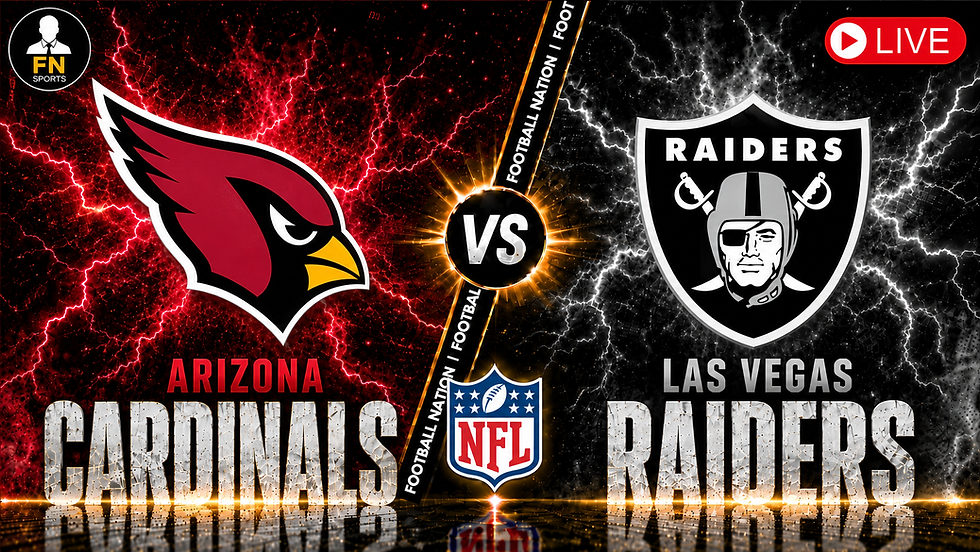
Ignore preseason rushing totals in small samples. Watch first-team snaps, third-down assignments, two-minute work, pass protection and which back gets the first goal-line series. Those details predict fantasy value better than one long run against a reserve defense. Football Nation’s Cardinals–Raiders preseason preview tracks the next game context and the battles that matter.
The bigger Arizona story is also about identity. The franchise is honoring its past by retiring Larry Fitzgerald’s No. 11, while asking a new group of skill players to define the offense. Love does not need to carry that history alone. He only needs enough high-value touches to justify a premium fantasy pick.
Bottom line: Love is worth a late Round 2 pick in 2026 fantasy drafts. He has legitimate RB1 upside, but the crowded backfield makes him a price-sensitive selection rather than an automatic click. Draft the talent near consensus cost, build a stable roster around him and let Arizona’s usage—not preseason hype—decide whether he climbs further.


Comments