


What Is Blitz Pickup in Football? Pass Protection Explained
Updated: Sep 13
Blitz pickup is the offense’s process for identifying and blocking an extra pass rusher so the quarterback has time to throw. A running back, tight end or other eligible protector may be responsible for a defender the offensive line cannot account for. The job is not simply to hit the first defender who appears. It is to understand the protection call, find the assigned threat and keep that threat from reaching the quarterback.
The direct answer: good blitz pickup is equal parts recognition, communication and technique. The offense must decide before the snap who the line can block, who the back owns and what the quarterback will do if the defense sends more rushers than the protection can handle. One correct block can turn immediate pressure into a clean completion.

Pass protection starts before the snap
Every protection has rules. The quarterback and center usually identify the defensive front and a key linebacker so the line can sort its responsibilities. The running back listens to that call, checks where the likely pressure can come from and aligns with the protection in mind. If the defense shifts, stems or walks a safety toward the line, the offense may have to reset the count.
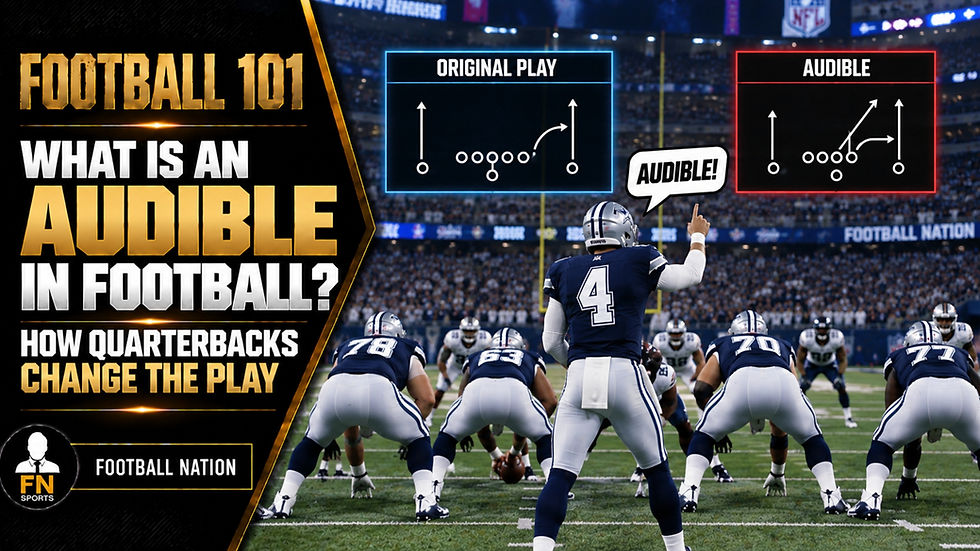
That communication connects directly to an audible. The quarterback may change the play, change only the protection or alert a quick answer without replacing the original concept. The goal is to create a shared map. If the line slides left while the back believes he is responsible for the left side, two blockers may take one defender and leave another free.
The back’s exact rule varies by playbook. One common coaching framework is to scan inside-out: check the most dangerous interior gap first, then work toward an outside threat. That is a principle, not a universal assignment. Some protections give the back one named linebacker. Some ask the back to check one side and release. Others keep both the back and tight end in for maximum protection.
The four parts of a blitz pickup
First, identify. The back confirms the protection and locates the defender he may have to block. Interior rushers usually threaten the quarterback on the shortest path, which is why a back cannot stare only at a wide edge defender. He must also recognize twists, delayed pressure and a linebacker who creeps forward just before the snap.
Second, close space under control. Waiting too deep lets the rusher build speed and compresses the pocket around the quarterback. Charging recklessly creates a different problem: the defender can sidestep the block. The back needs a balanced path that meets the threat without opening an easy escape lane.
Third, square up and anchor. Good protectors keep their shoulders square, bend at the knees, strike from a stable base and fight to stay between the rusher and the quarterback. Size helps, but leverage and timing matter more than a spectacular collision. The objective is not to knock a linebacker backward. It is to delay and redirect him long enough for the throw.
Fourth, finish the assignment. On a pure stay-in protection, that means maintaining the block through the quarterback’s delivery. On a check-release, the back confirms that his threat is not rushing before entering the route. Releasing early may produce an easy checkdown, but it can also leave the quarterback exposed. Protection comes before the outlet.
Blitz pickup is not the same as a hot route
A protection adjustment tries to block the pressure. A hot route gives the quarterback a fast throwing answer when a defender is intentionally left unblocked or the defense sends more rushers than the offense can protect. The two solutions can work together: the line and back handle the most dangerous threats while a receiver shortens or converts his route for the extra rusher.
This is why an untouched defender does not automatically prove that the running back missed his assignment. The protection may deliberately leave the widest rusher for the quarterback’s throw. A defender may also drop out while a different linebacker replaces him, as in a zone blitz. To judge the play correctly, watch the line’s slide, the back’s eyes and the quarterback’s timing—not only the player who reaches the backfield.
What legal technique looks like
A blocker is allowed to absorb and redirect a rusher, but blitz pickup still operates within the NFL’s blocking rules. The 2026 NFL rulebook governs holding, clipping, chop blocks and other illegal contact. A back who loses leverage cannot rescue the play by grabbing outside the defender’s frame or tackling him. Technique must keep the protector both effective and legal.
Coaches often value backs who can identify pressure as much as backs who can survive the collision. A perfectly executed block on the wrong defender is still a protection error. Eyes, footwork and communication get the back to the right opponent; leverage and hands keep that opponent away from the quarterback.
Two NFL examples show the value
An official NFL clip of Josh Jacobs picking up a blitz shows the practical result: the block buys enough time for Jimmy Garoppolo to deliver a chain-moving throw to Davante Adams. The pickup does not appear in the receiver’s catch total or the quarterback’s passing line, but it is part of why the play functions.
Jerick McKinnon received the NFL’s Way to Play recognition for a postseason block against linebacker Foyesade Oluokun. That example reinforces the larger point: pass protection is a real offensive skill, not dead time before a back begins his route. Recognition and safe, controlled contact can protect both the quarterback and the structure of the play.
Why blitz pickups fail
The first failure is identification. Disguised pressure can make a back commit to a defender who drops into coverage while a second-level rusher attacks from elsewhere. The second is a communication mismatch between the quarterback, center and back. The third is poor depth: meeting the rusher too close to the quarterback gives the passer nowhere to step.
Technique creates the final set of problems. A back who lunges can be beaten by a side step. A narrow base can collapse under power. Dropping the head sacrifices vision and balance. Releasing before the check is complete leaves a free runner. These errors happen quickly, which is why protection trust often affects which backs play on obvious passing downs.
The biggest misconception
The biggest misconception is that the running back should block the biggest or most obvious defender. He should block the defender assigned by the protection. That could be an inside linebacker, a safety, an edge player after a line slide, or nobody at all if the defense drops and the back is cleared to release. The correct target depends on the call and how the defense declares its rush.
A second misconception is that successful pickup requires a dominant pancake block. Most passing plays need only a workable launch point and a brief timing window. If the back forces the rusher to take a wider path or stops the initial charge long enough for the ball to leave, he has done the job.
How to watch blitz pickup on TV
Before the snap, find the running back and note which side of the quarterback he occupies. Watch whether he scans across the formation, steps toward an interior gap or widens toward the edge. After the snap, follow his eyes. If he checks a linebacker before releasing, the offense likely called a check-release. If he immediately attacks a rusher, the protection identified that threat.
Then watch the quarterback. Does he hold the ball because the back created time, or throw immediately because the pressure count produced a fast answer? Replays from behind the offense are especially useful because they reveal the line’s slide and the back’s path. That wider view separates a missed assignment from a defender the scheme intentionally did not block.
Football Nation takeaway
Blitz pickup is the hidden work that keeps a passing play alive. The offense identifies the pressure, assigns the most dangerous threats and pairs protection with a quick answer when the defense sends one rusher too many. For the running back, the sequence is clear: know the call, scan the right area, meet the assigned defender with leverage and release only when the quarterback is safe. The best pickup may last one second, but that second can decide the entire play.


Comments