Why Do Quarterbacks Point at the Mike Linebacker Before the Snap?
- Football Nation
- 4 hours ago
- 6 min read
Quarterbacks point at a defender and call him the “Mike” to give the offense a common reference point for blocking and pass protection. The declaration tells the center, linemen, running back and quarterback where the protection count begins. It does not necessarily identify the defense’s true middle linebacker, and it does not automatically reveal whether the play is a run or pass.
On television, the quarterback may point and shout a number such as “54 is the Mike.” The center can make or repeat the call in other systems. The important part is not who speaks first. It is that all blockers use the same starting point before the snap.
What the Mike Declaration Actually Does
Every protection needs an organized count. The offense cannot simply tell five linemen to block whichever five defenders look dangerous. Defenses move before the snap, walk linebackers into gaps and show more potential rushers than the offense can block. The Mike point lets the line divide those threats into a consistent order.
Once the offense identifies the Mike, the center and guards can establish which defenders belong to each side of the protection. The running back can learn where his scan begins. The quarterback can recognize whether the defense is presenting more rushers than the protection can handle and decide whether to change the call, use a hot route or get the ball out quickly.
Offensive group | What the Mike point establishes | What happens next |
|---|---|---|
Center and guards | The middle of the protection count | Sort interior threats and communicate combinations |
Tackles | The outer edge of each side | Set for edge rushers or adjust to a slide |
Running back or tight end | The extra threat in the scan | Block, chip or release based on the call |
Quarterback | Whether the numbers are manageable | Keep the play, reset protection or throw hot |
The Declared Mike May Not Be the Real Middle Linebacker
This is the biggest misconception. The defense may have a player whose actual position is Mike linebacker, the traditional middle player described in Football Nation’s Sam, Mike and Will linebacker guide. The offense’s declared Mike is different: he is the reference defender chosen for that protection.
That reference can be an inside linebacker, an outside linebacker, a safety walked into the box or even a defensive back in a pressure package. NFL analysis has described defenses designating a safety as the Mike in subpackages specifically to complicate the offense’s protection count. The league’s own linebacker terminology guide explains the traditional defensive Mike role, but the offensive declaration is a communication tool rather than an official rulebook position.
The best way to understand it is to imagine numbering seats in a row. The offense needs a seat labeled one so everyone can count outward in the same direction. Choosing that seat does not change who is sitting there. It only organizes the count.
A Simple Protection Example
Imagine an offense in 11 personnel with five offensive linemen and a running back available to protect. The defense places four linemen near the line and walks two linebackers into the A gaps on either side of the center. A safety hovers close enough to threaten a late blitz.
The quarterback points to the right inside linebacker as the Mike. The line uses that defender to set its count and slides toward the most dangerous interior pressure. The running back checks the linebacker or safety assigned outside the line’s count. If only four defenders rush, the offense may have help available. If six rush, every protector has an assignment. If a seventh defender comes, the quarterback needs an immediate answer because one threat cannot be blocked by six protectors.
This is where the Mike declaration connects directly to blitz pickup. A running back cannot wait for the snap and then guess which defender matters. His scan is built into the protection call. The declared Mike helps turn a crowded picture into an ordered list.

Diagram: Football Nation original teaching graphic. Rights basis: original editorial diagram created for Football Nation.
Who Makes the Mike Call?
The answer depends on the offense. Some systems give the quarterback final control because he sees the full defensive picture and can change the protection. Others put the initial declaration on the center, who is closest to the front and responsible for line communication. Many offenses share the job: the center identifies the front, the quarterback confirms or resets it, and both communicate changes.
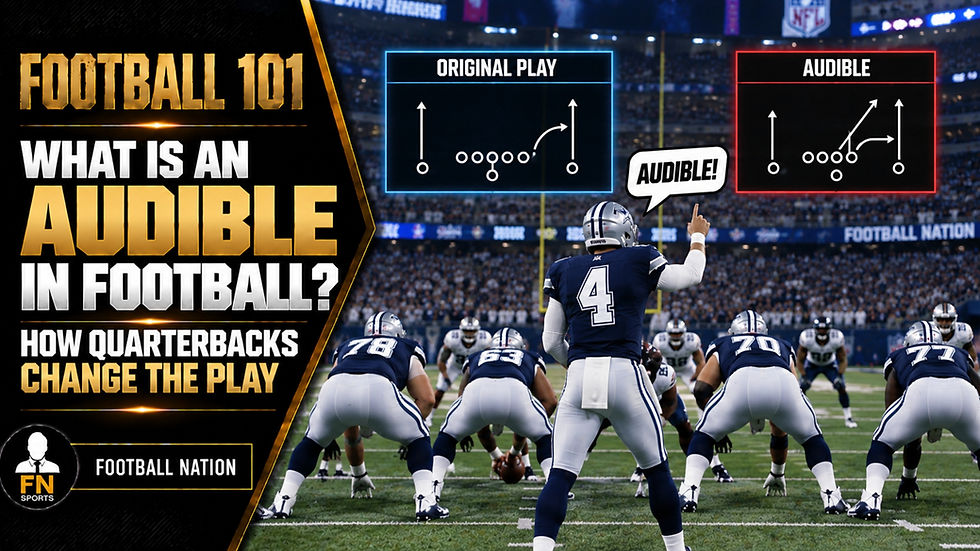
USA Football’s explanation of a Mike Point system describes the center using the declaration to keep blocking assignments consistent. At the NFL level, the quarterback may combine the Mike call with an audible or protection adjustment when the defense presents a different structure than expected.
The words and gestures also fit within the offense’s overall cadence. A point can confirm the declaration in a noisy stadium, but the offense still has to finish the communication before the play clock forces the snap.
How Defenses Try to Break the Count
Defenses know the offense is searching for a clean reference point. They respond by mugging both A gaps, moving linebackers late, showing pressure from one side and dropping out, or replacing a traditional linebacker with a safety. Those tactics are designed to make the offense count the wrong players or send its help away from the actual rush.
An NFL breakdown of Rex Ryan’s Bills defense connected protection problems to difficulty identifying the Mike against crowded pressure looks. Another NFL analysis of hybrid defensive personnel explained how defenses can use safeties and defensive backs in Mike-like positions to complicate blocking assignments.
That does not mean every incorrect protection is the quarterback’s fault. The center, line, running back and receivers all share pieces of the answer. A defender can also bluff pressure and force the offense to spend a blocker on someone who drops into coverage, shrinking the route concept even when the pocket remains clean.
Does Pointing at the Mike Reveal the Play?
No. The gesture usually reveals that the offense is organizing a count, but it does not tell the defense the exact play. The same Mike point can support a full slide, half slide, man protection, play action or a run-blocking rule. Offenses also use dummy communication and repeated calls to avoid giving defenders a reliable clue.
The declaration is not a guarantee that the identified defender will be blocked. A quarterback may point to organize the line while the play deliberately leaves an edge defender unblocked on a read concept. The call establishes relationships; the play design determines the final assignment.
How to Spot It While Watching a Game
Watch the quarterback and center after the offense breaks the huddle. If the quarterback extends an arm toward a box defender and calls a jersey number, note where the running back aligns and which direction the linemen turn after the snap. Then watch the declared defender: does he rush, drop or exchange with another player?
The next factual checkpoint is the protection result, not the pre-snap point. If the defense brings one more rusher than the offense can block, look for a hot throw. If a bluffing defender drops, see whether the offense lost a route to keep extra protection. If the line slides away from the actual pressure, the defense probably changed the picture after the declaration.
Frequently Asked Questions
Is the Mike always the middle linebacker?
No. The defense may have a true middle linebacker, but the offense can declare another box defender as its Mike reference for a particular protection.
Can the center identify the Mike?
Yes. Many systems ask the center to make the initial point. Other systems give the quarterback final authority, and some require both players to confirm it.
Why does the quarterback shout a jersey number?
The number identifies the defender clearly in a loud environment. It helps the entire offense attach the same player to the protection count.
Does calling the Mike mean that player will blitz?
No. The declared defender may rush, cover or move after the snap. He is the reference point, not a guaranteed blitzer.
Can the defense change the picture after the call?
Yes. Late movement, simulated pressure and coverage rotation are common ways to attack protection communication.
Football Nation Takeaway
When a quarterback points at the Mike, he is organizing the offense, not giving a scouting report on the defense. The declaration creates a shared count so the line and eligible protectors know where their responsibilities begin. To judge whether the call worked, ignore the pointing after the snap and watch whether the offense accounts for the actual rush.


Comments