top of page

What Is a Contain Rush in Football? How Defenses Cage Mobile QBs

A contain rush is a disciplined pass rush designed to keep the quarterback inside a controlled pocket. The edge rushers protect the outside escape lanes and avoid racing behind the quarterback, while the interior rushers compress the middle without opening a runway. The immediate goal is not simply to win the fastest path to a sack. It is to build a cage, force the passer to stay on schedule and make the coverage do its work.

How a contain rush works

Picture the quarterback finishing his drop seven yards behind the line. In a normal speed rush, an edge defender may bend tightly around the tackle and chase the quarterback’s back shoulder. In a contain rush, that defender still attacks, but he works to the depth of the quarterback rather than flying past it. His outside shoulder stays free, his path remains wide enough to close the boundary and his eyes confirm whether the quarterback steps up, rolls out or tucks the ball.

The interior rushers are the other half of the structure. If both defensive tackles vacate their lanes on ambitious loops or get washed sideways, the quarterback can climb through the middle. A sound contain plan asks them to push the pocket and close the inside doors as the edge defenders close the outside doors.

NFL analyst Bucky Brooks described this as a “mush rush” when explaining a plan for containing Cam Newton. In the official NFL breakdown, the edge rushers were instructed to reach the depth of the quarterback’s drop without going farther, while the interior defenders kept their eyes on the passer and clogged escape lanes. That is the basic geometry of contain.

Contain rush versus a normal pass rush

A contain rush does not mean the defense stops trying to pressure the quarterback. It changes the order of priorities. On a pure pass-rush down against a stationary passer, an edge defender may take a sharper risk: burst upfield, dip under the tackle and finish from behind. Against a dangerous runner, that same path can create a clean exit. The blocker may technically lose, yet the offense still wins because the defender has removed himself from the play.

Contain places lane integrity ahead of the shortest route to the quarterback. The edge may convert speed to power, squeeze the tackle toward the pocket or pause at quarterback depth before closing. The interior may bull-rush instead of crossing faces. Pressure can still arrive, but the rush is coordinated so one defender’s win does not become another defender’s gap.

That tradeoff is real. Green Bay defensive coordinator Jeff Hafley explained that his defense had sometimes contained “to a fault,” preventing quarterback runs but becoming too passive. The Packers’ official analysis stressed the need to mix disciplined lanes with aggressive chances. Football Nation’s takeaway from that balance: contain is a tool, not a permanent brake pedal.

Why contain matters against mobile quarterbacks

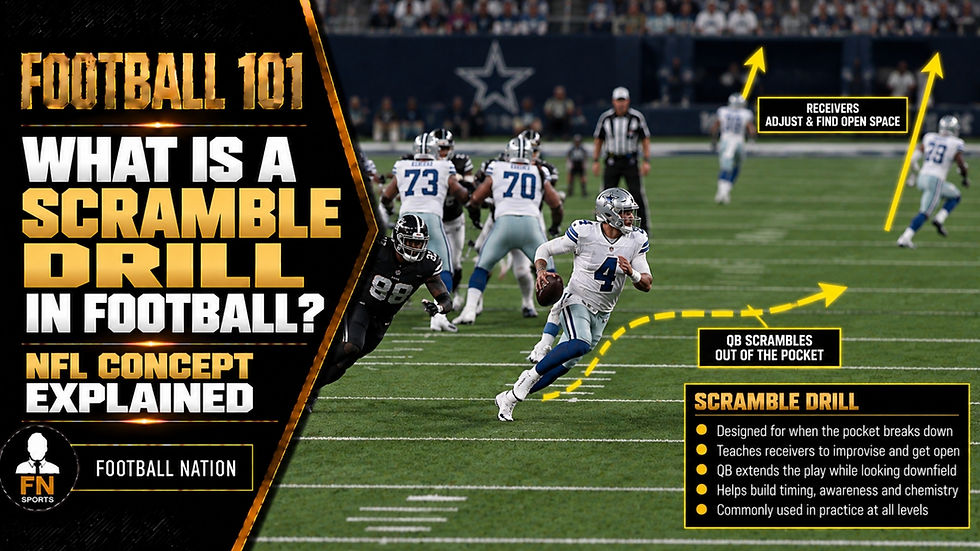
Mobile quarterbacks punish poor rush spacing in two ways. First, they can turn an open lane into rushing yards. Second, they can escape long enough to create an unscripted throw. Once the quarterback breaks the pocket, coverage rules become harder to maintain and receivers begin a scramble drill. A play that looked covered at two seconds can become an explosive gain at five.

New England defensive end Deatrich Wise called that balance an art in the Patriots’ official feature. He explained that containment cannot mean standing still and watching the quarterback; the defender must stay within the rush lanes while continuing to make the passer uncomfortable. That is why good contain rarely looks passive on film.

Contain rush versus a quarterback spy

A contain rush and a quarterback spy solve related problems with different players. The contain rush uses the defensive front to shape the pocket. A spy is usually a linebacker, safety or other second-level defender assigned to mirror the quarterback and react when he escapes.

A defense can use both. The front may maintain its lanes while the spy waits behind it. But that costs a defender who could otherwise rush, cover a receiver or help in a passing lane. Contain can be more economical because it asks the four rushers to control the quarterback without automatically removing a coverage player.

How stunts fit into a contain plan

A defense can still run games up front, but every exchange needs a new edge and a new interior lane. On a defensive stunt, one rusher penetrates while another loops behind him. If the penetrator crashes inside, the looper or another defender must replace the contain responsibility. Otherwise the stunt may create pressure in one gap and an escape route in the next.

Football Nation teaching diagram showing two edge defenders holding outside leverage at quarterback depth while two interior rushers close the middle escape lanes.

Football Nation original AI-assisted teaching diagram. It illustrates rush-lane responsibilities with anonymous icons and is not a copied playbook image or game photograph.

How offenses attack a contain rush

The defense gives up something when it prioritizes the cage. A patient quarterback may receive an extra beat because the edge is not taking the most aggressive angle. Quick rhythm throws can exploit soft coverage before the pocket tightens. Deep protection can also hold long enough for a receiver to uncover if the front generates control without meaningful push.

Offenses can change the launch point with a bootleg. The run fake influences the edge, then the quarterback rolls outside. The contain defender must recognize the fake and stay home; if he chases the run action, the quarterback reaches open space. Conversely, if the edge widens too early, the offense can hand the ball inside.

Screens are another answer. A screen pass invites defenders upfield and throws behind them. A controlled rush may diagnose the screen more quickly, but an interior defender focused entirely on closing the quarterback can still be displaced. Draws, checkdowns and quarterback step-ups test whether the cage can tackle as well as contain.

The biggest misconception

Contain is not the same as playing prevent defense, and it is not a promise that the quarterback will never escape. It is a rush rule that manages where the escape should occur. The defense wants the passer moving toward help, into a closing lane or back toward the middle of the pocket—not freely around the edge.

How to spot a contain rush on television

Watch the edge defenders instead of following the ball immediately. If they reach the level of the quarterback and flatten rather than continuing behind him, they are protecting the outside exits. Next, look inside. The tackles should keep their rushes connected enough that the quarterback cannot step into a vacant A-gap or B-gap.

Then watch the quarterback’s response. A contained passer may hitch in place, reset repeatedly or throw the ball away even though no defender wins instantly. That is often a successful rush. The box score may show no sack, but the front has removed the quarterback’s second play and allowed the coverage clock to expire.

Football Nation takeaway

A contain rush is disciplined pressure. The edges set the walls, the interior closes the floor and the quarterback is forced to operate from the original pocket. The best contain plans still attack; they simply refuse to trade one defender’s highlight chase for an open escape lane. When a mobile quarterback looks unusually ordinary, rewind the rush before crediting only the coverage. The cage may have taken away the play that never appeared in the box score.

Frequently asked questions

Is a contain rush only used against running quarterbacks?

No. It is most visible against mobile quarterbacks, but defenses also use contain principles against bootlegs, deep play-action and quarterbacks who extend plays before throwing. The degree of discipline changes with the opponent and situation.

Does a contain rush reduce sacks?

It can reduce some quick, high-risk sack opportunities because rushers avoid running past the pocket. A well-executed cage can also create coverage sacks by making the quarterback hold the ball with nowhere to escape.

Who has contain responsibility?

Usually an edge defender owns the outside lane, but the assignment can rotate on a stunt or blitz. A linebacker, safety or looping interior defender can become the contain player depending on the call.

What is the difference between contain and force?

Contain keeps the quarterback or ball carrier from escaping outside. Force is a broader run-defense responsibility that turns the ball back toward pursuit. The jobs can belong to the same defender, but the terms are not interchangeable in every scheme.

Comments


bottom of page