What Is the Zone Read in Football? Quarterback Give-or-Keep Explained
- Football Nation
- 3 days ago
- 5 min read
The zone read is an option run that pairs zone blocking with a quarterback decision after the snap. The offensive line blocks the called zone run while one backside edge or C-gap defender is intentionally left unblocked. The quarterback reads that defender during the mesh with the running back: if the defender crashes toward the back, the quarterback keeps the ball; if the defender stays wide or waits on the quarterback, the ball is given.
That is the direct answer, but the important word is read. The quarterback is not guessing, surveying the entire defense or automatically keeping because he is athletic. He has one primary key and a rule attached to that key. Exact footwork and coaching language vary, yet the play's arithmetic is constant: instead of assigning a blocker to the read defender, the offense accounts for him with the quarterback's decision.
How the zone read works
Start with the run itself. Most versions are attached to Inside Zone. The linemen step toward their zone landmarks and work combination blocks to the second level. On the backside, the offense does not block the designated read defender. That saves a blocker for another gap or linebacker and creates a two-way threat at the mesh point.
The running back takes the same disciplined track used on the base zone play. He should not slow down to watch the defender. The quarterback receives the snap, extends the ball, aligns his eyes with the read key and makes a give-or-keep decision within the timing of the system. A clean mesh lets both players sell the handoff long enough to force the defender to declare without creating a loose ball.

The quarterback's read, step by step
First, identify the read key before the snap. Coaches often teach the backside end or, more precisely, the backside C-gap defender because fronts can move. USA Football's coaching material notes that the read should stay consistent even when the defense changes alignment. The quarterback cannot let a late stem or stand-up EDGE defender change the rule after the snap.
Second, read the defender's first committed movement. A hard squeeze down the line says the defender is chasing the running back, so the quarterback pulls and replaces him outside. Square shoulders, patient feet or width usually say the defender is preserving quarterback leverage, so the quarterback gives and lets the line block the zone play. USA Football offers a useful coaching example in its Inside Zone complement guide, while also showing why each system must define the key precisely.
Third, finish the play decisively. On a give, the quarterback carries out a keep fake to hold pursuit. On a keep, he secures the ball and gets vertical once leverage appears. Drifting sideways makes the pursuit faster and turns a good read into a small gain. The read creates the lane; the quarterback still has to use it.
Why leaving a defender unblocked can help
Traditional run math asks the offense to block every immediate threat near the point of attack. Zone Read changes the math. The quarterback neutralizes one defender without a physical block, which allows the backside tackle to work inside rather than chase a difficult edge matchup. If the defender takes the running back, the quarterback owns the space he vacated. If he waits for the quarterback, the offense hands the ball into a properly blocked zone run.
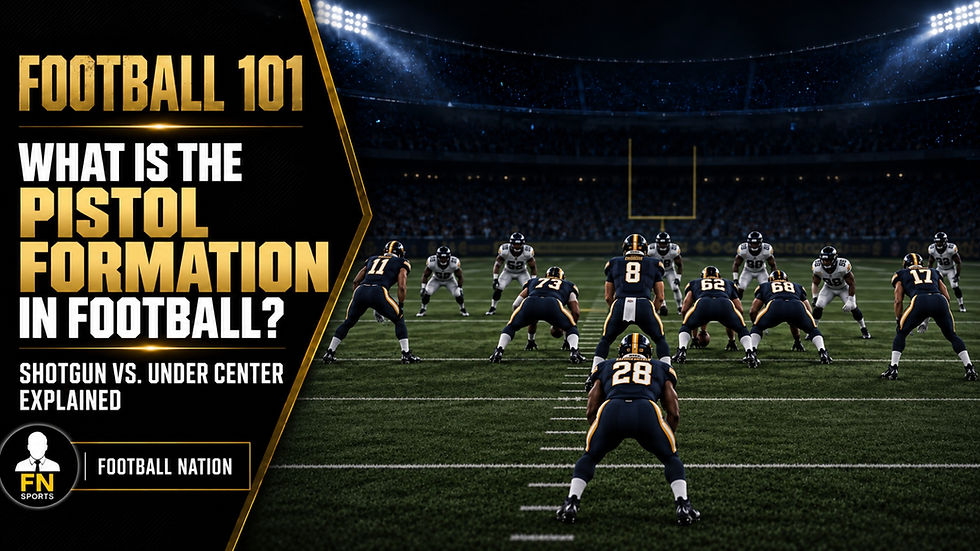
The concept also makes familiar formations more stressful. From the Pistol formation, the back can remain directly behind the quarterback and threaten either direction. From shotgun, the back's alignment can help the defense anticipate the run direction, so offenses add motion, formation changes and constraint plays. The same initial picture can lead to a quarterback keep, a give, a bubble screen or play-action.
Zone Read versus Split Zone and RPO
Zone Read and Split Zone can look alike because both begin with zone blocking and action across the formation. The difference is the backside answer. In standard Split Zone, an H-back crosses the formation to block the backside edge. In Zone Read, that defender is commonly left unblocked and controlled by the quarterback's decision. Offenses can blend the concepts with bluff action, which is why the read key matters more than the backfield choreography.
A Zone Read is also not automatically an RPO. The basic Zone Read gives the quarterback two running choices: hand the ball to the back or keep it. An RPO adds a pass option and may read a linebacker, nickel or safety instead of the backside edge. Some plays combine all three possibilities, but viewers should not label every shotgun mesh an RPO.
How defenses stop the Zone Read
One answer is to make the quarterback give. The edge defender widens or slow-plays the mesh while the interior front squeezes the back's running lanes. Another is the scrape exchange: the edge crashes toward the running back and a linebacker loops outside to replace him against the quarterback. That can bait the pull while putting a fresh defender in the keep lane.
Defenses can also change the read with a slant, a late rotation or a pressure. A defensive line slant can move the apparent key after the snap and alter the cutback picture. USA Football's fill-and-fold explanation shows how a defense can assign one player to the quarterback and another to the running back's cutback. The goal is to restore the numbers advantage that the read tried to remove.
The offense therefore needs answers beyond the base play. Arc releases and bluff blocks punish a defender who chases the mesh. Bootleg action attacks pursuit with a pass outside the pocket. Motion can relocate the force defender. The best option systems do not ask the quarterback to rescue a bad call; they build a family of plays that makes every defensive adjustment expose something else.
The biggest misconception
The biggest misconception is that Zone Read is simply a quarterback run. Most snaps can still be designed to produce a handoff, and the quarterback may keep only when the defense gives the correct picture. A mobile quarterback matters because the defense must respect the keep, but disciplined eyes and ball handling are more important than highlight speed.
It is also wrong to assume every coach uses the same crash-equals-keep rule. Some offenses change the read key, run direction or back assignment. Bash concepts even send the back away from the zone action and can flip who carries where. When watching film, identify the unblocked defender, follow his first movement and then confirm which player receives the ball. That sequence is more reliable than guessing from formation.
Football Nation takeaway
When you see a shotgun or Pistol mesh, watch the backside edge instead of the football. If he is untouched and crashes toward the running back, expect the quarterback to pull and replace him. If he stays square or widens, expect the give. Then watch the defense's second answer: is a linebacker scraping outside, a safety fitting downhill or the front squeezing the back's cut? Once you find the read key and the replacement defender, Zone Read stops looking like a trick and starts looking like simple, disciplined numbers football.


Comments