


Fantasy Football Roster Construction
Updated: Oct 10
Roster construction is how you distribute draft picks and roster spots across the jobs your fantasy team must fill. There is no universally correct number of running backs or receivers: lineup rules, scoring, league size and bench capacity change the answer.
Part of Football 101. Explore the guide to choose your next topic.
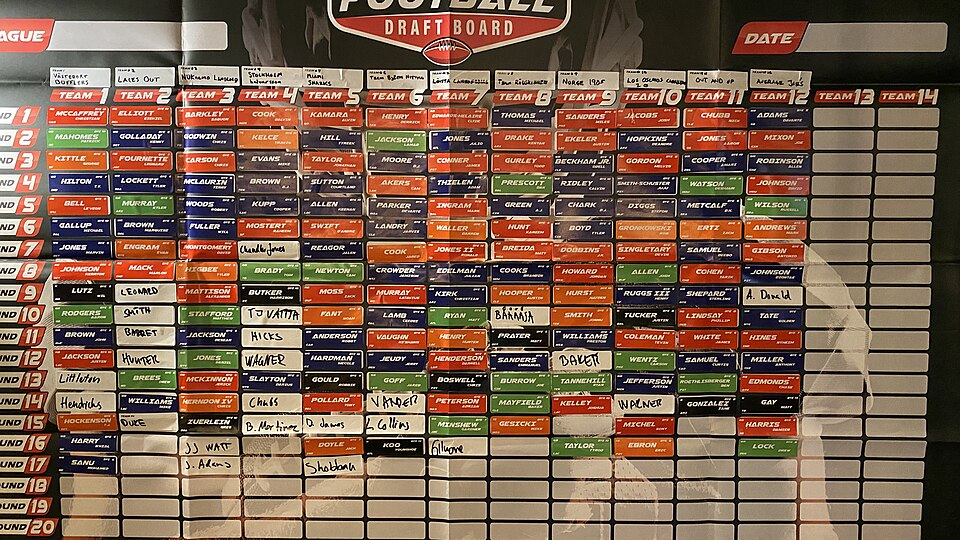
Start with the actual settings. Write down starting positions, flex eligibility, quarterback slots, scoring, bench size, injured reserve rules and waiver access before copying a draft strategy.
Build around scarcity
A superflex position can accept a quarterback alongside other eligible positions. When many teams want two starting quarterbacks, replacement options can become scarce because the NFL supplies only a limited number of weekly starters.
In a league requiring only one quarterback, using several bench spots on that position may cost useful depth elsewhere. The tradeoff depends on how many viable replacements remain available, not on a blanket rule that a second quarterback is always good or bad.
The same logic applies to receivers, tight ends and running backs. Compare likely points to what you could reasonably obtain later.
Give each bench spot a purpose
Some reserves cover an immediate starting need. Others offer upside if their role grows. A backup who would never enter your lineup may be less useful than a developing player with a realistic path to more work.
Evaluate that path using snaps and route participation and target share in context. Roster labels alone cannot tell you which backup will receive valuable touches after an injury.
Do not build an entire bench around hypothetical breakouts if your current starters already leave weekly holes. Balance future opportunity with the next decision you actually need to make.
Manage byes without letting them run the draft
A bye week conflict is predictable and temporary. A large difference in player value can matter for the whole season. Take the stronger value when appropriate, then plan the replacement before the deadline arrives.
After the draft, reassess as roles change. An excellent preseason plan can become outdated by September. The aim is a roster that can score now, absorb foreseeable absences and improve when new evidence appears. That is more flexible than preserving every draft pick simply because you chose it.
Keep learning
Running back roles: Distinguish carries, receiving work and protection.
Reading camp information: Avoid building depth from unsupported hype.
Fantasy football history: See how roster management became part of the game.
Browse the Football 101 collection.
Sources checked October 10, 2026. SumerSports receiving metric definitions; NFL Next Gen Stats.


Comments