


What Are Disconcerting Signals in the NFL? Why the Defense Can Be Flagged Before the Snap
Disconcerting signals in the NFL are defensive acts or words designed to disrupt the offense at the snap. Imitating the offense’s snapping signal can fall under that restriction. It is an unsportsmanlike conduct foul carrying 15 yards and an automatic first down for the offense, not merely an ordinary five yard false start against the player who reacts.
That does not mean every defensive shout or movement is illegal. The rule concerns what the defense is doing to the offense’s start signal. A separate defensive delay of game provision addresses a specific kind of abrupt movement near the line. Football Nation’s advice is to identify the act before choosing the penalty.
Rules checked October 17, 2026 at 5:07 PM Central against the official 2026 NFL rulebook. The examples are hypothetical teaching situations, not claims about a current team, player or officiating crew.
The actual rule is about disrupting the snap
Rule 12, Section 3, Article 1(i) bars the defense from using acts or words designed to disconcert an offensive team at the snap. It directs the official to stop play immediately. This is broader than a list of banned words: the context and purpose of the act matter.
Imagine a defender deliberately mimicking the quarterback’s cadence so the center will snap before the offense is ready. That is different from a linebacker communicating a coverage adjustment to his own teammates. Hearing a loud voice on television does not, by itself, establish which action occurred.
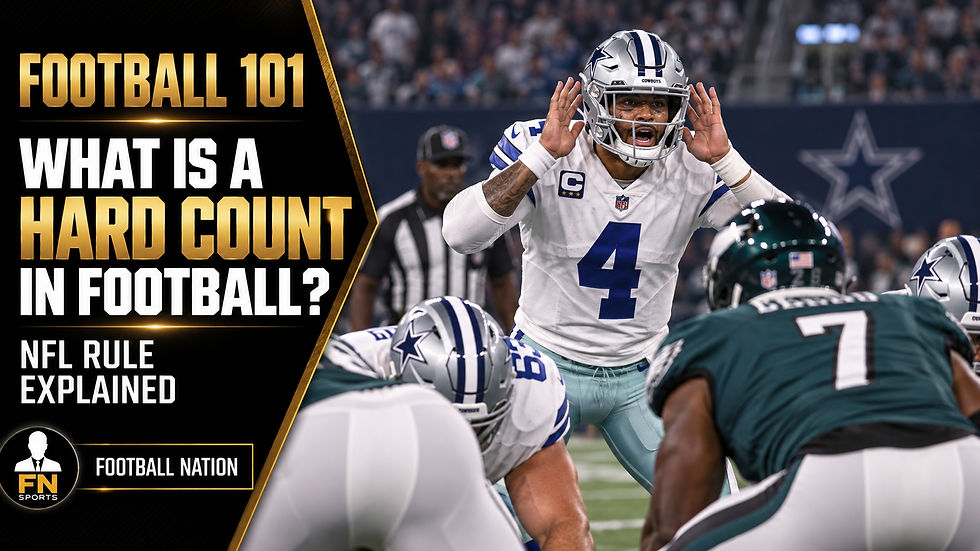
The offense’s hard count uses cadence to test defensive discipline. That does not grant a defender the same right to counterfeit the offense’s snapping signal. The two acts have different roles in starting the play.
Why the movement rule can produce a different announcement
Rule 4, Section 6, Article 5(d) addresses a defender stationary within one yard of the line who makes quick, abrupt actions outside normal defensive movement in an obvious attempt to cause a false start. Officials stop that action immediately, too, but the specified delay of game penalty is five yards.
The same provision includes an important exception. A defender walking or running toward the line to time the snap is not guilty of this delay foul simply because he stops abruptly when the snap does not happen. The fact that the offense notices a defender is not enough to make every defensive movement illegal.
Do not turn that distinction into an absolute formula that all sounds cost 15 and all movement costs five. The disconcerting provision itself covers acts as well as words. Listen to the rule officials are applying, and compare the actual sequence with its elements.
Possible issue | The question that separates it |
Disconcerting signals | Was a defensive act or statement designed to disrupt the offense at the snap? |
Defensive delay of game | Did a stationary defender near the line use the specific abrupt nonfootball movement described by Rule 4? |
False start | Did the offense simulate the start of the play under its own movement restriction? |
Normal defensive adjustment | Was the defense communicating or moving without satisfying a prohibited act’s test? |
Example one: a counterfeit snap signal
Picture third and 18 at the offense’s 30 yard line. The quarterback looks toward the sideline. A defender deliberately reproduces the offense’s snapping signal in an attempt to make the center release the ball. Assume an official identifies the act as disconcerting signals and stops play, with no other foul complicating enforcement.
The appropriate framework is the defensive unsportsmanlike conduct provision. With the 15 yard penalty accepted from that dead ball spot, the ball moves to the offense’s 45 and the offense receives an automatic first down. The fact that 18 yards had been needed does not leave it facing third and three.
The strongest alternative explanation would be that the sound was an ordinary defensive call rather than a counterfeit signal or other act designed to disrupt the snap. That requires evidence about the sound, its source and the sequence. A center’s reaction alone cannot tell a viewer everything an official heard.
Example two: abrupt movement, not a copied cadence
Now imagine the same third and 18, but no defender imitates a snap signal. A lineman stationary within one yard of the line makes an abrupt motion outside normal defensive movement, obviously trying to provoke an offensive false start. Assume officials classify this under the specific Rule 4 delay provision.
The ordinary accepted penalty is five yards. With no other factor changing the down, third and 18 becomes third and 13. Defensive delay of game does not carry the automatic first down attached to the disconcerting unsportsmanlike conduct foul.
Change the action again: the defender is approaching to time the snap, realizes it has not occurred and abruptly stops. That is the explicit movement exception, not the prohibited stationary act just described. The starting position and reason for the stop are decisive facts, not decorative details.
What the broadcast can and cannot prove
A false start concerns the offense’s prohibited movement. If an offensive lineman moves, rewind the sequence rather than immediately assigning blame. That movement may be the whole story, or an earlier defensive act may need examination.
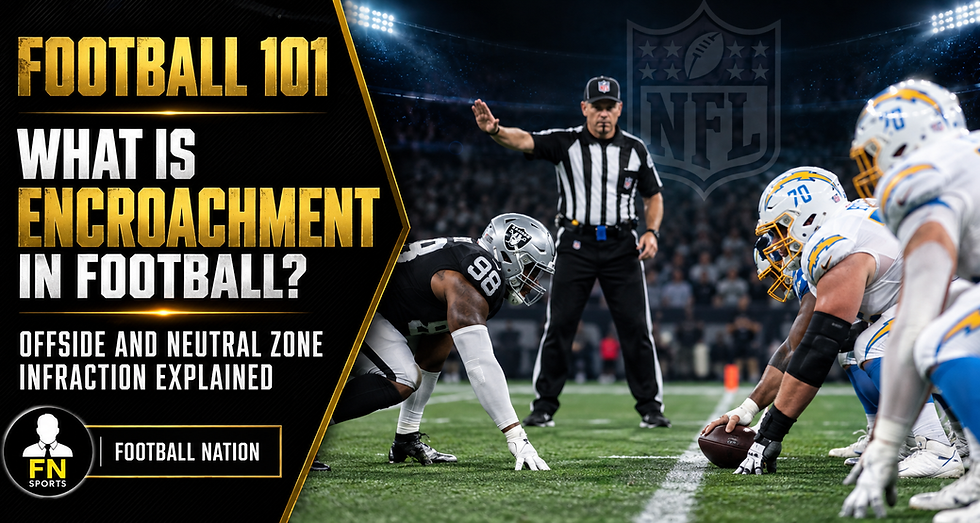
Likewise, offside and neutral zone fouls concern separate alignment, timing and contact tests. A defender does not have to cross the line to raise the disconcerting signals issue. A legal location is not permission to use a prohibited snapping signal.
FN’s viewing recommendation is to check both the wide shot and the available audio, then separate what is observable from what is inferred. A crowd microphone can leave the speaker unclear. A replay without sound cannot establish the words. Avoid claiming certainty from evidence that does not show the relevant act.
Frequently asked questions
Must the offense actually snap the ball? The rule requires an immediate whistle for the prohibited act. It does not make a completed snap a condition of the foul.
Can defenders talk before the snap? The cited provision is not a blanket ban on defensive communication. It targets acts or words designed to disconcert the offense at the snap. Classify the specific action rather than treating all noise as the same thing.
Is this always five yards? No. Disconcerting acts or words under Rule 12 carry 15 yards and a defensive automatic first down. The separate defensive delay provision discussed here carries five.
Football Nation’s takeaway
The crucial distinction is not whether somebody flinched. It is what caused the disruption and which rule applies. On the next disputed snap, identify the speaker or movement, the defender’s position, the timing and the referee’s announcement. That gives you a defensible explanation instead of a penalty guessed from the offense’s reaction.
Use the penalty enforcement guide to separate yardage from the next down. This guide covers NFL rules; another competition may use different language or penalties.
Official 2026 NFL Rulebook: Rule 12 Section 3 Article 1(i) and its penalty; Rule 4 Section 6 Article 5(d); Rule 7 Section 4 Article 2; Rule 14 Section 1 Article 2 Item 5. Checked October 17, 2026 at 5:07 PM Central. Read the official rulebook

Comments