


NFL 3-Strike Safety Rule: Five Fouls That Trigger Suspension
Updated: Sep 22
The NFL and NFL Players Association have approved a new 2026 on-field accountability system: a player who commits three violations across five emphasized safety categories in one season will receive an automatic one-game suspension. The five categories are hip-drop tackles, horse-collar tackles, launching, hits on defenseless players and blindside blocks.
The league and union announced the change on Wednesday, August 26, after clubs were briefed at a league meeting in Atlanta and player representatives voted on it Tuesday. The joint NFL statement and the NFLPA announcement say every player starts 2026 with a clean slate, even though violations can carry into later seasons.

What the NFL's three-strike safety rule does
This is a repeat-offender system, not an automatic suspension for one disputed hit. The triggering categories are techniques the league and union believe pose the greatest injury risk:
Hip-drop tackle
Horse-collar tackle
Launching
Hit on a defenseless player
Blindside block
A third offense in any combination of those categories during the same season produces the one-game suspension. That means the strikes are shared across the five buckets; a player does not need three violations of the identical rule. The league's existing disciplinary and appeal processes still matter because the classification of each play will determine whether it counts toward the threshold.
Football Nation has already seen how one absence can stress a secondary in the Cam Taylor-Britt suspension case. This system makes the risk more predictable: teams will know when a defender is approaching a mandatory missed game.

How fines, resets and team accountability change
The agreement also creates a financial distinction between an isolated mistake and repeated conduct. A player with only one violation in one of the five emphasized categories will get 50 percent of that fine back after the season. For a single offense in other eligible safety categories, the entire fine will be returned. The announcement does not erase the violation itself; it changes the financial consequence when the conduct is not repeated.
All players begin 2026 at zero, but offenses can carry forward to future seasons. The NFL and NFLPA also promised a clearer and faster path for reducing the impact of prior offenses. Coaches must participate in league meetings when a player nears the suspension threshold, and clubs with excessive safety violations can face larger financial penalties.
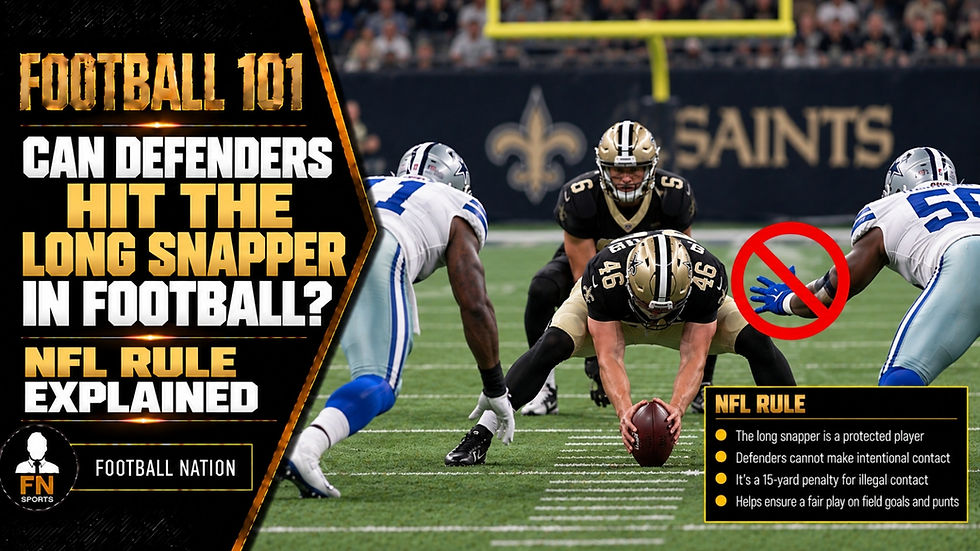
That shared-accountability element is significant. Teaching details already define niche rules such as protections for long snappers and the boundary between a legal block and an illegal crackback block. Now the league is explicitly tying coaching intervention and club-level money to repeated unsafe techniques.
Video: what a swivel hip-drop tackle looks like
Tom Pelissero’s NFL press-conference video demonstrates the banned swivel hip-drop technique, one of the five safety categories now included in the 2026 three-strike system.
Why it matters for games and fantasy football
For defensive coordinators, the new rule creates a weekly availability variable. A starting safety, linebacker or cornerback with two qualifying offenses may face a difficult balance: continue playing aggressively while correcting the technique that could remove him from the next game. Clubs must prepare the backup plan before the third strike arrives, much as they plan around injury evaluations in the blue medical tent.
For fantasy managers, the direct effect is strongest in IDP leagues, but it can spill into offense. A suspended run defender can improve an opponent's rushing matchup; a missing safety or corner can alter target expectations. The correct response is not to downgrade players now. Track official discipline, then adjust only when a defender reaches the threshold or a suspension is confirmed.
Enforcement will also put more attention on officiating signals and postgame review. Fans who want the mechanics behind those moments can revisit why officials use a blue bean bag. The on-field flag and the later accountability decision are related, but they are not always the same event.

The uncertainty and next checkpoint
The agreement establishes the threshold, but early cases will show how consistently plays are categorized, how appeals affect strike totals and how quickly players can reduce carryover consequences. Ron Rivera, a former NFL player and head coach, is joining the pool that hears on-field discipline appeals, adding a coaching perspective to a process previously overseen by former players.
Reuters reported the agreement as a tightening of discipline for repeat safety violations. The next factual checkpoint is Week 1 enforcement: the first qualifying decisions, the first players placed on a two-strike watch and the first required coach-player meeting with the league. Roster planning will be especially compressed because the 2026 cutdown calendar is already unusual.
Football Nation's verdict
The policy is a meaningful improvement because it gives players a clean 2026 start, refunds part or all of isolated fines, and saves the automatic suspension for repeated conduct. The strength of the system will depend on consistent review and transparent notice. If the league applies the five categories evenly, teams can coach to a clear standard and fans can understand why a third strike changes a lineup.
It also arrives during a broader reshaping of league traditions, including the decision to end the Pro Bowl game. Unlike that format change, this rule will touch competitive availability every week. That makes the first two-strike cases—not the first headline fine—the moment to watch.


Comments