


What Is an Audible in Football? How Quarterbacks Change the Play
Updated: Sep 13
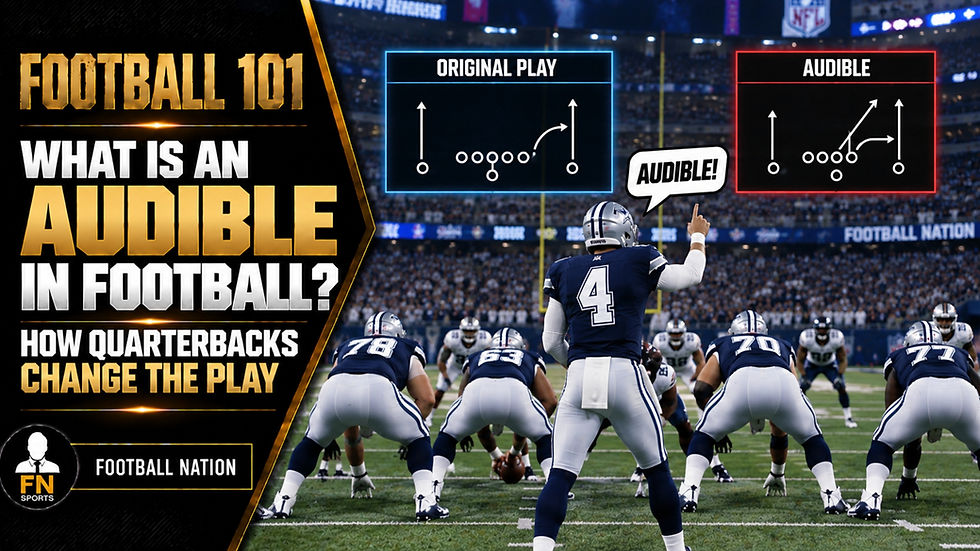
An audible is a pre-snap change to the offense’s original call. After seeing the defensive alignment, the quarterback—or occasionally the sideline—uses a word, signal or gesture to replace the play, redirect it, alter a route or change the protection. The goal is simple: avoid running the wrong answer into the look the defense has presented.
The direct answer is also the most important limitation: an audible is not improvisation after the ball is snapped. It is a coordinated change before the snap, and all 11 offensive players must receive the same final instruction. A brilliant matchup check becomes a busted play if the center changes the blocking while one receiver still runs the original route.
What can an audible change?
An offense can change the entire play, such as checking from a run into a pass when defenders crowd the box. It can switch from one run to another, flip the strength of the play, redirect the primary read or replace only one receiver’s route. It can also change the pass protection so the offensive line and running back account for a pressure threat.
Not every quarterback has unlimited freedom. Many calls contain a paired answer—a run and a pass, two runs, or a primary play with a built-in “kill” call. The quarterback chooses from that approved menu rather than inventing something. Other systems use a “check-with-me” structure in which the offense reaches the line with alternatives and waits for the final call after the defense aligns. NFL.com’s explanation of the no-huddle and check-with-me approach describes the same advantage: the decision is made with more information about the defensive picture.
The four-step audible process
First, the quarterback identifies the look. That includes the defensive front, the number of defenders near the box, cornerback leverage, the safety shell and possible pressure indicators. Motion can reveal whether a defender travels with a receiver, but the offense must avoid turning its adjustment into an illegal motion or an illegal shift before the snap.
Second, the quarterback selects the answer built into the game plan. A heavy box may invite a pass outside. A light box may invite the run. An uncovered slot receiver can create an immediate throw. A potential extra rusher may require the offense to change protection or activate a hot route. The best check depends on down, distance, field position and the offense’s personnel—not merely on finding any one-on-one matchup.
Third, the quarterback communicates the change. Teams use code words, repeated calls, hand signals and visual cues. The center often relays protection information, while receivers confirm route adjustments across the formation. NFL.com has highlighted how the quarterback-center relationship matters when a play changes because the center must help redirect blocking assignments against a moving front.
Fourth, the offense confirms the formation is legal and snaps the ball before the play clock expires. The 2026 NFL rulebook still governs everything around the adjustment: legal formation, shifts, motion and delay of game. Calling an audible does not pause the clock or excuse a player who fails to reset when the rules require it.

Audible vs. cadence, hard count and no-huddle
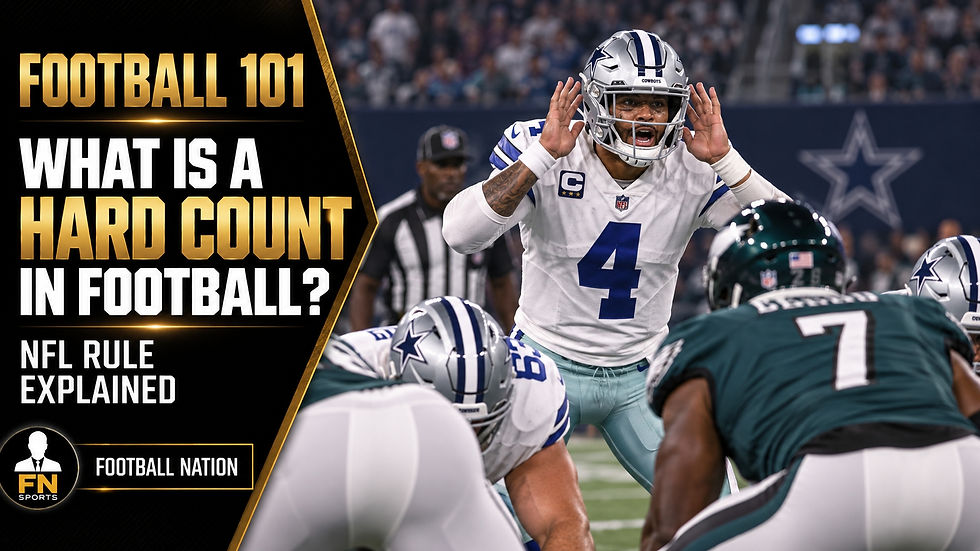
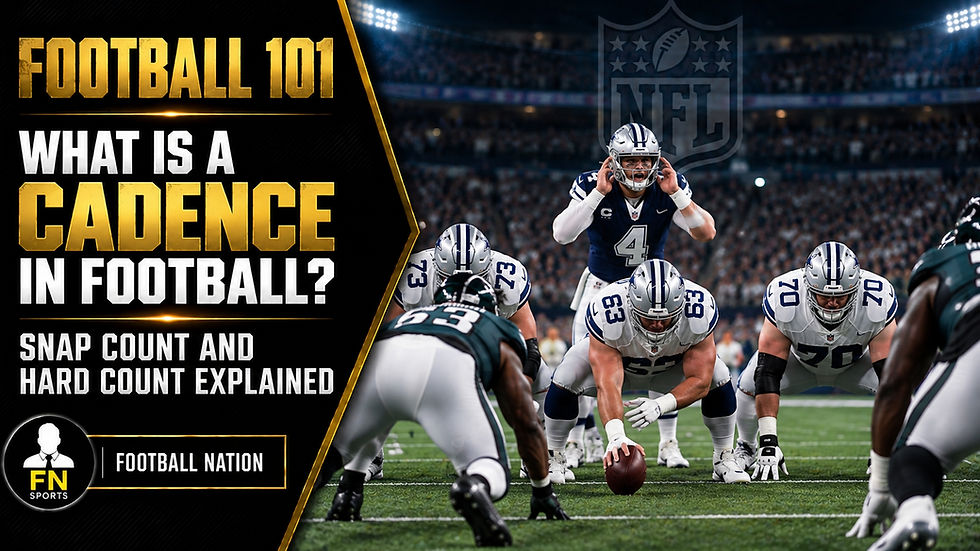
These terms overlap, but they are not interchangeable. The cadence is the quarterback’s verbal and rhythmic system for organizing the snap. A hard count is an attempt to draw the defense into revealing or committing movement. An audible changes an assignment or play. The quarterback can use the same cadence after making an audible, and a hard count can provide information that triggers the change.
No-huddle describes tempo and organization, not a specific play change. An offense can huddle, break the huddle and audible after seeing the defense. It can also operate no-huddle and run the original call without changing anything. The concepts often appear together because getting to the line early gives the quarterback more time to diagnose and communicate.
A real NFL example
A useful example is Peyton Manning’s breakdown of C.J. Stroud’s line-of-scrimmage audibles. The teaching point is not a magic word that every team shares; playbook language is private and changes by system. The value is the sequence: recognize the picture, communicate the adjustment and get the offense into a call designed for that picture.
Veteran quarterbacks are often associated with dramatic pre-snap communication, but volume is not the same as control. Some calls are dummy words meant to disguise the real instruction. Some merely reset the protection. Others alert one receiver without replacing the play. Viewers should judge the result by whether the offense shares the same answer at the snap, not by how much the quarterback gestures.
Why audibles fail
The first failure is miscommunication. Crowd noise can prevent an outside receiver from hearing the call, which is why teams pair words with visual signals. The second is disguise. A defense can show pressure, force the quarterback into the expected check and rotate out of that look at the snap. The offense has improved one matchup only if the defense stays in the picture it presented.
The third failure is overcorrection. A favorable box count does not guarantee the run will work, and a one-on-one receiver is not automatically open. Personnel, leverage and blocking matchups still matter. The fourth is time: too many checks can leave the offense rushing the snap, inviting a false start, a protection mistake or delay of game.
The biggest misconception
The biggest misconception is that every audible replaces the whole play. Many modern adjustments are narrower. A quarterback may change the direction of a run, identify the middle linebacker for protection, alert a quick throw or tell one receiver to convert a route against pressure. The original concept remains intact while one part changes to solve the defense’s immediate threat.
It is also wrong to assume the quarterback always acts alone. Coaches design the menu during the week, the center handles major protection communication, receivers echo signals and the sideline may supply the check. Quarterback freedom varies by experience, system and game plan. An audible is team execution led by the player with the clearest pre-snap view.
How to spot an audible while watching
Watch for a quarterback to step away from the cadence, point toward a defender, use a repeated code word or signal to both sides of the formation. Then watch the center and receivers. A center turning to communicate with a guard, a receiver tapping a helmet or a running back moving to the opposite side can indicate that protection or routes changed.
Next, compare the defensive picture with the result. Did the offense throw quickly where a blitzer vacated? Did it run away from an overloaded front? Did a receiver convert to a fast answer? You will not know the private language, but the relationship between the defense’s alignment and the offense’s response reveals the purpose.
Football Nation takeaway
An audible is football’s pre-snap correction system. The quarterback gathers information, chooses an approved answer, communicates it and gets all 11 players into the same play before the clock expires. The smartest audible is not the loudest or most complicated one. It is the change everyone understands—and the one that turns the defense’s alignment into an advantage the offense can actually execute.

Comments