


What Is Banjo Coverage? How Defenders Switch Assignments Against Picks
Information cutoff: October 22, 2026 at 11:57 a.m. Central. Scheme descriptions are based on NFL analysis and USA Football coaching material. Rule references come from the official 2026 NFL Rulebook checked at that time.
Banjo coverage is a defensive switch call used when two receivers are close enough to create traffic for two man coverage defenders. Instead of chasing one assigned receiver through every route, the defenders treat the two receivers as a pair. Each defender takes the receiver who releases into his agreed area. If the routes cross, the defenders can exchange assignments. The goal is to avoid the natural pick or rub that can spring a receiver free.
Banjo is not a universal coverage with one diagram and one set of rules. It is a communication tool inside a defensive call. Teams can use different words, different leverage rules, and different answers against a stack, a bunch, motion, or a tight end and running back combination. The constant idea is that two defenders coordinate before the snap so the offense cannot make them collide.
Why defenses need a switch call
Straight man coverage tells each defender to follow one eligible receiver. That sounds simple until two receivers align close together and cross immediately. One receiver can run directly through the path of the defender covering the other receiver. Even when the offense avoids an illegal block, the route spacing can create legal traffic. The trailing defender has to run around bodies while the receiver accelerates into open space.
A banjo call changes the problem. The defenders no longer ask only, Which receiver is mine? They ask, Which release enters my leverage? That lets them stay on separate levels and reduces the chance that both chase the same route or run into each other.
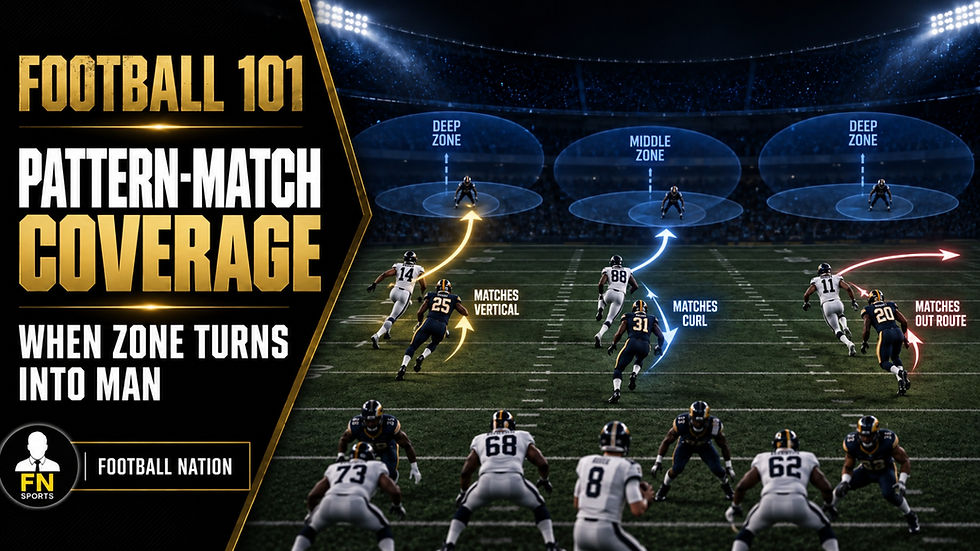
The technique is related to pattern match coverage, because route releases help determine the final assignment. The difference is scale. Pattern matching can organize an entire zone structure. A banjo call usually solves a local two receiver problem inside the larger defense.
Teaching diagram: the switch in five steps
TWO RECEIVERS ALIGN CLOSE → TWO DEFENDERS CONFIRM THE CALL → EACH DEFENDER PROTECTS HIS LEVERAGE → THE ROUTES CROSS → THE DEFENDERS TAKE THE RECEIVER ENTERING THEIR AREA
The arrows are a teaching sequence, not a universal playbook. One defense may assign the outside defender to the first route outside and the inside defender to the first route inside. Another may use vertical and under rules. The call only works when both defenders use the same language.
What the defenders communicate
The first job is recognition. Defenders identify a stack, bunch, reduced split, or motion that puts receivers close together. The second job is confirmation. One defender makes the call and the other acknowledges it. A one sided call is dangerous because one player may switch while the other continues in straight man coverage.
The third job is leverage. The inside defender cannot drift so wide that an inside release wins immediately. The outside defender cannot squeeze so hard that a vertical release has free access. The fourth job is depth. If both defenders stand on the same level, a single route can screen both. Coaches often stagger them so one can press or disrupt while the other sees the release.
That spacing connects to receiver cushion. Cushion is not surrendering easy yards by definition. It can be the space a defender needs to see two releases and drive on the correct route.
Example one: slot receiver and outside receiver cross
The offense aligns one receiver outside and one receiver in the slot. The outside receiver breaks inside while the slot receiver releases to the flat. In straight man coverage, both defenders may have to cross paths. With a banjo call, the outside defender can take the route expanding toward the sideline while the inside defender takes the route entering the middle.
The football consequence is cleaner leverage and less traffic. The risk is a communication bust. If both defenders take the flat route, the inside breaker is uncovered. If both take the inside route, the quarterback gets an easy throw outside. The technique trades a physical chase problem for a mental assignment problem.
Example two: stack release with a vertical route
Two receivers align in a stack, one directly behind the other. At the snap the front receiver releases inside and the back receiver pushes vertically. The defenders have to sort the releases without losing the vertical route. A common answer puts one defender in position to handle the quick inside threat while the deeper defender stays over the top of the vertical release.
The offense can attack that rule with a wheel route, a delayed release, or a switch release that initially looks like a crossing concept. The quarterback wants the defenders to hesitate. The defense wants the call to create fast decisions without giving up the deep ball.
This is why the technique often appears against condensed formations. Tight splits create room outside, change run support angles, and make route traffic easier for the offense to manufacture.
The exact NFL rules that shape banjo coverage
Banjo coverage is not named in the official 2026 NFL Rulebook. The technique is governed by the normal contact and pass interference rules.
Rule 8, Section 4 covers legal and illegal contact with eligible receivers. Article 3 is the illegal contact provision. A defender cannot use the switch call as permission to redirect an eligible receiver illegally after the protected contact area. The penalty table lists illegal contact as five yards.
Rule 12, Section 1, Article 6 covers defensive holding. Grabbing or restricting a receiver can be holding even before the pass is thrown. The penalty table lists defensive holding as five yards. This matters when a defender recognizes the switch late and reaches for the route he is about to lose.
Rule 8, Section 5 covers pass interference. The section applies when an act more than one yard beyond the line of scrimmage significantly hinders an eligible player's opportunity to catch a forward pass. Defensive pass interference restrictions operate after the pass is thrown until the ball is touched. Offensive pass interference restrictions operate from the snap until the ball is touched.
That timing explains the legal boundary around rub concepts. Receivers may cross and create incidental traffic, but an offensive player cannot deliberately block a defender downfield to free a teammate during a pass play. Offensive pass interference is a ten yard penalty under the 2026 penalty table. A defender who is switched onto a new receiver still cannot grab, restrict, or play through that receiver illegally.
Application, enforcement, and exceptions
Officials do not flag a route simply because it makes defenders navigate traffic. They judge whether a player committed a prohibited act. Incidental contact can occur when routes and defenders converge. Both eligible players have a right to the path of the ball, and contact that does not significantly hinder an opportunity is not automatically interference.
The point at which contact happens matters. Before the throw, illegal contact or defensive holding may apply. After the throw, pass interference may apply if the other requirements are met. A banjo call does not change those categories. It only changes which defender is responsible for the receiver at that moment.
The strongest exception is tactical rather than legal. A defense does not have to switch. It can stay in straight man coverage and make each defender fight through the traffic. NFL analysis has highlighted that choice with New England, which at times preferred straight man rather than banjo calls to reduce communication errors. That is the strongest counterargument to switching: a missed physical trail can be less damaging than two defenders misunderstanding one word.
Banjo coverage versus nearby concepts
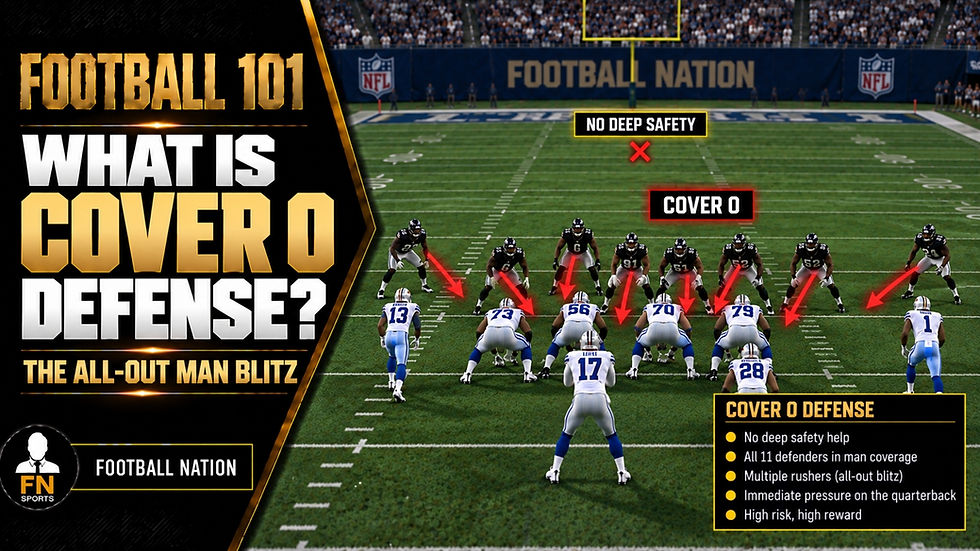
In Cover 0, defenders have no deep safety help, so one failed switch can become a touchdown. In Cover 5, two deep safeties can protect the top while underneath defenders play tight man technique. Banjo can be installed within different man structures, but the help changes how aggressively the defenders can exchange routes.
Offenses also use route stems to disguise the final break. A patient stem can delay the information the defenders need for their switch, which is why eyes and leverage are as important as the call itself.
Fantasy football consequence
Banjo coverage should not become a stand alone start or sit rule. It matters when a receiver earns much of his production from stacks, bunches, quick crossers, or designed rub concepts. A defense that sorts those releases cleanly can remove easy catches and force the quarterback to hold the ball or move to a later read.
For wide receivers, watch alignment and route type, not just the listed cornerback matchup. A slot receiver may start across from one defender but finish the play covered by another. For tight ends and running backs, banjo can appear when they align close together or release from a condensed formation. For quarterbacks, a defense that switches well can reduce quick answers against pressure.
The fantasy counterargument is important. Switching can also create favorable matchups. A receiver may use motion or a wheel route to force a slower defender onto him. One communication error can produce a larger gain than straight man would allow. Treat banjo as a clue about how the defense will handle route traffic, not as proof that one player will be erased.
Common misconceptions
Misconception: banjo is zone coverage. Reality: defenders can use a banjo call while playing man coverage. The call changes how they distribute two routes.
Misconception: defenders switch every crossing route. Reality: the call is installed for specific alignments and route releases. Chasing may remain the rule in other situations.
Misconception: a rub route is automatically offensive pass interference. Reality: legal routes can create incidental traffic. Officials judge whether a prohibited act significantly hindered the defender.
Misconception: switching is always safer. Reality: it reduces collision risk but adds a communication requirement. One missed confirmation can uncover a receiver.
Frequently asked questions
Why is it called banjo coverage?
The term is football language for a switch or exchange call. The name itself does not define the exact leverage rules, which remain specific to the defense.
Is banjo the same as bracket coverage?
Not always. Bracket often means two defenders combine to contain one receiver. Banjo usually means two defenders sort two receivers and may exchange assignments.
Can three defenders use a similar call against a bunch?
Yes. Defenses can build three player distribution checks against bunch formations. The communication becomes more complex because vertical, inside, and outside releases all need an answer.
What is the biggest danger?
The biggest danger is a split decision. If one defender switches and the other chases, both can cover the same route.
What is the next checkpoint?
The rule sections and teaching sources were checked on October 22, 2026. The next checkpoint is any NFL rulebook or officiating clarification affecting illegal contact, defensive holding, or pass interference, plus new public coaching material that explains how a current defense handles stacks and bunches.
Sources
Official 2026 NFL Rulebook, checked October 22, 2026 at 11:57 a.m. Central: https://operations.nfl.com/rules-officiating/2026-nfl-rulebook/
NFL analysis describing banjo as a switch call and explaining the straight man counterargument, checked October 22, 2026 at 11:57 a.m. Central: https://www.nfl.com/news/lessons-from-josh-allen-lamar-jackson-mahomes-vs-patriots-0ap3000001084590
USA Football coaching explanation of banjo technique against rub concepts, checked October 22, 2026 at 11:57 a.m. Central: https://blogs.usafootball.com/blog/4177/rub-concepts-how-to-defend-them-and-how-offenses-can-counteract-it

Comments