top of page

What Is a Quarterback Sneak in Football? How the Short-Yardage Play Works

A quarterback sneak is a short-yardage running play in which the quarterback takes the snap—usually from directly under center—and immediately drives behind the offensive line. There is no handoff and almost no delay. The offense is trying to gain a few feet before the defense can create penetration.


Teams most often call it on third-and-1, fourth-and-1 or near the goal line. The play looks simple because it is compact, but the result depends on the snap, pad level, leverage, gap choice and ball security happening almost simultaneously.

How a quarterback sneak works


First, the quarterback aligns under center so he can receive the snap and attack immediately. The center and guards fire forward with low pads, trying to move or divide the interior defenders. The quarterback follows the center's movement, often choosing one hip rather than running blindly into the middle.


The quarterback then lowers his shoulders, protects the ball with both hands through contact and drives until officials stop the play. The gain is measured by forward progress, so the ball is spotted where the runner's advance ends—not where he is pushed backward after the whistle.

Football Nation three-step diagram showing the snap, blocking wedge and finish of a quarterback sneak.
The quarterback sneak compresses the snap, blocking wedge and finish into one immediate sequence. Original Football Nation teaching diagram.

Why the play works in short yardage


The quarterback is already touching the ball and standing directly behind the line. A normal run asks the quarterback to receive the snap, turn and transfer the ball to a back several yards deep. A sneak removes that time and distance. The runner can reach the line before defensive linemen fully separate from their blocks.


The offense also controls the snap count. Linemen know exactly when to move, while defenders must react without jumping early. When only one yard is needed, a clean initial surge can be enough even if the defense wins the rest of the play.


Heavy personnel can strengthen the picture. A jumbo package may add a sixth lineman or extra tight end, but size alone does not guarantee success. The offense still needs a clean exchange and coordinated leverage.

Standard sneak vs. the Tush Push


A standard quarterback sneak relies primarily on the quarterback and the offensive line. The Philadelphia-style push sneak adds teammates behind the quarterback who drive the runner forward after the snap. Football Nation's current guide to the Tush Push in 2026 explains the league debate and the variations that have spread to other teams.


The distinction matters because not every quarterback sneak is a Tush Push. A team can run the traditional version with no organized pushers. It can also fake the interior surge and pitch or hand the ball outside when the defense sells out between the tackles.


The push version remains legal for the 2026 season. NFL.com reported in February that competition committee co-chairman Rich McKay did not expect a new ban proposal, and the league's March list of team proposals contained no Tush Push ban. The governing details remain in the 2026 NFL Rulebook.

What elite execution looks like


Philadelphia's results show why execution—not merely formation—matters. NFL.com reported that the Eagles converted 90% of their quarterback sneaks during the 2022 season. The same report credited Jalen Hurts with six first downs on sneaks in Super Bowl LVII. In October 2023, Philadelphia went four-for-four on the play against Miami.


Verified Eagles sneak benchmark

Result

Source/period

QB-sneak conversion rate

90%

2022 season — NFL.com

Sneaks vs. Miami

4 for 4

Oct. 22, 2023 — NFL.com

Sneak first downs in Super Bowl LVII

6

Feb. 12, 2023 — NFL.com


Those numbers describe one exceptional operation, not an automatic league-wide rate. Jason Kelce emphasized that the snap and movement require repetition because the quarterback begins driving forward as the ball is moving. The NFL's explanation of Philadelphia's practice advantage makes the strongest counterpoint to the idea that any team can copy the play simply by adding pushers.

How defenses try to stop it


Defenses crowd the interior gaps, lower their pad level and try to knock the center backward before the quarterback can choose a crease. Linebackers stack directly behind the defensive line to add force. The goal is not a clean open-field tackle; it is to build a wall before the ball reaches the line to gain.


Penetration is especially valuable. If a defender disrupts the exchange point, the quarterback may have nowhere to step and the pile can form in the backfield. Defenses also watch the eligible players outside, because an offense can use the same condensed alignment to fake the sneak.

When a quarterback sneak can fail


The most dangerous failure is a mishandled snap. The quarterback is moving forward while receiving the ball, so a poor exchange can become a fumble in traffic. The play can also fail when the offense stands too tall, the center loses immediately or the quarterback chooses a closed gap.


Predictability is another cost. A packed formation tells the defense where the action is likely to start. The offense sacrifices the spacing of a formation such as 11 personnel and invites nearly every defender toward the ball. If the required distance is closer to two yards than one, the risk rises quickly.

Why the sneak matters for fantasy football


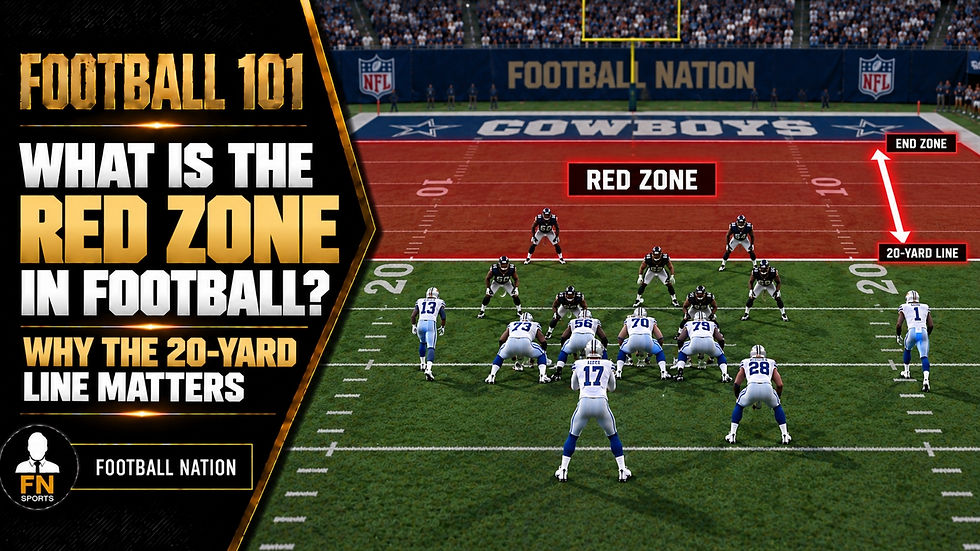
Sneaks affect touchdown equity. A quarterback who regularly keeps the ball at the 1-yard line can take scoring chances away from running backs. That does not make every mobile quarterback a goal-line specialist, but fantasy managers should notice which teams trust the quarterback in the red zone and which prefer a handoff.


Formation is a useful clue. An under-center look with tightly packed backs suggests a sneak or push sneak, while the pistol formation keeps the running back deeper and preserves more handoff options.

Quarterback sneak FAQ


Is a quarterback sneak a pass or a run?


It is a rushing play. The quarterback becomes the ball carrier immediately after the snap.


How many yards is a quarterback sneak designed to gain?


Usually one yard or less, though a clean crease can produce a longer gain.


Does the quarterback have to be under center?


The traditional sneak is run under center because that creates the shortest path to the line. Variations can use another player or alignment.


Is every quarterback sneak a Tush Push?


No. The Tush Push is a modified sneak with organized help from teammates behind the runner.


Can the quarterback extend the ball over the line?


Yes, but extending exposes the ball. The quarterback must balance reaching the line with protecting possession in a crowded pile.

Football Nation takeaway


A quarterback sneak is football's shortest path from snap to line to gain. The offense wins by securing the exchange, creating immediate interior movement and letting the quarterback follow leverage. The Tush Push adds force from behind, but it does not replace the timing and technique that make the basic sneak work.

Comments


bottom of page