


What Is the Red Zone in Football? Why the 20-Yard Line Matters
Updated: Sep 22
The red zone in football is the area from the opponent’s 20-yard line to the goal line. An offense enters the red zone when it advances the ball to the 20 or closer. The name is strategic shorthand, not a place where the scoring rules change: a touchdown is still worth six points, a field goal is still worth three and merely crossing the 20 produces no score.
What changes is the geometry. The offense is close enough to threaten the end zone on every snap, but it also loses the deep grass that normally stretches a defense. Routes compress, safeties can play more aggressively and one mistake can turn a likely scoring drive into a field-goal attempt or a turnover.
Where does the red zone begin?
The conventional boundary is the defense’s 20-yard line. The NFL’s official NFL RedZone explanation uses that same landmark: when a team reaches the 20, it has reached the red zone. The area runs from that line to the goal line, so it covers the final 20 yards of the field of play.
The 2026 NFL Rulebook defines the field, end zone and scoring rules, but it does not create a separate red-zone scoring system. That distinction matters. Broadcasters and coaches track red-zone trips because they reveal how efficiently a team finishes drives, not because the 20-yard line triggers a special rule.
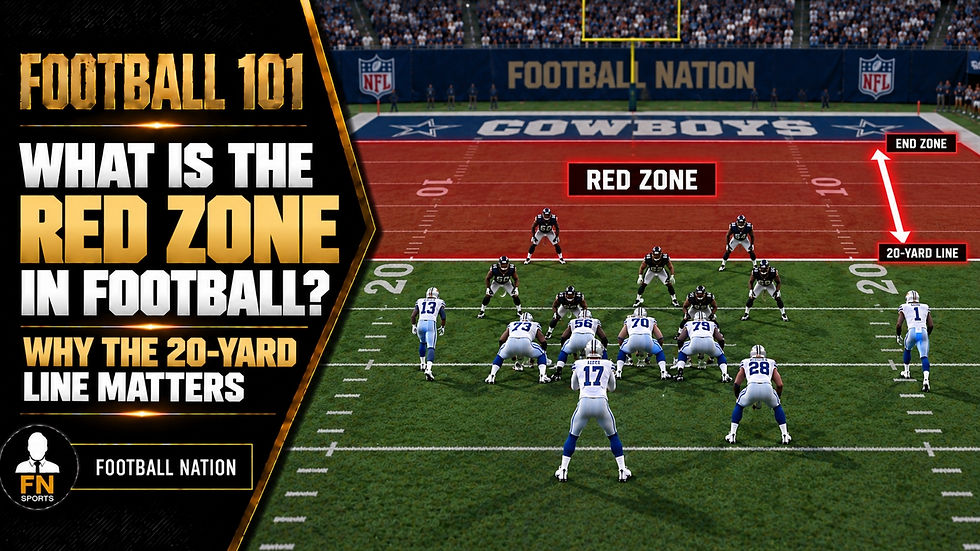
Why offense becomes harder inside the 20
Between the 20s, a receiver can threaten a defender vertically for 30, 40 or more yards. Near the goal line, the end line becomes an extra defender. A safety does not have to protect unlimited space behind him, and underneath defenders can squeeze throwing lanes without fearing the same depth.
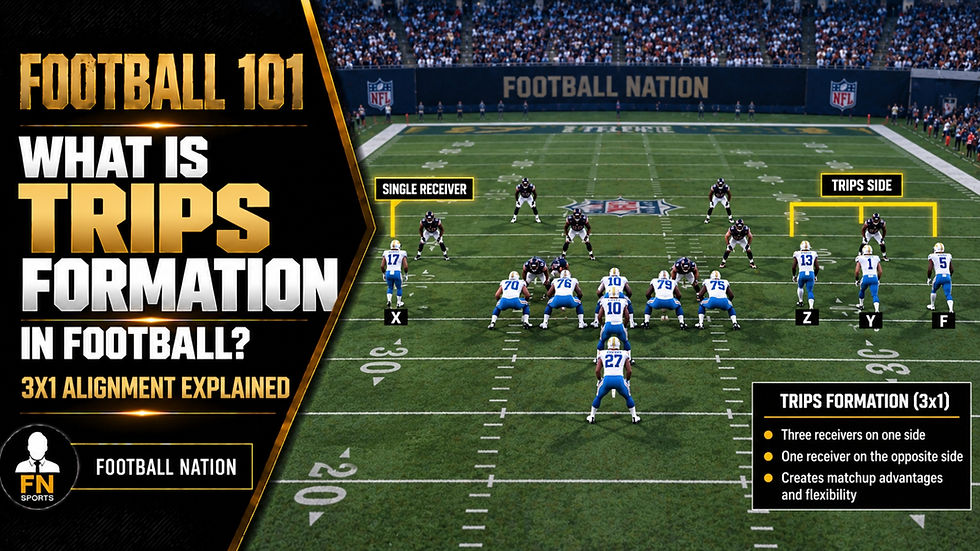
That is why spacing becomes more valuable than simply adding routes. A Trips formation can force the defense to declare how it will handle three eligible receivers on one side, but those receivers still need releases and landmarks that do not crowd one another. Motion, stacks and bunches are useful because they create leverage before the available grass disappears.
Which passing concepts work in the red zone?
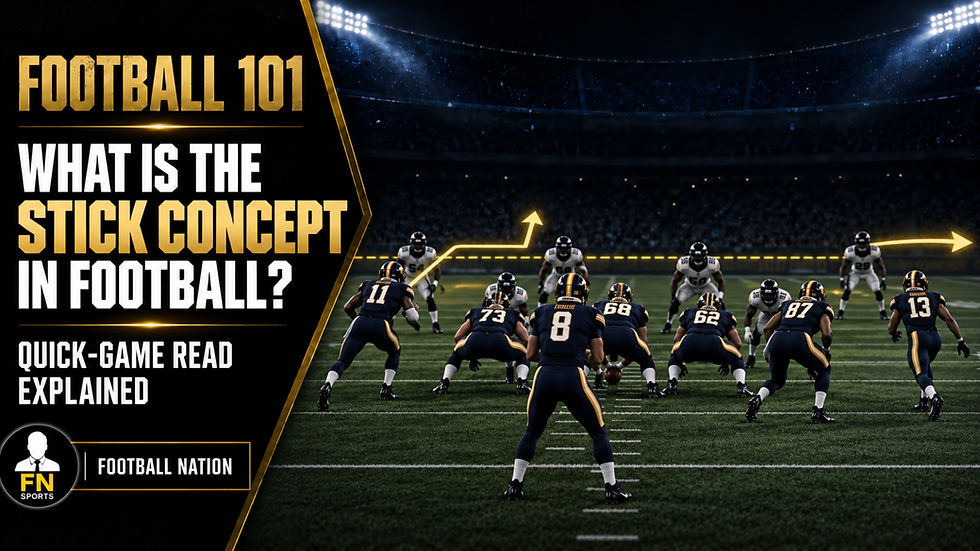
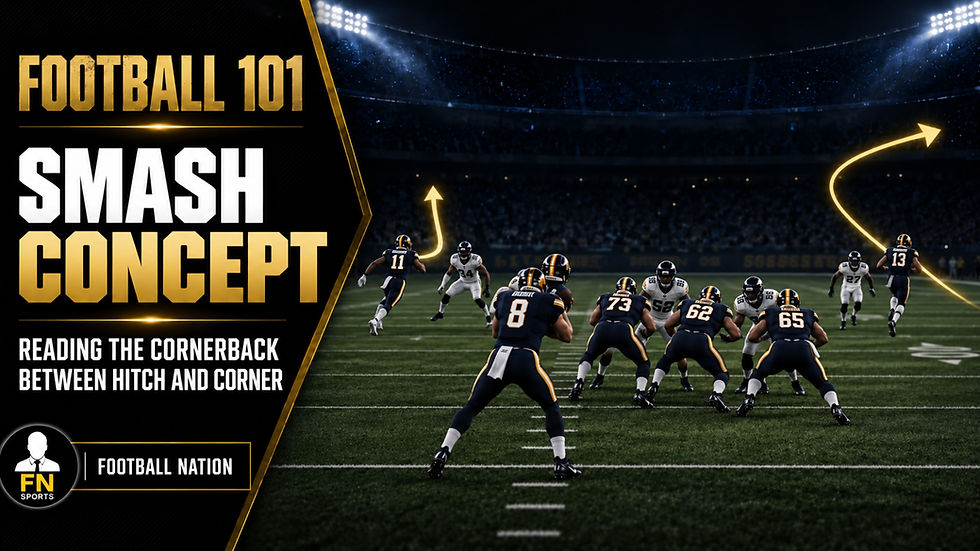
Quick-game concepts help the quarterback throw before coverage can compress. The Stick concept can stress a flat defender with an inside-out read, while the Smash concept can create a high-low decision near the boundary. Neither concept is automatically a touchdown call. Its value depends on the defense’s leverage, the route spacing and the quarterback’s timing.
Backs also become matchup pieces. A Texas route can sell an outside release before breaking inside against a linebacker. Tight ends can work seams, pivots and crossers. The NFL’s video of Mark Andrews finding space for an 11-yard red-zone touchdown is a useful example of how one coverage error becomes more costly when the target is already close to the goal line.
The run game and pass protection still matter
Red-zone offense is not a collection of trick plays. A credible downhill run forces linebackers to step toward the line and can create throwing space behind them. Quarterback movement can change the launch point, and play-action can punish defenders who attack the run too quickly.
Protection decisions become more visible because the ball often must come out on schedule. A missed blitz pickup can erase a scoring chance before the route combination develops. The quarterback may also use an audible when the defense presents an unfavorable box count or reveals pressure. The goal is not to change every play. It is to avoid running a call directly into the defense’s best answer.
How defenses change near the goal line
Defenses can play tighter because there is less field behind them. Corners may challenge releases, safeties can drive downhill sooner and linebackers can wall off crossing routes. The tradeoff is that one lost leverage battle can become six points. A defender who looks into the backfield too long may lose a tight end; a corner who overplays an outside fade can give away an inside route.
The offense therefore wants to create a two-way problem. If the same alignment can produce a run, quick throw, fade or quarterback keeper, the defense cannot sell out against one answer. If the formation tells the defense exactly what is coming, the short field makes the call easier to defend.
Red zone is not the same as goal-to-go
A team can be in the red zone without being in a goal-to-go situation. Red zone describes field position. Goal-to-go describes down and distance when the offense cannot earn another first down before reaching the goal line. First-and-10 at the 18 is a red-zone snap but not necessarily goal-to-go. First-and-goal at the 8 is both.
This is a common broadcast misconception. The two labels overlap often, but they answer different questions: where is the ball, and can the offense gain another first down before scoring?
How to judge red-zone performance
The most common measure is touchdown rate: red-zone possessions that end in touchdowns divided by total red-zone possessions. But one number does not explain the process. Down, distance, turnovers, penalties and game situation matter. A team that reaches the 19 on third down has a different opportunity from one that begins first-and-goal at the 2.
Watch whether the offense creates clean first reads, preserves route spacing and keeps a real run threat. On defense, watch leverage and communication rather than assuming every short completion is a failure. The closer the ball gets to the goal line, the more valuable it becomes to force the offense to use another snap.
Red zone FAQ
Is the 20-yard line officially called the red zone?
The 20-yard line is the accepted NFL coaching and broadcast landmark, but “red zone” is strategic terminology. Crossing it does not award points or change the value of a score.
Does the red zone include the end zone?
The red zone normally means the field of play from the 20 to the goal line. The end zone begins beyond the goal line and is the scoring target.
Why is it called the red zone?
The term signals a high-alert scoring area: the offense is close to points and the defense has little room left to protect. It does not refer to the painted color of the turf.
What is a good red-zone play?
There is no universal best call. A useful design creates leverage, keeps routes separated, protects the quarterback and offers an answer if the defense takes away the first option.
Football Nation takeaway
The red zone is the final 20 yards before the goal line. It matters because the offense is close to scoring while the defense has less space to cover. Successful teams do not merely call their favorite plays near the goal line; they adapt their spacing, tempo, protection and reads to a field that has suddenly become much smaller.
Comments