


What Is Trips Formation in Football? 3x1 Alignment Explained
Updated: Sep 13
Trips formation is an offensive alignment with three eligible receivers on one side and one primary eligible receiver on the other. Coaches also call it a 3x1 set. Trips describes receiver distribution, not a personnel group and not a specific play. The three-receiver side can include wideouts, tight ends, running backs or any legal mix of eligible players.
The formation matters because it makes the defense choose where to place its numbers. Coverage can lean toward the three-receiver side, but that may isolate the backside receiver. If the defense keeps help backside, three threats can stress fewer zone defenders on the other side. Trips gives the quarterback information before the snap and creates leverage after it.
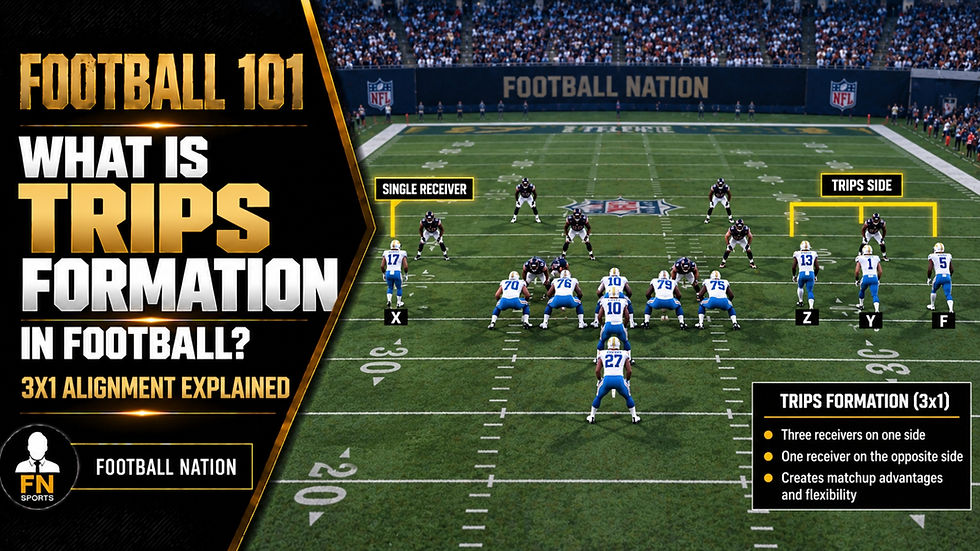
How a 3x1 Trips formation is arranged
Coaches number receivers from the sideline toward the ball. On the Trips side, the widest eligible receiver is No. 1, the next inside is No. 2 and the innermost is No. 3. The player alone opposite Trips is commonly called the backside X, although terminology varies.
The three players do not need identical splits. No. 1 may be wide, No. 2 in the slot and No. 3 an attached tight end. A bunch version compresses them together. Motion can create Trips just before the snap or turn 3x1 back into a 2x2 formation.
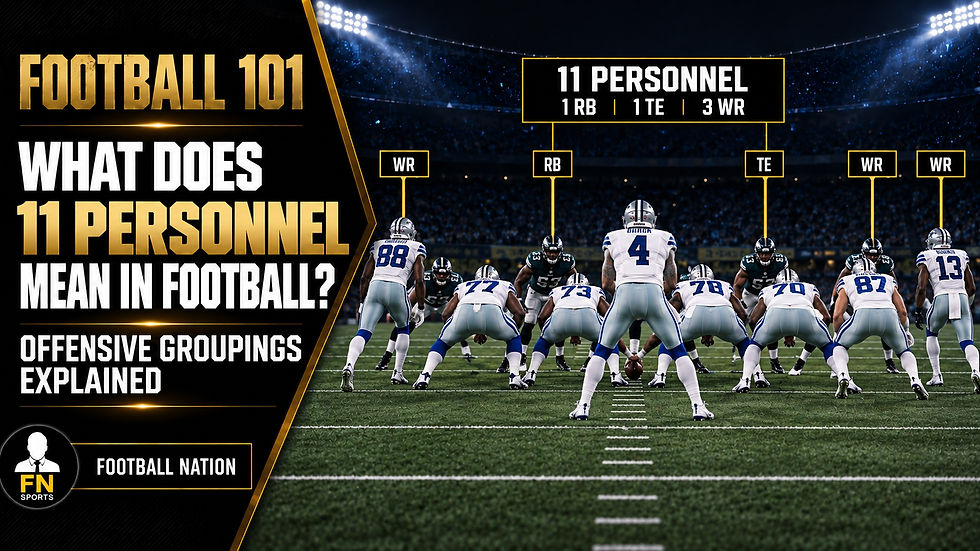
Formation and personnel are different. A team can create Trips from 11 personnel with three wide receivers, one tight end and one running back. It can also use 12 personnel and place a tight end within the three-player distribution. Personnel tells you who is playing; Trips tells you where the eligible receivers align.
Why offenses use Trips
The first advantage is leverage. Three receivers force the defense to declare a passing strength and reveal whether the corner, nickel, linebacker and safety share the same rules. If the defense over-rotates, the quarterback can work backside. If it stays balanced, the offense may have a numbers advantage toward Trips.
The second advantage is route spacing. Three receivers can attack three levels: a flat route underneath, an intermediate out or corner, and a vertical route over the top. They can cross or exchange positions, stressing zone handoffs and man-coverage traffic. Our guides to Four Verticals and the Mesh concept show how distribution can stretch coverage vertically or horizontally.
How defenses answer Trips
A defense can match the three-receiver side with a corner, nickel and safety while keeping a linebacker underneath. It can roll a safety toward Trips, play a form of Cover 3, or use split-field rules that treat each half differently. Quarters defenses often create a special check for No. 3 because his vertical release threatens the middle and changes the safety’s responsibility.
Defenses can bracket the isolated X and play three-over-three toward Trips, or press backside and devote more resources to the overloaded side. Pattern-match systems may begin with zone leverage and become man-like after the routes declare. Post-snap behavior matters more than simply counting two high safeties before the ball moves.
Trips is not automatically good against every coverage. A defense can disguise rotation, reroute inside receivers and force the quarterback to hold the ball. The offense still needs protection, spacing and an answer for pressure. The formation creates choices; execution determines whether they become completions.
Real NFL examples of the 3x1 stress
NFL.com described Kansas City using a Trips bunch formation to overload Cleveland’s coverage and isolate Travis Kelce backside. The coverage reaction created a one-on-one matchup, and Alex Smith hit Kelce on a skinny post for a touchdown. The lesson is how 3x1 forced the defense to spend resources away from the featured target.
NFL.com also showed Buffalo using Trips with Sammy Watkins isolated at X. The alignment helped Tyrod Taylor diagnose whether the defense could double Watkins. After the coverage rotated, Taylor attacked him down the boundary. Both examples show the same structural value: three receivers on one side can create a premium matchup on the other.
USA Football’s Y-Cross breakdown begins in a 3x1 alignment and uses the isolated boundary receiver as the quarterback’s first option before the progression returns to the Trips concept. That is a practical sequence: check the isolation, then scan into the route combination.
Trips and the run game
Trips is not only for passing. Pulling defenders toward three receivers can lighten the box or create an edge for a quarterback run, draw, inside zone or screen. If the defense keeps two safeties deep and widens the nickel, the offense may have a favorable run count. If a safety inserts into the box, the quarterback may gain an outside matchup.
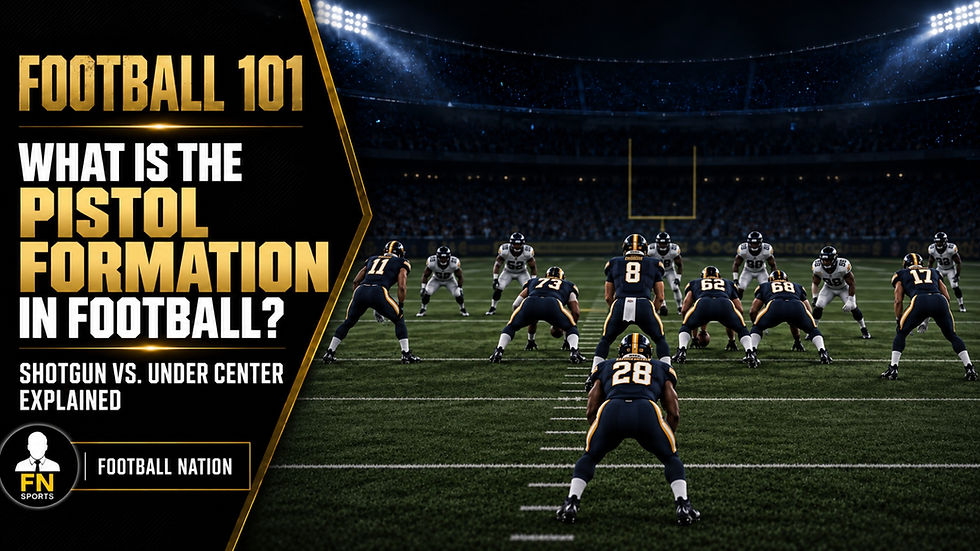
A Pistol formation can preserve downhill run action while presenting Trips outside. Defenses may still set the front away from Trips, spin a safety late or pressure from the overloaded side, so the quarterback must confirm the box rather than assume it is light.
The biggest Trips misconception
Trips does not mean three wide receivers standing side by side. It counts eligible receivers to one side, and they can come from different positions with wide, stacked, attached or bunch splits. Bunch is one version of Trips, but not every Trips set is a bunch.
Trips is also not a play call. Coaches can run layered routes, crossing concepts, screens and runs from the same 3x1 shell. The defense recognizes the distribution first, then identifies what those receivers actually do.
What to watch on the next broadcast
Before the snap, count eligible receivers on each side of the center. Find No. 3, closest to the core on the Trips side, and locate the safety responsible if he releases vertically. Then look backside: is the X pressed without safety help, or is a defender shaded over him? That picture often explains the quarterback’s first glance.
After the snap, watch whether coverage rotates toward Trips, whether a linebacker carries No. 3, and whether the backside corner is truly isolated. Motion is another clue. When an offense shifts from 2x2 to 3x1, the defense must communicate its new strength and coverage check without substituting.
Trips formation FAQ
Is Trips the same as bunch formation?
No. Trips means three eligible receivers are on one side. Bunch compresses three receivers close together. A bunch is usually a Trips distribution, but a standard Trips set may spread the receivers much wider.
Does Trips require three wide receivers?
No. A tight end or running back can be part of the three-player distribution if the formation is legal and the player is eligible. The 2026 NFL rulebook governs line alignment and eligibility at the snap.
What is the difference between Trips and 3x1?
Usually none. Both describe three eligible receivers on one side and one on the other. 3x1 is numerical shorthand; Trips is the common formation name.
Why isolate the backside receiver?
Coverage may move toward the three-receiver side, leaving the backside X with space or single coverage. If that matchup is favorable, the quarterback can take it without working through the full Trips-side progression.
Football Nation takeaway
Trips formation organizes information and creates leverage. Three eligible receivers align to one side, one aligns to the other, and the defense must distribute coverage, box numbers and safety help. The offense can attack the overloaded side with layered routes or punish the adjustment by throwing to the isolated receiver.
The simplest viewing rule is: count the formation, find No. 3, then check the backside X. Those steps reveal why the defense rotates and where the quarterback’s best matchup may appear.

Comments