


Where Is an NFL Penalty Enforced During a Pass Play?
Most NFL fouls that happen after the snap but before a legal forward pass ends are enforced from the previous spot—the place where the ball was snapped. That is the fast answer. It is also only the starting point, because intentional grounding, defensive pass interference, end-zone fouls, personal fouls and changes of possession can move enforcement somewhere else.
The key for fans is to separate three locations: the previous spot, the spot of the foul and the dead-ball spot. Then ask when the foul happened and what kind of foul it was. The yellow flag itself marks where an official saw an act, but it does not automatically determine where the penalty yardage begins.
The short answer: start at the previous spot
Under 2026 NFL Rule 8, Section 6, Article 1, a foul by either team from the snap until a forward pass thrown from behind the line ends is generally enforced from the previous spot. In ordinary language, officials return to the snap location and measure the penalty from there.
That rule fits the structure of a passing play. Before the pass is completed, there is no new running-play endpoint to use. If a defender holds an eligible receiver while the quarterback still has the ball, or an offensive lineman holds while the pass is in flight, the enforcement normally begins at the snap.
Previous spot: where the ball was last put in play. Spot of the foul: where the illegal act occurred. Dead-ball spot: where the play ended.
When a pass play becomes a running play
The rulebook says the pass play ends when the forward pass is caught. For a companion guide to receiver eligibility, see who can catch a forward pass in the NFL. At that instant, a running play begins. That timing line matters. A foul before the catch is analyzed under pass-play enforcement; a foul after the catch may be enforced under running-play rules, often from the end of the run or another basic spot.
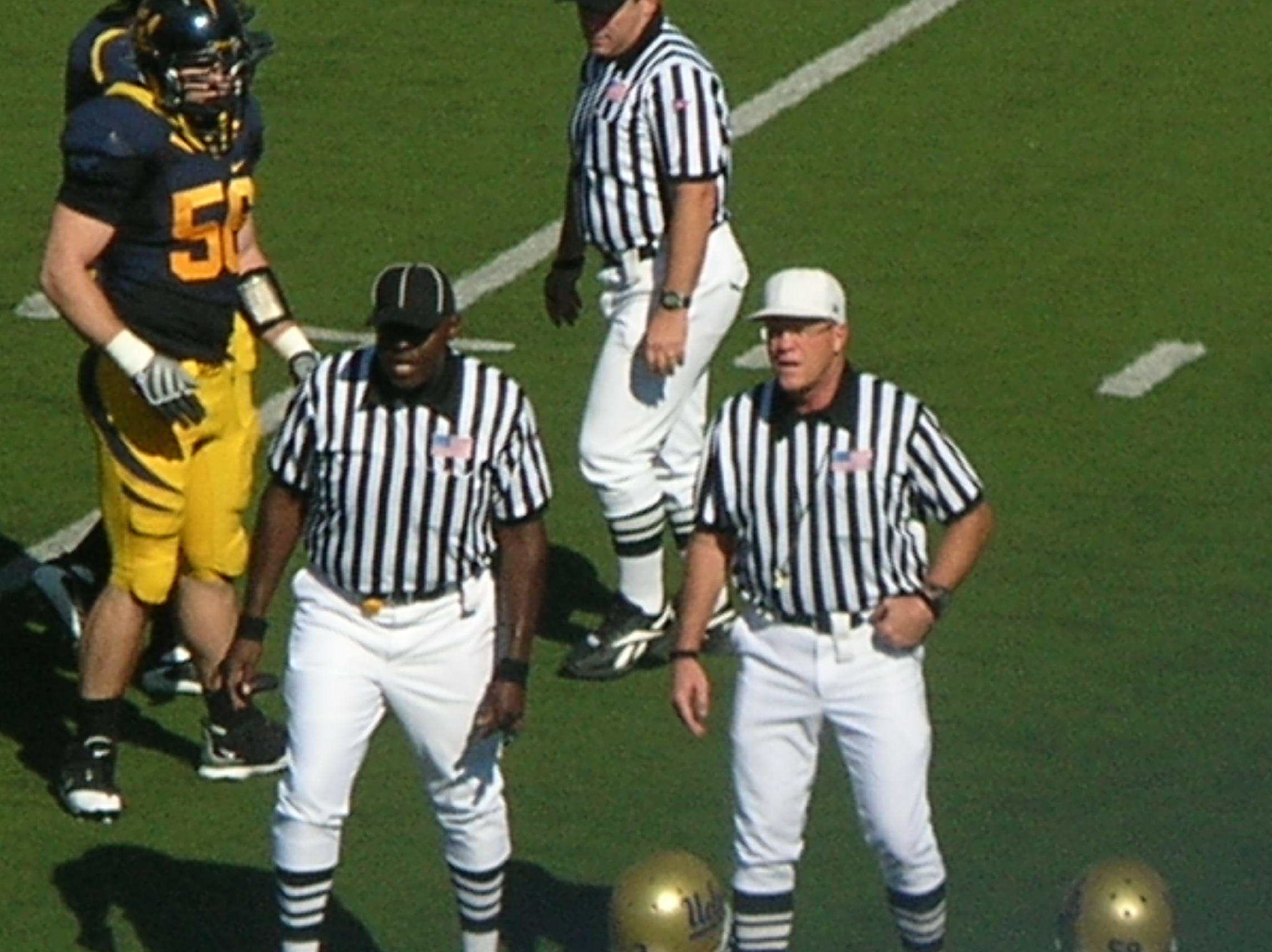
Photo source: BrokenSphere / Wikimedia Commons (CC BY-SA 3.0).
NFL pass-play enforcement: quick reference
Situation | Where enforcement starts |
|---|---|
Ordinary foul before pass ends | Previous spot |
Intentional grounding | Spot of pass or 10 yards from previous spot, whichever hurts offense more |
Defensive pass interference | Spot of foul, with special goal-line placement |
Offensive foul behind own goal line | Defense may elect a safety |
Certain personal or unsportsmanlike fouls | Previous spot, dead-ball spot or possession spot under special rules |
The major exceptions
Intentional grounding. This foul carries loss of down. Enforcement is at the spot where the passer threw the ball or 10 yards from the previous spot, whichever result is less favorable to the offense. If the passer grounds the ball from his own end zone, the result is a safety. Football Nation's intentional grounding explainer covers the pocket exception and receiver-area requirement.
Defensive pass interference. DPI is a spot foul rather than an ordinary previous-spot penalty. If it occurs in the defense's end zone, special placement rules usually put the ball at the one-yard line, or half the distance when the previous spot was inside the two. Review the acts and timing in our defensive pass interference guide.
Video: NFL Officiating reviews a pass-interference ruling. Correctly identifying the foul matters because DPI uses a different enforcement location from most pass-play fouls.
Offensive pass interference. OPI remains a foul by the passing team and normally sends the offense backward from the previous spot. It is not enforced from the defender's location. See the separate offensive pass interference explainer for push-offs, pick plays and early downfield blocks.
End-zone fouls by the offense. If an offensive foul covered by this rule occurs behind the offense's own goal line, the defense may choose enforcement at the spot of the foul. Because that spot is in the end zone, the result can be a safety.
Defensive personal or unsportsmanlike conduct before a completion. The offense may receive enforcement from the previous spot or the dead-ball spot, whichever is more beneficial. If the play produces a touchdown, enforcement moves to the Try. A particularly important possession exception also can give the passing team the ball back after a later turnover on the same play.
Offensive personal or unsportsmanlike conduct before a later loss of possession. The penalty can be enforced from the dead-ball spot. If the defense subsequently loses the ball, enforcement may begin where the defense caught or recovered it, with the defense retaining possession. This prevents a later turnover from erasing the consequence of the earlier offensive misconduct.
Example 1: defensive holding before an incomplete pass
The offense snaps from its own 35-yard line. Before the quarterback throws, a defender holds an eligible receiver at the 42. The pass falls incomplete. The flag may be near the 42, but defensive holding during the pass play is enforced from the previous spot, the 35. The offense receives five yards and an automatic first down. Officials do not simply place the ball at the flag.
Example 2: a defensive personal foul before a completed pass
The offense snaps from midfield. While the pass is in the air, a defender commits a personal foul. The receiver catches the ball and is tackled at the 25-yard line. Because the special rule permits enforcement from the previous spot or the dead-ball spot, whichever benefits the offense, the 15-yard penalty can be added from the 25. The ball would move to the 10 rather than merely to the opponent's 35.
The common misunderstanding
Fans often assume every penalty is measured from the place where the flag landed. That is wrong for two reasons. First, an official may throw the flag away from the exact act to avoid players. Second, the enforcement spot is a legal concept, not a physical marker. Officials first identify the foul, the play segment and any possession change; only then do they choose the correct basic spot.
Another frequent mistake is treating the entire down as a pass play after a catch. The catch is the dividing line. A hold before the catch and a hold during the receiver's run can produce different enforcement even when they occur only a second apart.
Why this matters during a game
Enforcement spots can change a punt decision, field-goal range, red-zone possession or even the score. Intentional grounding in the end zone creates two points. Defensive pass interference can move the ball dozens of yards. A personal foul added to the end of a completion can turn a routine first down into a red-zone snap. On a chaotic turnover play, the special possession rules can determine which team keeps the ball.
What fans should watch for
Watch the referee's announcement in order. The official usually identifies the foul, the team, the player number, the enforcement location and the down. On replay, note whether the ball had been caught when the foul occurred, whether the passer was still behind the line, whether the foul was personal or unsportsmanlike, and whether either team later lost possession. Those details explain why two similar-looking flags can produce very different field position.
Football Nation conclusion
The dependable starting rule is simple: a foul before a forward pass from behind the line ends is usually enforced from the previous spot. Then check the exceptions. Grounding, defensive pass interference, an offensive foul in its own end zone, certain major fouls and later changes of possession can shift the enforcement point. Once you track timing, foul type and possession in that order, the walk-off becomes much easier to predict.


Comments