top of page

Why Are NFL Hash Marks So Close Together?

NFL hash marks sit close to the middle of the field because the league wants every new play to begin from a relatively balanced inbounds position. The narrower spacing limits extreme boundary angles, gives an offense usable space on both sides of the ball, and prevents kicks from being spotted near a sideline. On a 160-foot-wide NFL field, each hash row is 70 feet 9 inches from its nearest sideline, leaving only 18 feet 6 inches between the two rows.

That spacing is not decorative. Hash marks tell officials where the ball may be placed between plays, create the field’s one-yard reference points, and change the geometry that coaches see when they call formations, runs, routes and kicks.

What Do the Hash Marks Do?

The NFL’s football terminology guide defines hash marks as the short lines placed at one-yard intervals and used by officials to determine ball placement. They run parallel to the sidelines, so they are different from the long yard lines that cross the field. They also do not replace the line of scrimmage, which is the imaginary line through the ball after the spot is established.

When a play ends between the hash rows, the next snap generally starts at that dead-ball spot. When the ball becomes dead outside a hash row, officials bring it back to the nearest inbounds line under the 2026 NFL Rulebook. That keeps the next snap away from the sideline. The hashes therefore work with, but are not the same thing as, the neutral zone between the two teams before the snap.

NFL Hash-Mark Measurements Compared

All three major American football levels use a 160-foot-wide field, but their inbounds lines are spaced differently. The distance between the rows below is derived by subtracting both sideline offsets from the full field width.

Level

From each sideline

Between hash rows

Practical effect

NFL

70 ft 9 in

18 ft 6 in

Most centered starting positions

College

60 ft

40 ft

More pronounced field and boundary sides

High school

53 ft 4 in

53 ft 4 in

Widest directional imbalance

The NFL and college figures come from the league’s official field diagram and the NCAA Football Playing Rules. The high-school measurement is listed in the NFL’s youth and high-school glossary. The table explains why an NFL broadcast often looks more centered before the snap than a college game filmed from the same angle.

Football Nation field diagram comparing NFL hash marks 18 feet 6 inches apart, college hashes 40 feet apart and high-school hashes 53 feet 4 inches apart.
Football Nation comparison graphic showing how NFL, college and high-school hash-mark spacing changes the usable width of the field.

Why Did the NFL Move the Hash Marks Inward?

The modern position dates to 1972. The Pro Football Hall of Fame’s league chronology records that the NFL moved its inbounds lines nearer the center of the field, placing them 23 yards, 1 foot, 9 inches from each sideline—the same 70-foot-9-inch measurement used today.

The practical goal was better field balance. With a wider hash layout, a play ending near one side creates a very short boundary side and a very large open side. Moving the ball nearer the middle reduces that difference. It does not make every snap perfectly centered, but it makes the two sides similar enough that the entire NFL playbook remains available.

How Close Hash Marks Change an NFL Offense

Coaches still describe a field side and a boundary side, yet the distinction is milder than it is in college football. From an NFL hash, the near sideline is 70 feet 9 inches away and the far sideline is 89 feet 3 inches away. That 18-foot-6-inch imbalance matters, but it is much smaller than the 40-foot difference created by college hashes.

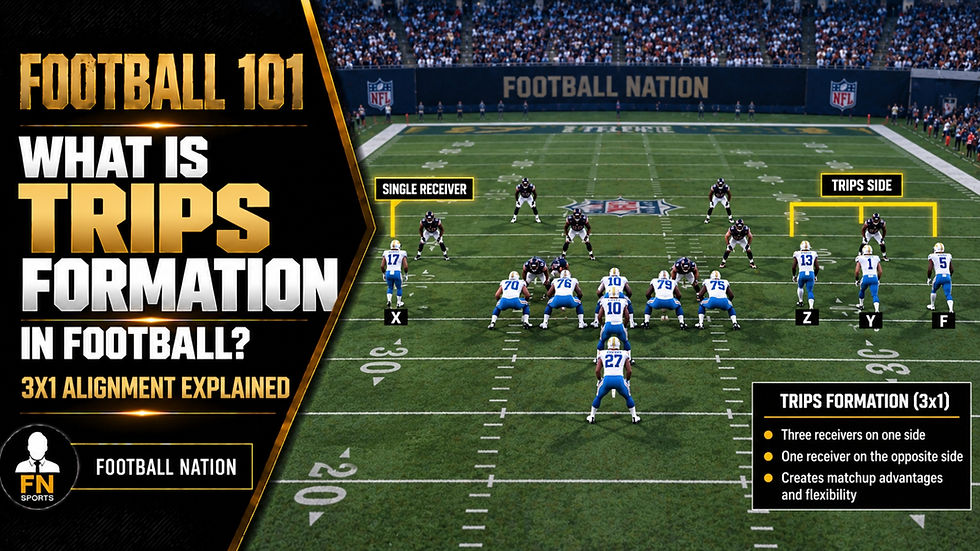
For formations, that means an offense can place a trips formation to either side without squeezing three receivers into an extremely narrow strip. For the run game, a toss sweep still has a preferred edge based on leverage, personnel and defensive alignment, but the hash location alone does not remove one sideline from consideration.

The spacing also affects passing angles. Out routes, corner routes and sideline throws have slightly different available widths from the near and far sides. Quarterbacks and receivers account for that when they set splits and landmarks. The close NFL hashes keep those adjustments manageable instead of forcing two dramatically different versions of the same concept.

What the Spacing Does to a Defense

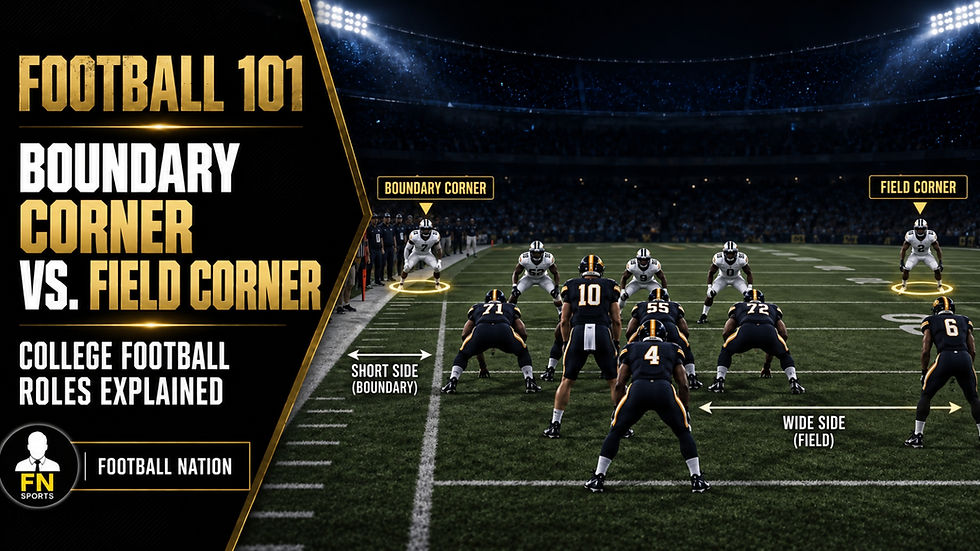
Defenses use the hash to set strength, leverage and communication. A safety may shade toward the wider side, a corner may defend the short side with different help, and the front may align based on where the offense has space. The important point is that the NFL hash creates a tendency, not a wall. Both sidelines remain realistic targets.

In college and high school, the wider rows can make the short side feel compressed and the far side expansive. That geometry increases the value of boundary specialists and makes field-versus-boundary terminology more prominent. NFL teams still use those ideas, but the professional field is deliberately less lopsided.

Why Hash Marks Matter on Field Goals

A field-goal attempt is snapped from the ball’s legal spot. Because an NFL ball cannot be placed closer than 70 feet 9 inches to either sideline, the kicker avoids the severe horizontal angle that wider hashes can create. Kicks from the left and right hashes are still angled, especially at short distances, but the target remains comparatively centered.

That is why an offense may use a late run to place the ball on a kicker’s preferred hash. The choice can change the angle slightly, even though the narrow NFL spacing prevents an extreme setup. The kicker’s preference, the remaining down, the timeout situation and the risk of losing yards all influence that decision.

What Viewers Should Watch Before the Snap

First, locate the ball relative to the two hash rows. If it is on the left hash, the offense has a little more width to the right. Then watch receiver splits, the tight end and the running back. Their alignment often reveals whether the offense wants to attack the wider side, create leverage into the boundary or make the defense overreact to the available space.

Next, watch the defense. Safeties may rotate, linebackers may bump with formation strength, and corners may change leverage. The hash does not dictate the call, but it helps explain why the same formation can produce a different matchup when the ball moves from one side to the other.

The Most Common Hash-Mark Misconception

Hash marks do not measure a first down and do not decide where the sticks go. The chain crew establishes the line to gain along the sideline, while officials use the ball’s spot to determine whether the offense earned a first down. Hashes help establish the lateral inbounds spot; the down-and-distance system measures progress toward the opponent’s goal line.

They also have nothing special to do with the red zone. The same inbounds-line rules apply near midfield, inside the 20 and close to the goal line.

Football Nation Takeaway

NFL hash marks are close together to keep the next snap near the center of the field and preserve balanced access to both sidelines. Their 18-foot-6-inch separation is much narrower than college or high school spacing, which reduces field-side extremes without eliminating them. Once you notice the ball’s hash, receiver splits and defensive rotation, the field’s hidden geometry becomes much easier to read.

Frequently Asked Questions

How far apart are NFL hash marks?

The two NFL hash rows are 18 feet 6 inches apart. Each row is 70 feet 9 inches from its nearest sideline on a 160-foot-wide field.

Are college hash marks wider than NFL hash marks?

Yes. College hash rows are 40 feet apart, compared with 18 feet 6 inches in the NFL. That produces a larger difference between the short boundary side and the wide field side.

Why is the ball moved to a hash mark?

When the ball becomes dead outside an inbounds line, officials place it at the nearest hash for the next play. This prevents a snap from beginning too close to the sideline.

Can an NFL play start between the hash marks?

Yes. If the previous play ends between the hashes and no rule requires a different placement, the next snap can begin from that exact lateral spot.

Do hash marks affect play calling?

Yes. They change the width available to each side, influencing formations, receiver splits, route landmarks, run direction, defensive leverage and field-goal angles. They inform the call, but personnel and game situation still matter more.

Comments


bottom of page