Why Does a Quarterback Spike the Ball? NFL Clock Rule Explained
- Football Nation
- 19 hours ago
- 5 min read
A quarterback spikes the ball to stop a running game clock quickly while saving the team’s remaining timeouts. The snap starts a new play, the quarterback immediately throws the ball straight into the ground, and the intentional incompletion stops the clock. The tradeoff is one down: the offense gains no yardage and must run its next play on the following down.
The spike is legal because the NFL rulebook creates a narrow exception to intentional grounding. It is not a free administrative stoppage. The offense must line up legally, complete the snap and execute the throw immediately; the clock continues to run until the ball becomes incomplete.
Why does spiking the ball stop the clock?
An incomplete forward pass stops the game clock. A spike deliberately creates that result with the shortest practical live-ball play. After the center snaps the football, the passer begins a continuous throwing motion and drives the ball into the ground. Officials rule the pass incomplete, and the offense can regroup for the next down.
Rule 8, Section 2 of the 2026 NFL Rulebook says intentional grounding is not called when the passer immediately begins that continuous motion after receiving the snap and throws the ball directly into the ground. The words immediately and continuous matter: they separate a legal clock-stopping spike from an ordinary throwaway with no eligible receiver nearby.
The NFL’s football terminology guide defines the spike as a time-management tool, but its strategic value comes from the clock-versus-down exchange. A timeout preserves the down. A spike preserves the timeout.
Play | Clock result | Football cost |
|---|---|---|
Quarterback spike | Stops on an incomplete pass | Uses one down; no yardage gained |
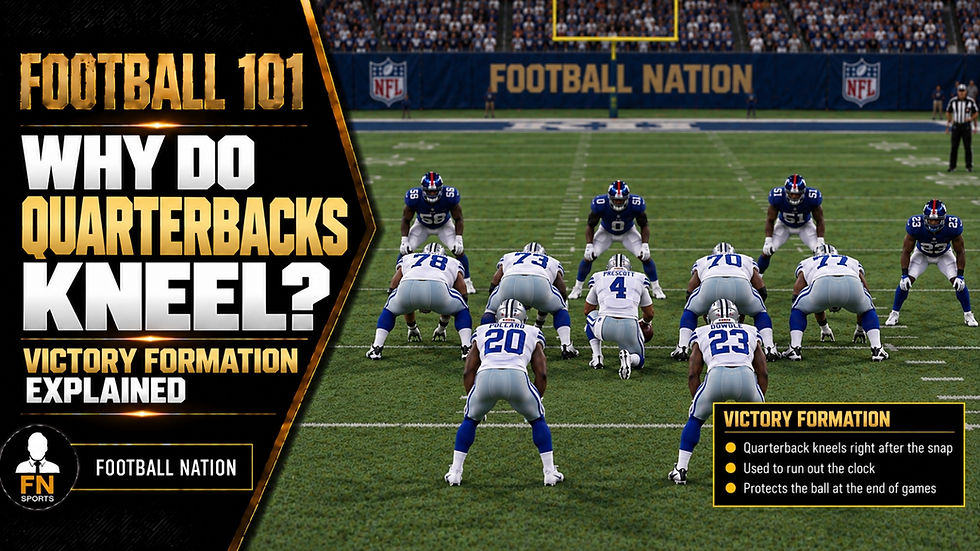
Quarterback kneel | Usually keeps running unless another rule stops it | Uses one down and records a rushing loss |
Incomplete sideline pass | Stops on an incompletion | Uses one down; receiver route and pass take more time |
Timeout | Stops immediately | Uses one team timeout; no down consumed |
Sources: 2026 NFL Rulebook timing and intentional-grounding provisions. The exact clock value depends on the game situation; the table compares rule effects, not a guaranteed number of seconds saved.

What does a spike cost the offense?
A spike counts as a play and an incomplete pass. If the offense spikes on first down, the next snap is second down. If it spikes on second down, the next snap is third down. That cost becomes especially important near field-goal range because a team can run out of downs even while successfully saving time.
The offense also loses several seconds before the clock stops. Players must get set, the center must deliver a legal snap, and the quarterback must complete the spike. The play clock governs how long the offense may wait between plays, while the game clock may be draining throughout the hurry-up sequence.
When should a team spike instead of call timeout?
A spike makes sense when the game clock is running, the offense can reach the line with enough time to execute it, and saving a timeout is more valuable than saving the down. Common examples include setting up a field-goal attempt, preserving a timeout for a later play in the middle of the field, or stopping after a completed pass before the two-minute warning or halftime.
A timeout is better when every down matters, when the offense is not organized enough to line up legally, or when only a few seconds remain. A quick sideline throw may preserve the down if completed out of bounds, but it carries interception, sack and timing risk—and going out of bounds does not always produce the clock result fans expect under the NFL out-of-bounds timing rules.
How late is too late to spike?
There is no universal safe number because the offense’s distance from the ball, substitutions, alignment and officiating administration all matter. The offense needs time to get every required player set and snap legally. If it substitutes late, an official may need to hold the ball while the defense matches, which makes a last-second spike even more dangerous.
The next factual checkpoint is the snap itself. The clock does not stop when the quarterback signals “spike,” when the offense reaches the line or when the center touches the ball. It stops only when the pass is incomplete and the official rules the play dead.
Can the quarterback fake a spike?
Yes. A quarterback may show the body language of a spike and then keep the play alive. But once he delays, the special grounding exception is no longer automatic. If he later throws the ball away while facing imminent loss of yardage and without a realistic completion chance, officials apply the normal intentional-grounding rule. A fake spike also exposes the offense to pass rush and turnover risk because defenders are entitled to keep playing.
The strongest misconception is that defenders must relax because a spike is expected. They do not. The play begins with a legal snap. Until the ball actually hits the ground and is ruled incomplete, both teams must treat it as live football.
How the offense executes a clean spike
Get set legally. Receivers and linemen must reach legal positions; hurried movement can produce a false start or illegal shift. Communicate the plan. The quarterback uses a clear cadence and snap count so the center knows the snap is immediate. Throw without delay. The passer begins one continuous motion and sends the ball directly to the ground. Know the next down. Coaches must have the next call ready because the spike solves the clock problem, not the down-and-distance problem.
Frequently asked questions
Does a quarterback spike count as an incomplete pass?
Yes. It is recorded as an incomplete forward pass and uses one down.
Is a spike intentional grounding?
No when the passer immediately begins a continuous throwing motion after the snap and throws directly into the ground. A delayed throwaway can be grounding.
Does the clock stop before the ball hits the ground?
No. The clock stops when the pass becomes incomplete and the play is ruled dead.
Can a quarterback fake a spike?
Yes. The ball remains live after the snap, although the passer loses the automatic grounding protection if he delays the throw.
Why not always call timeout instead?
A timeout preserves the down but consumes a limited timeout. A spike consumes a down while saving that timeout for later.
Football Nation takeaway
Think of the spike as a trade: one down for a stopped clock. Watch three things—the game clock before the snap, whether the offense gets legally set, and which down follows. If the team has enough time and can afford the down, the spike is a clean way to preserve a timeout. If either resource is too scarce, the same decision can end the drive.


Comments