


Can an NFL Receiver Go Out of Bounds and Come Back In?
Yes, an NFL receiver may step back onto the field after going out of bounds. But returning inbounds does not usually restore his eligibility for that forward pass. If an eligible offensive receiver goes out voluntarily or is legally forced out, reestablishes inbounds, and then catches the pass, the play is live but the receiver has committed illegal touching. The penalty is loss of down at the previous spot.
There are two important branches. If the receiver touches the pass before reestablishing inbounds, the pass is incomplete immediately and there is no illegal-touching foul. If an opponent's foul forces the receiver out, he can remain eligible by trying to return immediately, reestablishing inbounds, and avoiding any touch before that happens. Those distinctions make the sideline, not the catch itself, the first thing to watch.
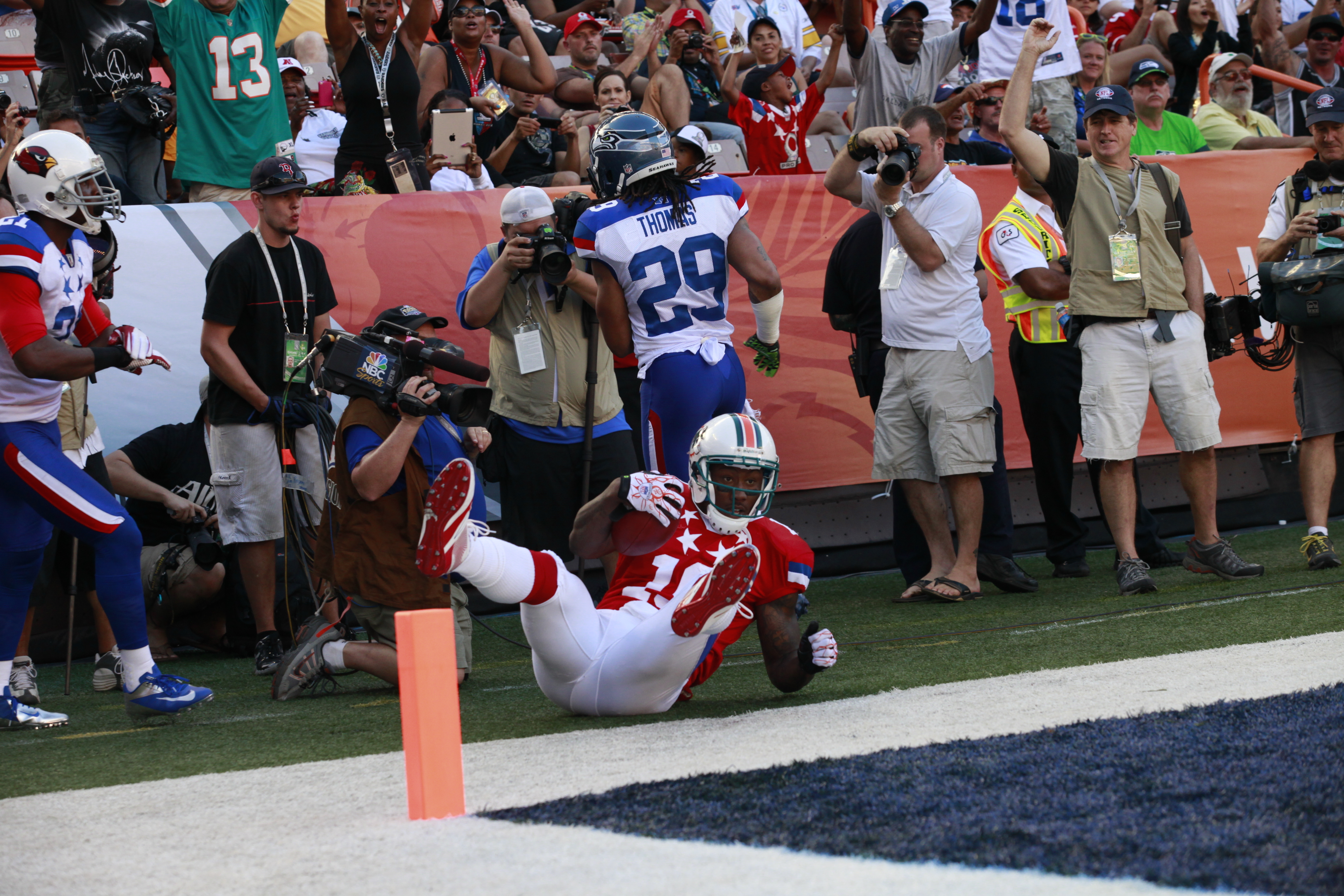
Photo source and license: Cpl. Jody Lee Smith/U.S. Marine Corps image on Wikimedia Commons (public domain).
The rule in plain English
The controlling provision is 2026 NFL Rule 8, Section 1, Article 8(b). It covers an eligible receiver who leaves the field, returns, and then first touches or catches a forward pass thrown from behind the line of scrimmage. His original alignment and number may have made him eligible at the snap, but going out can remove that eligibility for the rest of the pass.
That is different from the starting question of who can catch a forward pass in the NFL. Alignment, number and reporting status establish eligibility at the snap. Rule 8-1-6(c) adds a new disqualifier: an otherwise eligible receiver becomes ineligible after going out voluntarily or after being legally forced out, even if he later gets both feet back down.
Quick ruling guide
What happens before the touch? | NFL ruling |
|---|---|
Receiver steps out, returns with both feet, then catches | Illegal touching; live ball; loss of down at previous spot |
Receiver steps out and touches before reestablishing | Incomplete pass immediately; no illegal-touching foul |
Opponent's foul forces him out; he returns immediately and reestablishes | Receiver can remain eligible |
Opponent legally forces him out; he returns and catches | Illegal touching still applies |
How a receiver reestablishes inbounds
NFL Rule 3, Section 20, Article 2 supplies the test. A player who has been out becomes an inbounds player again when both feet, or any body part other than his hands, touch the ground inside the boundary. At that moment, no part of his body may be touching the boundary line or anything outside it. The white sideline is out of bounds, so a foot on the paint does not count.
The sequence matters more than the final picture. One foot back in followed by a touch is not enough. A receiver who lands one foot inbounds and contacts the ball before his second foot returns has not reestablished. Under Rule 8-1-4(c), that pass is incomplete and dead immediately. Because the ball is dead at the touch, officials do not also add the illegal-touching foul.
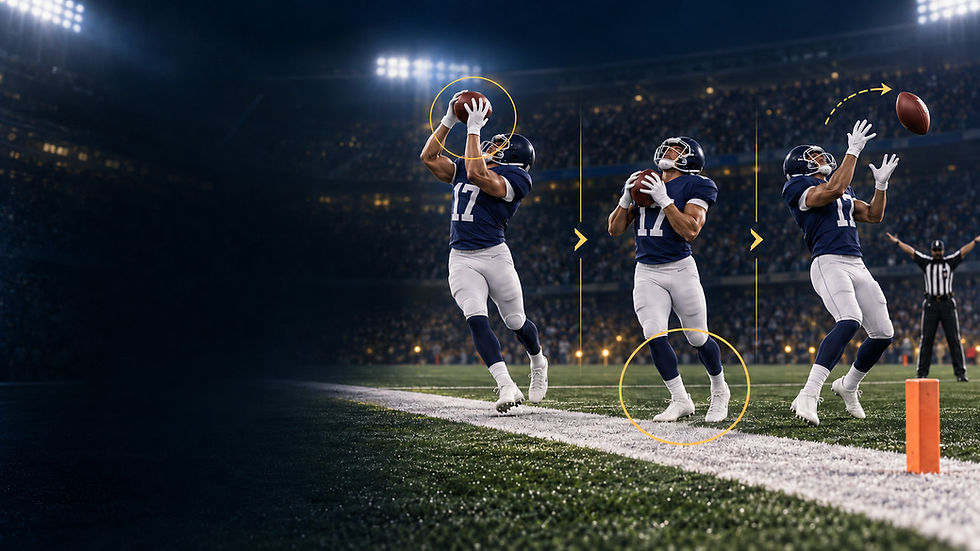
A useful decision diagram is: OUT OF BOUNDS → WHY DID HE LEAVE? → DID HE REESTABLISH? → DID HE TOUCH OR CATCH THE PASS? Officials work through those questions in order. Television angles often focus on the catch point, but the decisive evidence may be several steps earlier, when the receiver crossed the boundary.
Why a legal push does not create an exception
Fans often hear that a receiver was pushed out and assume he can come back. The rule is narrower. If the defender's contact is legal, the receiver who goes out remains ineligible for that pass. Rule 8-1-6(c) expressly includes a receiver who is legally forced out. Physical cause alone is not enough; the contact must itself be an opponent's foul.
The exception in Rule 8-1-5(e) applies when the opponent's foul forces the receiver out. The receiver must then attempt to return immediately and reestablish before touching the pass. Lingering outside the boundary, taking a shortcut, or touching the ball while still out removes the protection. Officials therefore judge the contact, the return effort, both feet and the timing of the touch.
The penalty and why the ball stays live
When a reestablished receiver catches the pass after being out, Rule 8-1-8(b) says the ball remains live. That lets the rest of the play finish and gives the defense the ordinary option to accept the loss-of-down penalty or take the play result. The accepted penalty is enforced at the previous spot and consumes the down. It carries no additional yardage.
On second-and-10, an accepted foul normally produces third-and-10 from the previous spot. On fourth down, the lost down can hand possession to the defense. That is why this is not a harmless technicality even though there is no five- or 10-yard march-off. The down itself is the entire punishment.
Two realistic examples
Example 1: Voluntary step out, then a catch
A wide receiver runs a deep out route, steps on the sideline while avoiding a defender, and continues three yards outside the field. He returns with both feet inbounds and catches a pass for 18 yards. He has reestablished as an inbounds player, so the catch is not dead on contact. But he remained ineligible after leaving voluntarily. The result is illegal touching and loss of down at the previous spot.
Example 2: A defensive foul forces the receiver out
A cornerback grabs and drives a receiver across the sideline in a way officials judge to be a foul. The receiver immediately turns back, places both feet inbounds without touching the boundary, and catches the pass. Rule 8-1-5(e) preserves his eligibility because an opponent's foul caused the exit and he satisfied the immediate-return and reestablishment requirements. The catch can stand, while the defense's foul is handled under normal enforcement rules.
Common misunderstanding: two feet back in fixes everything
Two feet back in establish location, not eligibility. That explains why a receiver can be physically inbounds when he catches the ball and still be guilty of illegal touching. The same phrase also appears in a different result: if he touches the pass before those two feet or another body part reestablish him, the pass is simply incomplete.
Football Nation's guide to when an NFL pass is incomplete explains that dead-ball branch, while the guide to an originally ineligible receiver touching a pass covers the five-yard version of illegal touching under Article 8(a).
A boundary ruling worth watching
This official NFL Officiating example shows how carefully crews separate control, inbounds contact and the boundary. For the out-of-bounds receiver rule, viewers should add one earlier question: had the player already left the field before the pass arrived?
What to watch on the next replay
First, find the exact frame when the receiver contacts the sideline or anything outside it. Second, decide whether the defender's action was legal or a foul. Third, count the receiver's inbounds contacts before he touches the pass. Finally, watch whether the official lets the play continue. A live play followed by a flag suggests the player reestablished and then illegally touched the pass; an immediate incomplete signal suggests he touched it before reestablishing.
Football Nation conclusion
Coming back inbounds and becoming eligible again are not the same thing. A receiver who voluntarily leaves or is legally forced out can return to the field, but a later catch normally costs his team the down. The narrow escape hatch requires an opponent's foul, an immediate return and a clean reestablishment before any touch. When a sideline replay gets confusing, follow the sequence instead of staring only at the catch.


Comments