


Dolphins vs. 49ers Prediction: Purdy Extends Miami's Slide
Friday availability update: San Francisco listed kicker Eddy Piñeiro questionable after illness kept him out all week and listed rookie running back Kaelon Black questionable with a groin issue. The 49ers may elevate a temporary kicker Saturday if Piñeiro cannot go. Miami had not posted a final designation for Chop Robinson when this revision was prepared; his concussion protocol status remains a separate clearance question. The injuries affect special teams and depth but do not change Football Nation's 30-17 San Francisco prediction.
Sources: 49ers final injury report; Miami injury report; Football Nation Week 2 injury tracker.
The answer: San Francisco should win its home opener because it enters Week 2 with the more stable passing game, a deeper rushing plan and a defense that can make Miami quarterback Malik Willis hold the ball. Miami can keep this competitive by creating short fields, but its Week 1 protection problems make that a difficult formula to sustain. Football Nation projects the 49ers to pull away after halftime, 30–17.
The official NFL game center lists Miami at San Francisco for Sunday, September 20, 2026, with a 3:25 p.m. Central kickoff on FOX at Levi’s Stadium in Santa Clara. The Dolphins are 0–1 after a 27–13 road loss to Las Vegas. The 49ers are 1–0 after beating the Rams 27–7 in Melbourne. This is Miami’s second road game and San Francisco’s first true home date after opening on neutral international turf.
Week 2 matchup snapshot
The table captures the basic tension in this matchup. Neither defense recorded a sack in Week 1, so this is not a claim that San Francisco already owns a dominant pass rush. The more important difference is offensive control. The 49ers held the ball nearly nine minutes longer than Miami and produced 120 more yards. Those figures come from one game, but they describe two very different opening-week scripts.
Why San Francisco has the cleaner path
Brock Purdy completed 25 of 34 passes for 205 yards, three touchdowns and one interception against the Rams. San Francisco also rushed for 174 yards and finished a 99-yard drive after a goal-line stand. Those details are supported by Reuters’ report from Melbourne. The point is not that Week 1 guarantees another efficient afternoon. It is that Kyle Shanahan can force Miami to defend every horizontal layer while Christian McCaffrey changes the math underneath.
The 49ers’ 27–7 Week 1 recap shows how the offense survived without relying on one explosive play. Purdy distributed the ball, McCaffrey supplied 88 yards from scrimmage and the running game kept the offense ahead of the chains. Miami’s best response is to win early downs and create obvious passing situations. If it cannot, San Francisco can build the same possession advantage that defined its opener.

Miami’s protection problem is the swing factor
Willis completed 15 of 27 passes for 220 yards with one interception in Las Vegas and ran for Miami’s only touchdown. He was also sacked five times. Using sacks divided by pass attempts plus sacks, that is a derived Week 1 sack rate of 15.6 percent. The independent Raiders–Dolphins recap also documented Miami’s 2-for-10 third-down performance and 1-for-3 red-zone result.
Willis can stress a defense with his legs, and Miami’s offense has enough speed to punish a broken angle. The trouble comes when the first read disappears. San Francisco does not need a huge sack total to win those downs. It needs to compress the pocket, keep Willis from escaping cleanly and force throws into a secondary that intercepted Matthew Stafford once in Week 1. Long-yardage snaps also reduce Miami’s ability to use misdirection and designed quarterback movement.
Miami’s 27–13 loss in Las Vegas was not only a quarterback story. The Dolphins finished with 259 yards and had the ball for 25:07. Two takeaways kept their turnover margin even, which is the clearest route to an upset here. If Miami steals a possession and starts inside San Francisco territory, the game changes. If the Dolphins must repeatedly drive 75 yards, the 49ers’ deeper offensive menu should win over four quarters.
Friday availability and the final Sunday checkpoint
The official Dolphins injury report still showed Miami’s Thursday participation when checked Friday afternoon: Ronnie Harrison did not practice, Chop Robinson moved from limited to out of practice while in concussion protocol, Tucker Addington and Seydou Traore remained limited, and Malik Willis remained full. Miami had not posted a final game designation for Robinson, so clearance and the Sunday inactive list remain controlling.
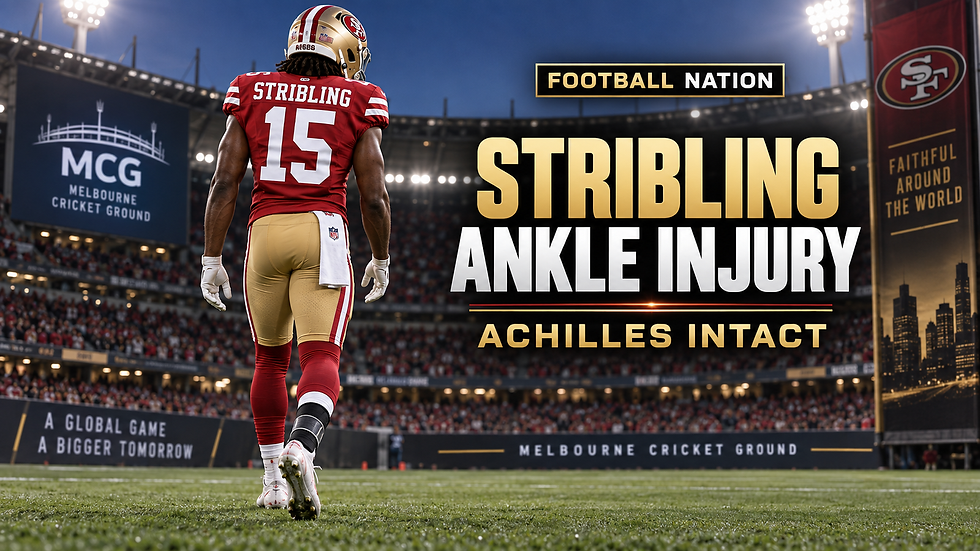
The official 49ers injury report showed Piñeiro and De’Zhaun Stribling out of practice Thursday, with George Kittle and Kyle Juszczyk limited. Friday reporting listed Piñeiro and rookie running back Kaelon Black questionable. San Francisco may elevate a temporary kicker Saturday if Piñeiro cannot go. Football Nation’s Stribling injury update explains.
Sunday’s inactive list is the final checkpoint. A concussion clearance for Robinson would materially improve Miami’s edge rotation. Kittle’s listed Achilles workload is equally important because his blocking and middle-of-field presence help San Francisco stay unpredictable. This prediction assumes no late downgrade for Purdy, McCaffrey or another central starter.
Fantasy football consequences
McCaffrey remains an automatic start if active. Purdy belongs in the streaming conversation because the matchup offers touchdown equity even if San Francisco leans on the run. Kittle’s managers should keep a replacement available until Sunday’s inactive list. The broader market context is covered in Football Nation’s Week 2 waiver-wire guide and Week 2 trade-value report.
Willis is a volatile Superflex option rather than a safe one-quarterback start. His rushing creates a usable ceiling, but the sack risk and Miami’s poor third-down baseline can erase possessions. Miami pass catchers can still deliver on volume or a single explosive gain, yet the lineup decision should account for a lower team-play projection than San Francisco’s.
Miami’s official X post above shows rookie safety Michael Taaffe’s Week 1 interception. That is the kind of sudden possession Miami needs again: an individual defensive play that shortens the field and prevents San Francisco from turning its run game into a four-quarter vise.
Matchup advantages
49ers advantage: offensive sequencing. San Francisco can move from outside zone to play action to quick-game answers without changing personnel. The 174-yard Week 1 rushing performance gives Miami several threats to honor before Purdy attacks the vacated space.
Dolphins advantage: turnover potential. Miami intercepted two passes in Week 1 and finished even in turnover margin despite an otherwise poor offensive afternoon. Purdy threw one interception in Melbourne. A plus-two Miami turnover margin would create the upset script.
Deciding advantage: down-to-down reliability. San Francisco converted its opening-week control into 27 points and a comfortable win. Miami went 2-for-10 on third down and allowed five sacks. Until the Dolphins prove they can protect Willis and stay on schedule, their path depends too heavily on takeaways and explosives.
For broader context, San Francisco and Miami appear in Football Nation’s Week 2 power rankings, while the current Week 2 injury report tracks Friday changes across the league. Readers comparing major games can also see the Steelers–Patriots prediction.
Football Nation prediction
Miami should create one short-field score and Willis should manufacture another drive with his legs. The 49ers still have more ways to win. Their offense can control pace, Purdy is coming off an efficient three-touchdown opener, and the home setting removes the travel complications that surrounded Melbourne. San Francisco’s defense does not need to dominate; it only needs to force enough second-and-long and third-and-long situations for Miami’s protection issues to matter.
Projected final score: 49ers 30, Dolphins 17.
The remaining uncertainty is concentrated in Sunday’s inactive list. Robinson’s concussion clearance, Kittle’s Achilles workload and Piñeiro’s illness could move specific matchup and fantasy conclusions. The core pick remains San Francisco because its Week 1 efficiency is supported by structure: a balanced rushing attack, a defined quarterback plan and the ability to sustain possession. Miami’s Week 1 takeaways give it a puncher’s chance, but they do not yet solve the protection and third-down problems underneath.


Comments