


How NFL Teams Evaluate Preseason Players
Updated: 5 hours ago
An NFL preseason game gives coaches competitive film while allowing them to choose who plays and what to test. The final score matters less to roster evaluation than whether a player can perform a useful job reliably.
Part of Football 101. Explore the guide to choose your next topic.

Most teams play three exhibitions. The two Hall of Fame Game participants receive an additional game. Coaches may limit established starters while giving reserves long stretches against different levels of competition.
Grade the job being tested
A reserve receiver may need to cover punts as well as catch passes. A backup lineman who can handle center and guard may solve two roster needs. A running back’s blitz pickup may determine whether coaches trust that player during a passing situation.
Those assignments are not fully captured by receiving yards or rushing average. A long gain can coexist with several missed responsibilities, while a quiet box score can accompany dependable work.
Context changes the evidence
Ask who else was on the field and what the team was trying to learn. Production against deep reserves is still evidence, but it is not identical to production against an opponent’s starting unit. Playing late can mean extended evaluation rather than a final verdict.
Combine game tape with training camp reports, meetings and availability. A repeated role across those settings offers stronger evidence than one touchdown followed by a prediction that the player has secured a job.
For example, a receiver consistently taking early special teams snaps and backing up several receiving positions may have a clearer roster function than a player with one spectacular catch in a limited package.
The roster decision
Teams build a group for many possible situations, not a ranking of the 53 best exhibition statistics. Positional depth, special teams and injury contingencies influence the final places.
The 2026 official calendar set final reduction to 53 for August 30 at 6 p.m. Eastern. Check each season’s published league calendar for roster reduction dates; older cutdown structures do not automatically apply.
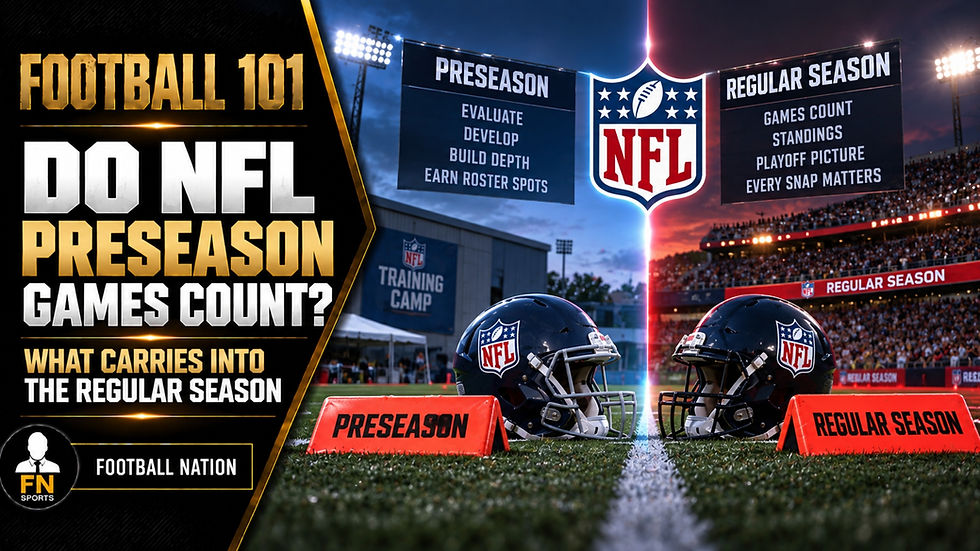
Preseason results do not enter the regular season standings. The value that carries forward is evaluation, preparation and the roster roles players earn.
The 18 game season guide explains why proposals to change the regular season also raise questions about preseason length and evaluation opportunities.
Examples and illustrations

Keep learning
Do preseason games count?: Separate official standings from exhibition results.
Joint practices: Compare another evaluation setting.
After final cuts: Follow the roster once decisions become transactions.
Browse the Football 101 collection.
Sources checked October 10, 2026. NFL Football Operations league calendar; NFL Football Operations formations and positions.


Comments