top of page

What Is a Seam Route in Football? How It Attacks Coverage

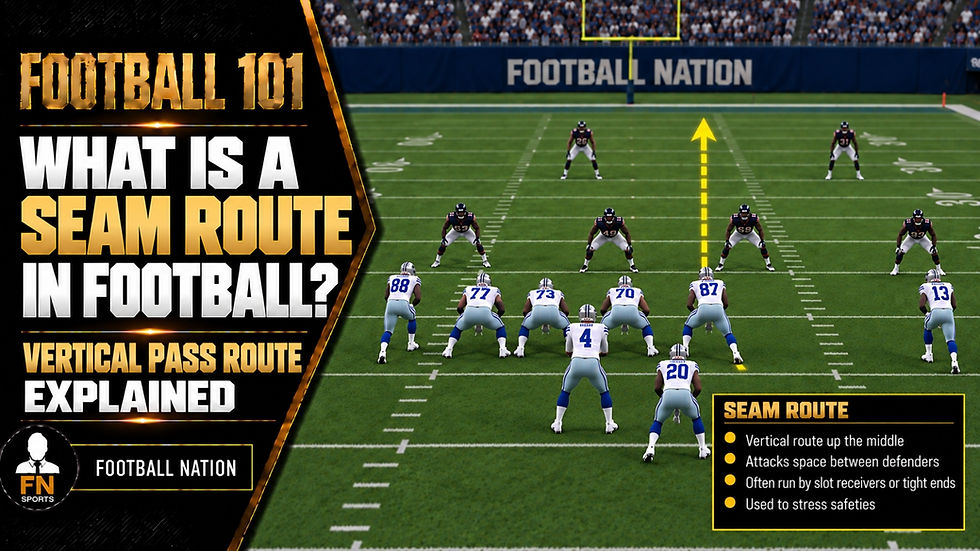
A seam route is a vertical pass route run from an inside alignment—usually by a tight end or slot receiver—through the lane between the numbers and the hash marks. The receiver pushes upfield instead of breaking toward the sideline, forcing underneath defenders and deep safeties to divide responsibility. When the quarterback reads the leverage correctly, the ball can arrive in the window between those layers.

The simplest answer is that the seam route attacks the space where coverage zones meet. It can produce an explosive play against zone, isolate a tight end against a linebacker in man coverage, or hold a safety so another receiver gets room. But it is not automatically open just because the receiver runs straight. The release, spacing, coverage rotation, quarterback timing and ball location all decide whether the throw is smart.

Where is the seam on a football field?

That field location separates the route from a traditional outside go route. A go route normally threatens a cornerback down the sideline. A seam route starts inside and threatens the defense vertically through traffic. Football Nation’s route-tree guide explains the standard vertical family, but the seam is best understood by alignment and the coverage lane it attacks—not by one universal route number.

How the seam route works

First, the receiver must earn a clean vertical release. A tight end may release from an attached position, a slot receiver may align outside the tackle, or either player may begin in a condensed set. The route should preserve enough width to avoid colliding with adjacent routes while still threatening the interior defender’s leverage. That is why condensed formations and 12 personnel can create useful seam opportunities without announcing the throw.

Second, the receiver climbs through the underneath coverage. Against zone, a linebacker or nickel defender may carry the route for several yards before handing it to a safety. That handoff creates the central conflict: if the underneath defender stays shallow, the quarterback can throw behind him; if he gains depth, a short outlet may open. The seam therefore pairs naturally with a checkdown or crossing route that punishes defenders for dropping too deep.

AI-assisted Football Nation teaching diagram showing an inside receiver releasing vertically up the seam between an underneath hook defender and two deep safeties.
AI-assisted original Football Nation teaching graphic: the route releases inside, stretches the vertical lane and creates a throw window between coverage layers.

Which coverages does a seam route attack?

Against quarters, the seam can occupy or isolate a safety depending on the pattern-match rules. A second vertical route may force two deep defenders to declare responsibilities. Against man coverage, the route becomes a leverage and matchup test: can a tight end outrun a linebacker, can a slot receiver stack a nickel defender, and is there enough middle-field space before safety help arrives?

Offenses often hide the route inside bunch formations or combine it with a legal traffic concept. The spacing must remain disciplined because an intentional obstruction can become offensive pass interference; Football Nation’s pick-route guide explains that boundary.

Seam route vs. go route vs. post route

A seam route and a go route are both vertical, but they attack different landmarks. The go route usually stays outside and tries to win down the boundary. The seam route originates inside and pressures the space between coverage structures. A post route begins vertically and then angles toward the goalpost, while a seam generally keeps climbing on a straighter interior path.

Playbooks can rename or adjust all three. Some seam routes bend slightly away from the nearest safety. Others convert based on middle-open or middle-closed coverage. The important viewer clue is not whether the line on a diagram is perfectly straight. Watch where the receiver aligned, which defender he is stretching and whether the quarterback is throwing between coverage layers.

Why defenses can still take it away

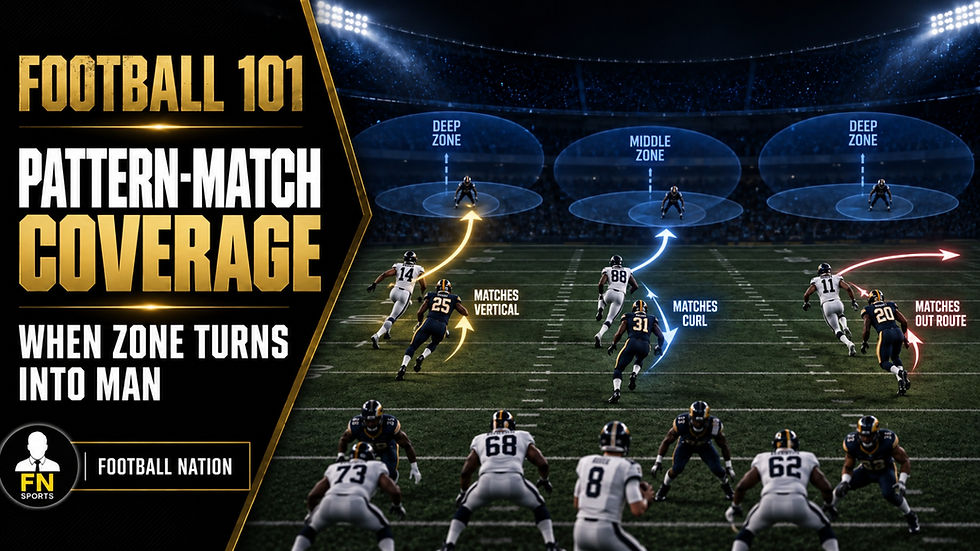
Defenses can reroute the receiver at the line, carry him with an underneath defender, bracket him with a safety, rotate late into the passing lane or disguise which safety owns the interior vertical. Pattern-match coverages make the route look open at the snap and close it once receivers declare their paths. A quarterback who predetermines the throw can deliver the ball directly into that rotation.

The most dangerous misconception is that the seam is simply a deep shot. It is a timed answer to a specific structure. If the safety stays square, the linebacker gains depth and the rush arrives, the correct decision may be the outlet. That differs from a hot route, which is usually an immediate adjustment to pressure rather than a planned vertical stretch.

How to spot a seam route on television

Start with the receiver’s alignment. Identify the tight end or slot receiver inside the widest receiver. After the snap, watch for a fast vertical release near the hash rather than an early break. Then shift your eyes to the nearest linebacker and safety. If one defender carries underneath and another closes from depth, the offense is attacking the seam window.

Also watch the complementary routes. An outside vertical can widen a safety, a shallow cross can hold a linebacker, and a checkdown can sit beneath the coverage. The seam’s value is often visible even when the ball goes elsewhere because it changes the spacing for every defender in the middle.

Football Nation takeaway

A seam route is an inside vertical route designed to stress the handoff between underneath coverage and deep safety help. It works because it forces two levels of the defense to share a narrow lane, but it succeeds only when the receiver preserves spacing and the quarterback throws with anticipation. On the next replay, do not just follow the ball: find the inside receiver, locate the nearest safety and watch the vertical window open—or disappear.

Frequently asked questions

Is a seam route the same as a go route?

No. Both are vertical routes, but a go route usually attacks the outside boundary while a seam route starts from an inside alignment and attacks an interior coverage lane.

Who usually runs a seam route?

Tight ends and slot receivers run seams most often because they align inside, though any eligible receiver can run an interior vertical route from the right formation.

What coverage is vulnerable to a seam route?

Cover 2 and Cover 3 can both be stressed along interior vertical lanes, but modern pattern-match rules, reroutes and safety rotations can close the window.

Why does a quarterback throw the seam before the receiver looks open?

The opening exists between moving coverage layers. If the quarterback waits until the receiver appears fully open, the safety may have enough time to close.

Can a seam route stop against zone coverage?

Yes. Some playbooks teach receivers to bend, throttle or sit in an open window, but the exact adjustment depends on the concept and the quarterback-receiver rules.

Visual disclosure: The cover and teaching diagram are original, AI-assisted Football Nation illustrations created for this article. They depict anonymous, team-neutral players and concepts; they are not licensed game photographs.

Comments


bottom of page