


What Is Bracket Coverage? How Defenses Double a Receiver
Information cutoff: October 22, 2026 at 5:04 p.m. Central. Scheme descriptions were checked against NFL and team analysis. Rule references come from the official 2026 NFL Rulebook checked at the same time.
Bracket coverage is a planned double team in which two defenders use different leverage responsibilities against one receiver. One defender can protect the inside while the other protects the outside. Another version places one defender underneath and one over the top. The point is not merely to put two bodies near the target. The point is to close two escape routes while keeping the rest of the defense organized.
That distinction separates bracket coverage from banjo coverage. Banjo usually tells two defenders how to sort two receivers and exchange assignments. A bracket normally tells two defenders how to contain one priority receiver. Teams use different names, so the responsibility matters more than the label.
The basic bracket in one teaching sequence
OFFENSE IDENTIFIES ITS BEST TARGET → DEFENSE ASSIGNS TWO LEVERAGES → FIRST DEFENDER REMOVES THE EASY BREAK → SECOND DEFENDER CAPS THE COMPLEMENTARY BREAK → QUARTERBACK MUST MOVE TO THE NEXT ANSWER
The arrows describe the decision flow, not one universal playbook. A corner and safety may form the bracket on an outside receiver. A nickel defender and safety may bracket a slot receiver. Two linebackers may surround a tight end in the middle of the field. Each defense decides who owns vertical, inside, outside, and underneath routes before the snap.
Inside out coverage
An inside out bracket places one defender on the receiver's inside shoulder and another on the outside shoulder. The receiver should not have a clean break in either direction. The defenders still need depth rules. If both sit flat at the same level, the receiver can run between them vertically. If both retreat too quickly, the receiver can stop underneath for an easy completion.
The New England Patriots have publicly explained a cone bracket in which the corner handles vertical and out breaking routes while the safety cuts off the inside. That is a useful teaching example because the jobs are complementary. The corner does not chase every movement. The safety does not simply hover nearby. Each defender owns a leverage family.
The best counter can be to split the bracket. A receiver with speed may attack the space directly between the two defenders before either can squeeze it. Justin Jefferson beat New England that way in a documented example. The play shows why two defenders do not guarantee a stop. The spacing and reaction speed still have to be right.
Under over coverage
An under over bracket places one defender closer to the line of scrimmage and another deeper. The underneath defender can disrupt quick routes, option routes, and in breaking access. The deep defender protects against a vertical release and explosive gain. Coaches may call this vice, cone, double, or another term. Those words are not perfectly interchangeable across every playbook.
The football consequence is clear. The receiver has fewer free releases and fewer uncontested windows. The defensive cost is also clear. Using two defenders on one receiver removes a body from another coverage zone, the pass rush, or the run fit. The offense wants to find the space created by that trade.
Example one: bracketing an outside number one receiver
The offense aligns its best receiver alone on the weak side. The corner plays with outside leverage and expects safety help inside and deep. If the receiver runs an out route, the corner drives on it. If he breaks inside, the safety is positioned to close the window. If he runs vertically, the two defenders squeeze the route from separate levels.
The quarterback can respond by throwing to the other side, checking to the run, or using the isolated receiver as a decoy. The defense accepts that bargain if the remaining defenders can survive their assignments. The strongest counterargument to the bracket appears here: if one corner could cover the receiver alone, the second defender might be more valuable helping somewhere else.
Example two: bracketing a slot option route
A slot receiver aligns near the formation and has freedom to break inside or outside based on leverage. The nickel defender can protect one side while a safety closes the other. The quarterback sees the first read surrounded and must reset. That extra hesitation gives the pass rush more time.
A 2026 Patriots analysis described defenses doubling or bracketing Stefon Diggs and using defenders who dropped away from the line to make Drake Maye hold the ball. The fantasy and football effect was not that Diggs disappeared from the field. It was that the quarterback needed another answer and the other receivers had to win single coverage.
How offenses attack a bracket
Motion is the first stress test. Moving the featured receiver can force the defense to reveal whether both defenders will travel, pass the receiver to new players, or abandon the bracket. The offense can also use condensed formations and stacks to create traffic before the bracket is fully established.
Switch releases are another answer. A second receiver can cross the face of the bracket or occupy one defender long enough for the featured target to escape. Patriots film analysis of Javon Baker showed a switch release in which another receiver attracted the bracket and Baker attacked the seam. The lesson is that a bracket protects defined leverage, but route combinations can force the defenders to process multiple threats.
The offense can also flood the opposite side. If two defenders lean toward one star, three eligible receivers may stress the remaining coverage. A patient quarterback can take the open checkdown until the defense stops spending two players on the primary target. Finally, the offense can run the ball toward the light box if the safety assigned to the bracket cannot participate quickly in the fit.
How bracket coverage fits larger defenses
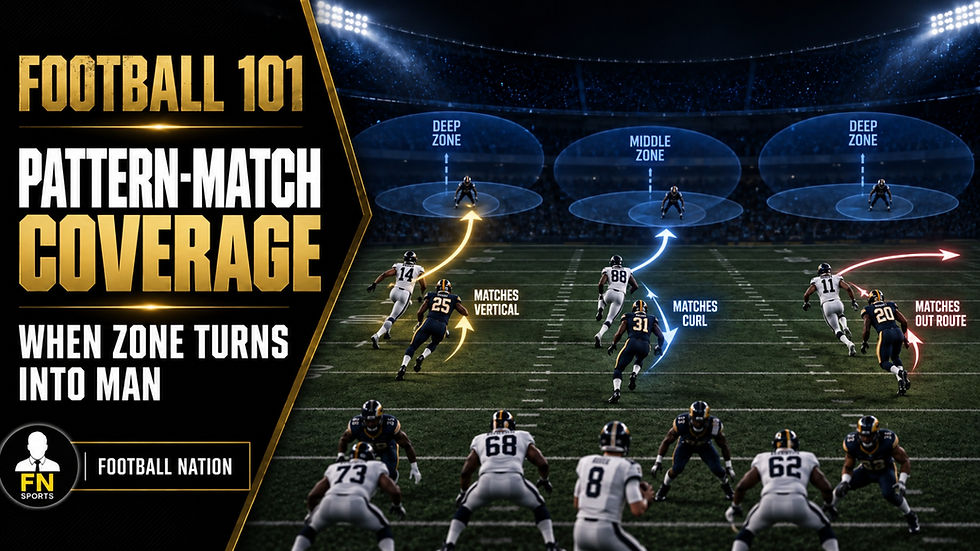
A bracket is not automatically man coverage or zone coverage. It can be inserted into a man structure, a split field zone, or a pattern matching call. In pattern match coverage, route releases can determine which defender carries which threat. The bracket is the local rule used to control the priority receiver inside that larger structure.
In Cover 5, two deep safeties can provide top help while underneath defenders play man technique. A defense may tilt one safety toward the dangerous receiver without turning every other matchup into the same double team. The specific help changes with formation and game plan.
The pass rush also matters. A bracket can make the quarterback hold the ball, but that advantage disappears if the rush never arrives. A defense using simulated pressure may try to create hesitation with four rushers while preserving enough defenders to double the featured target.
The exact NFL rules that govern the technique
Bracket coverage is not named as a separate rule in the official 2026 NFL Rulebook. It is governed by the normal restrictions on contact with eligible receivers.
Rule 8, Section 4 covers legal and illegal contact with eligible receivers. Article 3 is the illegal contact provision. A defender cannot use an underneath bracket assignment as permission to redirect an eligible receiver illegally beyond the protected contact area while the quarterback remains in the pocket. The 2026 penalty table lists illegal contact as five yards.
Rule 12, Section 1, Article 6 covers defensive holding. A defender who grabs or restricts the receiver before the pass can be penalized even when the other bracket defender is in position. The penalty table lists defensive holding as five yards. The coverage call never creates an exception for holding.
Rule 8, Section 5 covers pass interference. After the pass is thrown, a defender cannot significantly hinder an eligible receiver's opportunity to catch it through a prohibited act. Defensive pass interference places the ball at the spot of the foul, with special enforcement in the end zone. Offensive pass interference is covered in the same section and carries ten yards under the 2026 penalty table.
Application, enforcement, and exceptions
Officials judge the act, not the coverage label. Two defenders may legally occupy different leverage positions around one receiver. Incidental contact does not automatically become a foul. Both eligible players have a right to the path of the ball, and officials consider timing, restriction, and whether the contact significantly affected the opportunity to make a catch.
Before the throw, illegal contact or defensive holding may apply. After the throw, pass interference may apply when the rule's requirements are satisfied. If the receiver initiates a deliberate downfield block to free a teammate, offensive pass interference may apply. That is especially relevant when an offense tries to attack the bracket with a crossing or rub concept.
The practical exception is assignment based. A defender can leave the bracket when the call tells him to carry another threat, fit the run, or pass the receiver to a teammate. That is not a broken double team if the defense has a replacement rule. It becomes a bust only when the two defenders use different rules and uncover the target or another receiver.
Fantasy football consequence
Bracket coverage can lower the efficiency of an elite receiver by removing easy option routes and forcing throws into smaller windows. It can also redirect targets to the second receiver, tight end, running back, or opposite slot. That is the clearest fantasy consequence: the coverage can change target distribution even when the star still plays every snap.
It is not an automatic bench signal. Great receivers can defeat brackets with motion, alignment changes, route speed, and contested catches. High volume can survive lower efficiency. For quarterbacks, repeated brackets can increase time to throw and checkdowns. For secondary receivers, the value depends on whether they can beat the single coverage created by the double team.
Watch where the star aligns, how often the defense keeps a safety near him, and whether the quarterback immediately works elsewhere. Route stems matter because a receiver can pressure one defender's leverage before breaking into the other defender's space. The fantasy action is to adjust expectations modestly, not to treat one coverage term as a complete projection.
Common misconceptions
Misconception: bracket coverage always means one corner underneath and one safety deep. Reality: that is one common version, but brackets can divide inside and outside leverage or use other personnel.
Misconception: bracket coverage is the same as banjo. Reality: banjo usually sorts two receivers between two defenders. A bracket usually commits two defenders to one priority receiver.
Misconception: two defenders erase every route. Reality: the receiver can split the leverage, motion away from the structure, or benefit when a teammate occupies one defender.
Misconception: the star receiver is the only player affected. Reality: the quarterback's progression, the pass rush clock, run support, and every remaining one on one matchup can change.
Frequently asked questions
Is bracket coverage a full defensive call?
Not necessarily. It is often one local adjustment inside a larger man, zone, or pattern matching structure.
Can a tight end be bracketed?
Yes. Defenses often use a linebacker, nickel defender, or safety combination to take away a tight end's inside and vertical options.
Can motion defeat the bracket?
Motion can stress or reveal it, but the defense may travel both defenders, exchange responsibilities, or pass the receiver into a new bracket.
Why not bracket the best receiver on every play?
The second defender has an opportunity cost. The offense can attack the lighter box, the opposite side, or another receiver in single coverage.
What is the next checkpoint?
The rules and teaching sources were checked on October 22, 2026 at 5:04 p.m. Central. The next checkpoint is any NFL officiating clarification affecting receiver contact, plus new team film analysis showing how current defenses distribute bracket responsibilities against motion and stacks.
Sources
Official 2026 NFL Rulebook, checked October 22, 2026 at 5:04 p.m. Central: https://operations.nfl.com/rules-officiating/2026-nfl-rulebook/
New England Patriots analysis explaining the inside out cone bracket against Justin Jefferson, checked October 22, 2026 at 5:04 p.m. Central: https://www.patriots.com/news/game-observations-eight-takeaways-from-the-patriots-loss-to-the-vikings
New England Patriots 2026 playoff analysis describing defenses bracketing Stefon Diggs, checked October 22, 2026 at 5:04 p.m. Central: https://www.patriots.com/news/game-observations-8-takeaways-from-the-patriots-win-over-the-chargers-to-advance-to-the-divisional-round-playoffs
New England Patriots film review showing a switch release stressing bracket coverage, checked October 22, 2026 at 5:04 p.m. Central: https://www.patriots.com/news/film-review-analyzing-fourth-round-wr-javon-baker-s-fit-in-the-patriots-offense

Comments