The Dagger Concept: Clearing Space for the Deep Dig
- Football Nation
- 4 days ago
- 5 min read
Updated: 2 days ago
The Dagger concept is a two-route passing combination built around a vertical clear-out and a deep dig route. An inside receiver runs straight through the middle or up the seam, pulling deep and underneath coverage away. An outside receiver pushes vertically, then breaks across the field on a square-in route behind the linebackers. The quarterback reads whether the clear-out created the window and delivers the ball to the dig with timing.
The direct answer: Dagger attacks the middle of the field by making one route remove defenders and the other replace it. The vertical route is not a decoy that can be ignored; it can become the throw if the defense fails to carry it. But the deep dig is usually the featured answer, arriving in the space between the underneath defenders and the deep secondary.
How the Dagger concept is aligned
A common Dagger presentation places two receivers on the same side. The inside receiver is often the No. 2 receiver and runs the seam or clear-out. The outside No. 1 receiver runs the deep dig. Those receiver labels follow the same outside-to-inside numbering explained in Football Nation's route tree guide. The concept can appear from balanced, trips, bunch or motioned formations, and coaching terminology varies, but the relationship remains vertical route plus in-breaking route.
The outside receiver must sell vertical before breaking inside. If he rounds the cut or drifts too shallow, an underneath defender can squeeze the window. The inside receiver must threaten enough depth to occupy the safety or carry defender. If he throttles down early, the defense can pass him off and close on the dig.

Why Dagger works against Cover 3
Against Cover 3, the defense has three deep defenders and four underneath zone defenders. The inside vertical route pushes through a seam and can occupy the middle safety, an inside hook defender or both. The outside dig then crosses behind the linebackers and in front of the deep safety. That layered space is the target.
NFL.com has described Dagger as a seam-dig combination in which the vertical clears the hook zone and leaves room for the square-in. Its film example showed the quarterback delivering the dig with timing as the coverage expanded away from the inside numbers. The NFL film breakdown is a useful reminder that the quarterback is reading the movement of defenders, not merely waiting for a receiver to reach a painted landmark.
What changes against Cover 2 and match coverage
Against Cover 2, the seam can split or widen the two deep safeties while the dig settles behind the middle linebacker. The window depends on how much depth the linebacker gains and whether a safety drives down. A patient quarterback may need to hold the safety with his eyes, but he cannot stare at the dig so long that the closing defender arrives with the ball.
Pattern-match defenses make the read more demanding. A defense may begin with zone spacing and convert to man-like assignments after the routes declare. In that case, the vertical may be carried by a safety while an underneath defender walls the dig. Football Nation's guide to pattern-match coverage explains why the post-snap picture can differ from the pre-snap shell.
How the quarterback reads Dagger
There is no universal progression shared by every playbook, but the quarterback normally starts by identifying the deep structure and the defender who can take away the dig. The drop and receiver break must be synchronized. The ball should leave as the dig receiver enters the opening, not after he has already crossed the entire window.
Check the safety shell and leverage before the snap, then confirm the rotation after the snap.
Respect the vertical route. If the defense does not carry it, the clear-out can become the primary throw.
Read the underneath hook defender and the deep safety together. The dig is open only if the ball can arrive between them.
Move to the checkdown or backside answer when the middle closes instead of forcing a late throw into traffic.
USA Football has shown a play-action Dagger variation in which motion and backfield action pulled linebackers away while a deep crosser cleared space for the dig. The quarterback read seam to dig and hit the in-breaking route after the underneath coverage moved. That example demonstrates how formation and motion can change the presentation without changing the core stress. See the USA Football coaching breakdown.
Dagger versus Four Verticals, Levels and Mills
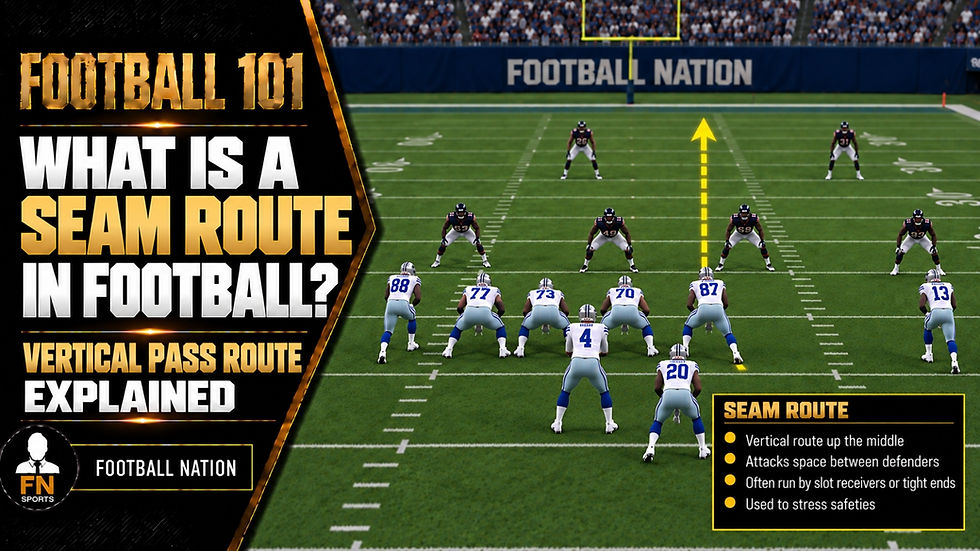
Dagger is sometimes confused with Four Verticals because both use a seam route to stress deep coverage. Four Verticals keeps four receivers pushing downfield and divides the secondary across four lanes. Dagger uses the vertical route to manufacture an intermediate-to-deep in-breaking window for a teammate.
Levels usually pairs two in-breaking routes at different depths, creating a high-low read on an underneath defender. Dagger pairs one vertical route with one dig. Mills is commonly taught as a post-dig combination: the post attacks the deep safety while the dig enters underneath. Because terminology changes between coaching trees, viewers should identify the actual route structure rather than assuming every broadcast label is universal.
How defenses stop Dagger
A defense can disrupt Dagger by rerouting the inside receiver, gaining depth with the hook defender, rotating a safety into the dig window or generating pressure before the routes develop. Man coverage can also squeeze the concept if defenders stay in phase and communicate through traffic. The pass rush matters because both routes need time to reach their landmarks.
Offenses answer with motion, play action, a backside route or an underneath outlet. Dagger fits naturally from 11 personnel because a tight end or slot receiver can run the clear-out while an outside receiver works the dig. If pressure arrives before the concept develops, the quarterback must use his protection answer or a hot route.
The biggest misconception
The biggest misconception is that the inside receiver is only bait. A true clear-out has to be dangerous. If the safety or seam defender abandons that route too early, the quarterback should punish the defense vertically. That threat is what creates the dig window. Calling one player a decoy understates the read: both routes are answers, and the coverage decides which one the quarterback uses.
Football Nation takeaway
When you see Dagger, watch the inside receiver first. If his vertical stem carries the safety or hook defender away, shift your eyes to the outside receiver breaking across the field. The concept works because the dig enters the space the clear-out just created. The best quarterbacks do not wait to see a receiver standing open; they anticipate the window, throw before it closes and take the checkdown when the defense wins the middle.


Comments