


What Is the Stick Concept in Football? Quick-Game Read Explained
Updated: Sep 13
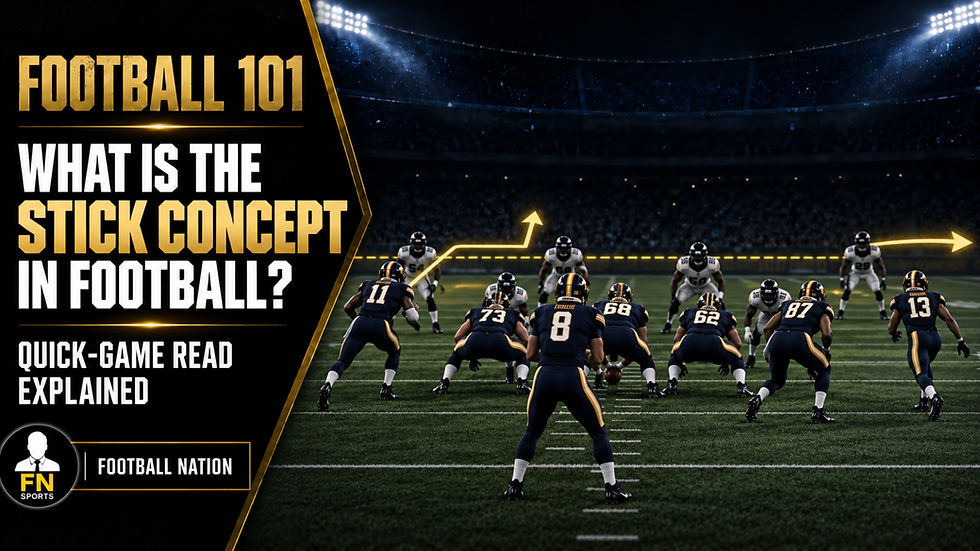
The Stick concept is a quick-game passing combination that places a short settling route inside and a flat route outside, forcing one underneath defender to choose. If that defender widens with the flat, the quarterback throws the stick route behind him. If the defender sits inside on the stick, the ball goes to the flat. A vertical route usually clears the outside corner and creates room for both answers.
That is the direct answer, but Stick is not one universal drawing. Offenses change which eligible receiver runs each route, how the stick receiver adjusts to leverage and whether the flat route is a speed out, shoot or running-back release. The governing idea remains the same: stretch one defender horizontally and deliver the ball before the pass rush arrives.
The basic Stick assignments
In a common three-receiver version, No. 1 runs a vertical clearout, No. 2 attacks the flat and No. 3 runs the stick route. The stick receiver pushes to a short landmark, turns toward the quarterback and settles in open space. If a linebacker sits directly on him, the receiver may work away from that leverage rather than stopping in a covered window.
The outside vertical matters even when it is not the primary throw. It removes the cornerback from the short read and punishes a defender who squats too aggressively. The flat route widens the underneath defender. The stick route occupies the space he leaves. Exact depths vary, so a five-yard landmark is a teaching example rather than a universal rule.
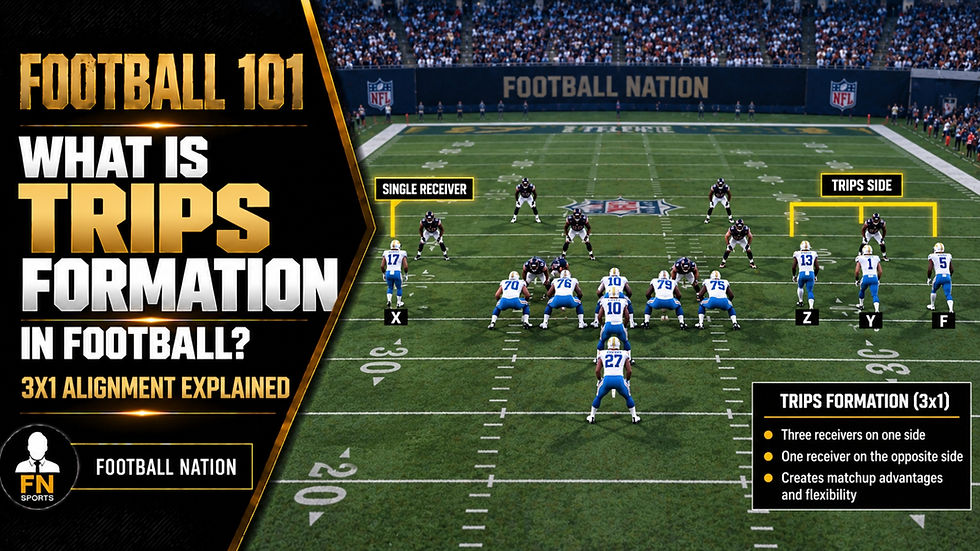
The concept fits naturally from Trips formation, but teams also run it from 2x2, empty, compressed and two-tight-end sets. In a two-receiver version, a tight end may run the stick while a running back releases to the flat. Personnel and formation change the presentation without changing the conflict.
What the quarterback reads
The quarterback starts with numbers, leverage and the outside corner. If the corner is in press or bails with the vertical receiver, the short two-on-one read is clean. If the corner squats, traps or has help over the top, the quarterback must confirm that the clearout is working before blindly throwing underneath.
After the snap, the key is usually the flat or apex defender. When he expands toward the speed out or running back, the stick receiver settles inside him. When he stays inside or drives the stick, the quarterback throws outside. The ball should come out on rhythm. Holding it turns a spacing advantage into a collision with recovering zone defenders.
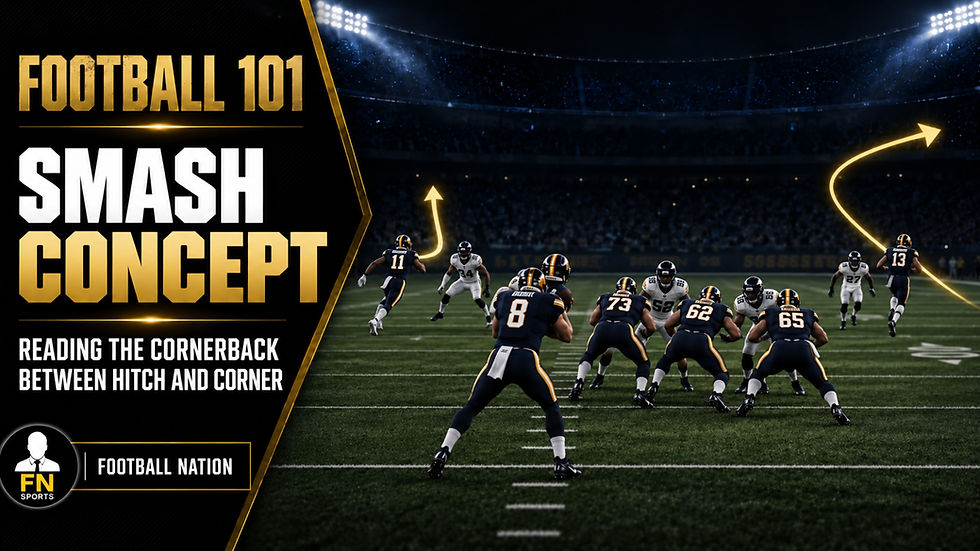
That high-low or in-out logic resembles the defender-conflict principles in the Smash concept and Curl-Flat. Smash stresses an outside defender vertically; Curl-Flat and Stick more directly stretch an underneath defender horizontally. The route shapes differ, but the quarterback is still making one defender wrong.
How Stick attacks common coverages
Against spot-drop zone, Stick tries to occupy the space between hook and flat defenders. The receiver should settle where the zone opens instead of drifting into the next defender. Against Cover 3, the vertical route carries the deep-third corner while the short routes conflict the curl-flat player.
Against two-high coverage, the offense may like the matchup between the stick receiver and an inside linebacker. USA Football’s study of New England’s Y-Hook/Tosser family found Rob Gronkowski adjusting the short route to linebacker leverage, sometimes stopping early and sometimes working farther to find space. The broader lesson is that a stick route is an option within rules, not a receiver running to a painted dot.
Against man coverage, the tidy zone read disappears. The stick receiver has to separate, and the flat runner must win leverage. Offenses may use motion, bunch or a natural traffic element to help. If the defense presses and passes routes off cleanly, the quarterback needs a backside answer or protection long enough to reach a later part of the progression.
A real NFL Stick example
An NFL.com breakdown of Jay Cutler’s Bears showed Chicago running Stick concepts from a tight formation, with the tight ends releasing to the flat and the outside receivers running the stick routes. The compressed presentation changed the defensive angles, but Cutler still received quick, defined throws underneath.
USA Football’s West Virginia Stick-Draw study shows how the same passing idea can become part of a packaged play. The quarterback checks the screen numbers, counts the box and reads leverage on the stick route. Depending on the defense, the answer can be a screen, draw or quick throw.
A separate USA Football explanation of defending an RPO Stick concept describes the defense rotating a safety so a linebacker can take away the pass without abandoning the run fit. That is the counterpoint: modern defenses try to erase the conflict by replacing the read defender’s responsibility.
Why offenses pair Stick with runs and screens
Stick is valuable because the quarterback can process it quickly. Offenses attach it to inside zone, draw or another run and ask whether the defense has enough players in the box. A light box favors the run. An overloaded box may expose the stick receiver. A soft perimeter can invite the screen.
This packaging reduces the need to call the perfect play against every front. The offense carries several answers in one structure, but the quarterback must follow the team’s rules. Linemen may be run blocking, which places timing and eligibility limits on the pass. The concept is simple only after everyone understands the same decision tree.
The biggest Stick misconception
The biggest misconception is that Stick means one receiver runs a five-yard hitch. The route is defined by the concept and its leverage rules, not merely by depth. The receiver may settle, turn away from the defender or adjust the break within the playbook’s instructions. A stationary receiver in a covered window has not solved the concept.
It is also wrong to assume the flat throw is a checkdown. The flat route is a primary answer. If the defender stays inside, the quarterback should take the ball outside immediately and let the receiver run. Efficient quick game succeeds by accepting the leverage the defense concedes.
What to watch on the next broadcast
Look for a vertical receiver outside, a second receiver racing to the flat and an inside receiver settling around linebacker depth. Then watch the underneath defender between the final two routes. If he widens, expect the throw inside. If he sits, expect the ball outside.
Also watch the quarterback’s feet. Stick is designed for rhythm, so extra hitches usually signal that the initial picture changed. Motion, compressed splits or a running-back release may disguise the concept, but the same two-on-one conflict appears after the snap. The quick timing fits the principles described in our West Coast offense guide.
Stick concept FAQ
Is Stick the same as a hitch route?
No. A hitch is one route. Stick is a combination and a quarterback read involving the stick route, an outside flat answer and usually a vertical clearout.
Who runs the stick route?
Often the innermost receiver in a three-player distribution, but a tight end, slot receiver or other eligible player can run it. The assignment depends on formation and terminology.
What defender does the quarterback read?
Usually the underneath defender responsible for the space between the stick and flat routes. Teams may call him the flat, apex or overhang defender depending on the structure.
Can Stick be an RPO?
Yes. An offense can pair the passing concept with a run or screen and give the quarterback a pre-snap and post-snap decision. Not every Stick call is an RPO.
Football Nation takeaway
Stick is a foundational quick-game answer because it gives the quarterback a clear conflict. One route settles inside, one attacks the flat and a vertical route clears space. The defender’s leverage tells the quarterback where to throw, while formation, motion and packaged runs keep the presentation flexible.
The viewing shortcut is simple: find the flat route, find the short settling route, and watch the defender between them. His first movement usually reveals the correct answer.

Comments