top of page

What Is the Yankee Concept in Football? Post-Over Route Explained

The Yankee concept is a two-route downfield combination built around a deep post and a deep over route. The post attacks or occupies the deep safety. The over route crosses behind the linebackers into the space the post creates. It is especially dangerous off play-action because the run fake can pull underneath defenders forward while the two receivers stretch the secondary at different angles.

How the Yankee concept works

Yankee is best understood as a vertical stretch of the middle of the field. Unlike the Levels concept, which places two in-breaking routes at different depths to high-low one underneath defender, Yankee pushes one route over the top of the coverage and brings the second route across underneath it.

The deep post normally starts outside, threatens vertically and then bends toward the goalpost. The deep over route starts from the opposite side and crosses the field at roughly intermediate-to-deep depth. Exact landmarks vary by formation, receiver alignment, coverage and playbook, but the relationship stays consistent: the post clears or holds the deepest defender, and the over route replaces the space below or behind him.

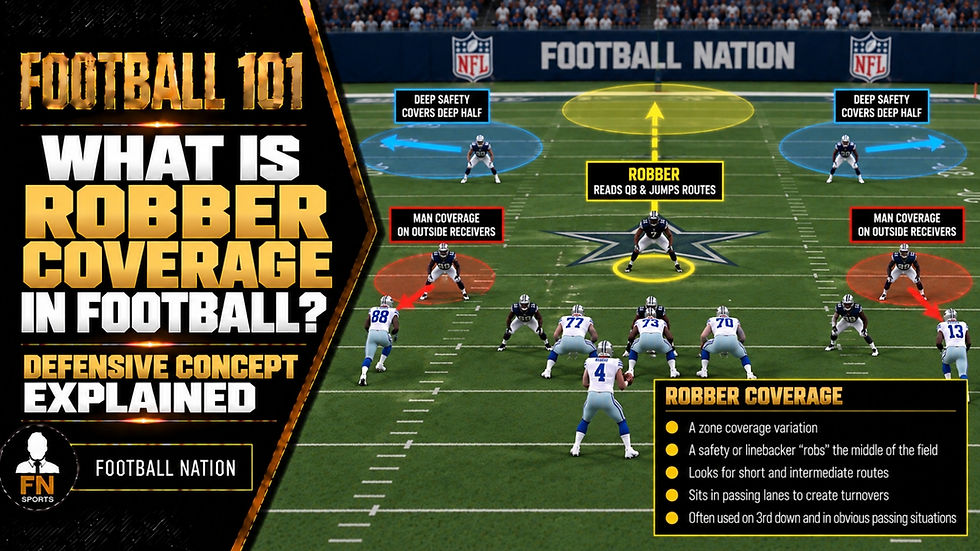
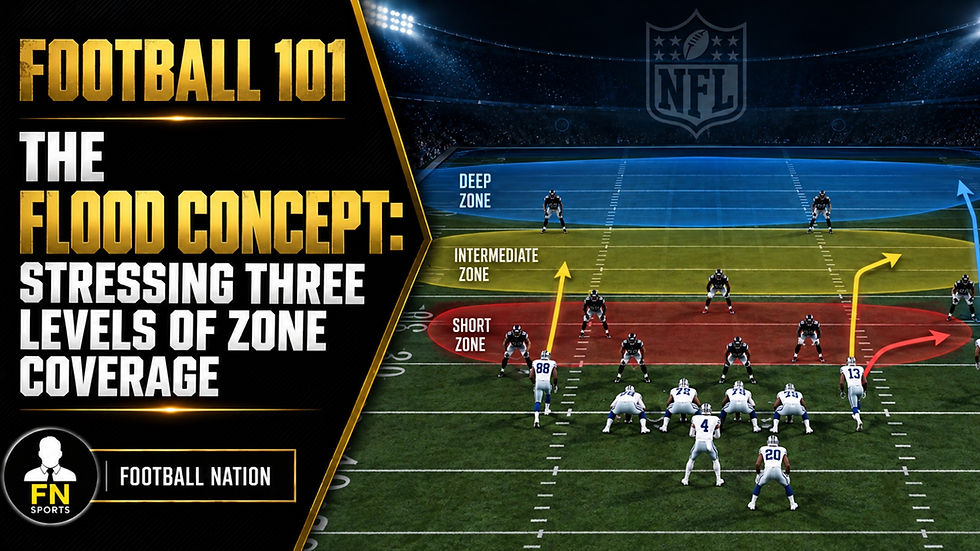
That makes Yankee related to—but not interchangeable with—the Flood concept. Flood places three routes at different depths toward one sideline. Yankee usually attacks the middle with two primary downfield routes moving across one another at different levels.

What each receiver is trying to accomplish

The post receiver must sell vertical speed before breaking inside. If he bends too early or drifts flat, the safety can stay over the crossing route and still recover to the post. A strong vertical stem forces the safety to gain depth, turn his hips and respect the touchdown threat.

That setup is why route stems matter. The post is not merely running to a spot. It is manipulating the leverage and vision of the deepest defender before making the break.

The over-route receiver must cross with enough depth to get behind linebackers but remain far enough below the post to preserve a clean throwing lane. He may continue running across the field against man coverage, settle in a zone window or adjust the angle based on the quarterback’s timing. If he climbs too deep, the two routes converge and one defender can threaten both. If he stays too shallow, linebackers can pass him across the formation.

Why play-action makes Yankee so effective

Yankee does not require play-action, but the pairing is natural. A convincing run fake asks linebackers and safeties to honor their run fits. Even one or two steps toward the line can open the lane for the over route. Meanwhile, the post attacks the safety who is trying to regain depth.

Condensed formations can make the stress even greater. As Football Nation’s guide to tight splits and condensed formations explains, reduced splits give receivers room to cross the field without immediately reaching the sideline. They also make it harder for defenders to identify releases and exchange assignments.

Green Bay’s official film study provides a clean real-game example of the structure: play-action pulled a linebacker forward, a companion post route held the safety deep, and the crossing route opened behind them for a long touchdown. The Packers described the post as the route that kept the safety from reacting in time.

How the quarterback reads the play

There is no universal read order because coaches attach Yankee to different formations, protections and coverage indicators. The quarterback commonly begins with the deepest safety structure, confirms how the defense reacts to the run fake, and then works from the post to the over route or from leverage to leverage.

Against Cover 1, the post can occupy the middle-of-the-field safety while the over route tries to outrun man coverage across the field. The throw often leads the crosser away from the trailing defender. Against Cover 3, the post threatens the middle safety and the over route searches for the window behind the underneath zone and in front of the opposite deep-third defender.

Against two-high coverages, the picture changes. The post may attack the space between the safeties, bend away from leverage or simply hold one safety. The over route may settle between zones rather than race all the way across. Against quarters, a safety can match the post while another defender looks for the crosser, so the quarterback cannot assume the same window will appear.

The over route also demands protection because it takes time to develop. The 49ers’ official highlight of Brandon Aiyuk gaining 27 yards on a deep over route illustrates how much open field the route can find once it reaches the opposite side.

Football Nation field diagram of the Yankee concept showing a deep post clearing space for a deep over route behind underneath zone defenders.

Football Nation original AI-generated teaching diagram. It illustrates the route relationship and quarterback progression; it is not a game photograph or a diagram from an NFL playbook.

The biggest misconception

Yankee is not simply any post route paired with any crosser. The name is also not universal. One team may call the same family Yankee, another may use a formation-specific tag, and another may teach a slightly different post or over landmark. The defining idea is the coordinated stress: one route threatens the deep middle while the other crosses the newly created space.

It is also different from a seam route. A seam generally stays vertical between coverage zones. The Yankee post bends toward the middle, while the over route travels horizontally across the formation.

How defenses stop Yankee

Defenses can pressure the quarterback before the routes develop, jam the post receiver to disrupt timing, carry the over route with a linebacker, or rotate a safety down into the crossing window. Pattern-match coverages can pass the over route from one defender to another while keeping a safety on top of the post.

The offense’s answer is spacing and patience. The quarterback must not force the over route into a defender who has gained depth, and the receivers must preserve separation between their landmarks. If the defense drops enough bodies to erase both routes, the checkdown can be the correct result.

The routes must also remain legal. The 2026 NFL Rulebook governs illegal contact and pass interference; a receiver cannot turn the clear-out into an intentional block on a defender while the pass is in the air. Proper Yankee spacing creates conflict without requiring a pick.

How to spot Yankee during a game

Watch for a hard play-action fake, one receiver climbing vertically before bending to the post and another receiver crossing behind the linebackers from the opposite side. Then watch the deep safety. If he turns and runs with the post, the over route may appear in the vacated window. If he drives downhill on the crosser, the post may become the shot.

If the quarterback escapes the pocket before either window develops, the play can transition into a scramble drill, but that is an improvised second phase—not part of the original Yankee design.

Football Nation takeaway

Yankee works because two routes tell one connected story. The post makes the secondary defend the touchdown; the deep over punishes the space that reaction leaves behind. The next time a play-action pass produces a long completion across the middle, find the deepest safety first. His response usually explains why the crosser became open.

Frequently asked questions

Is Yankee a play-action concept?

It is often paired with play-action because the fake helps open the crossing window, but the post-over combination can also be run from a straight dropback or with other backfield action.

Which route is the first read?

The answer depends on the offensive system and coverage. Many quarterbacks key the safety structure and work the post-over relationship, but coaches can reverse or modify the progression.

Does Yankee beat every coverage?

No. It is strongest when the post can occupy the deep safety and the over route can cross behind the underneath defenders. Two-high pattern matching, pressure and disciplined zone depth can close both windows.

Comments


bottom of page