top of page

Why Do Quarterbacks Clap Before the Snap?

Quarterbacks clap before the snap to give the center a clear, rehearsed signal that the offense is ready to begin the snap sequence. The clap is most common from shotgun, where the quarterback is several yards behind the center and cannot use the physical contact available under center. It does not carry one universal meaning: one offense may snap immediately, another may wait for a second cue, and another may change the rhythm to keep the defense from predicting the ball's movement.


That is the direct answer. The clap is a communication tool, not a secret play call and not an automatic command that always sends the ball backward at the same instant.


How the clap cadence works


Before the huddle breaks, the offense establishes the snap timing. Once everyone is aligned, the quarterback scans the defense, finishes any protection or route communication and brings his hands together. The center hears the distinctive sound and follows the agreed sequence.


That sequence can be simple: ready, clap, snap. It can also include a pause, a second clap or another cue. The quarterback may want time to finish a pre-snap read, just as he would within a traditional verbal cadence. What matters is repeatability. The center, guards, tackles, backs and receivers must all leave on the ball rather than guessing from the quarterback's hands.


Three-stage Football Nation diagram showing a quarterback ready in shotgun, clapping as a signal, and receiving the center's snap.
Football Nation teaching diagram: how a clap signal can begin the snap sequence in shotgun.

Why teams use a clap instead of only using words


A clap is sharp, short and easy to distinguish from normal pre-snap conversation. That helps a shotgun center separate the actual readiness signal from protection calls, receiver alerts and dummy words. It also lets the quarterback keep his eyes on the secondary instead of bending toward the center.


The method is especially familiar to quarterbacks coming from college spread systems. In a 2025 New York Giants coaching transcript, Brian Daboll said most college offenses use the clap and explained that the Giants were teaching rookie Jaxson Dart a verbal NFL cadence instead. Daboll called cadence a weapon because elite quarterbacks vary rhythm and voice inflection to make the defense reveal itself.


Arizona offered the same lesson in 2026. Cardinals offensive coordinator Mike LaFleur described the snap count as a major weapon while Carson Beck worked through the transition from a college clap to a longer verbal cadence. The point is not that one system is always better. The point is that NFL offenses want multiple tempos and signals available.


Clap cadence, verbal cadence and silent count


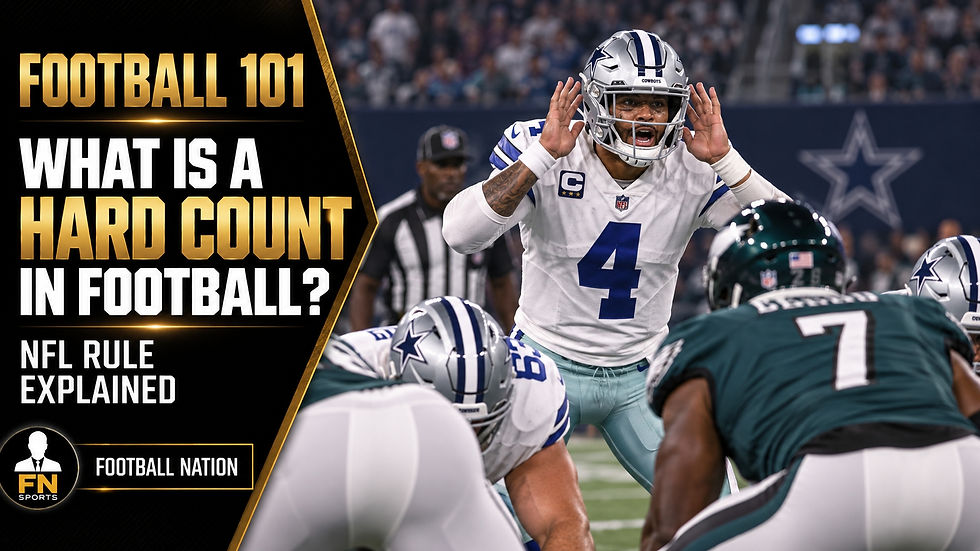
These systems solve the same basic problem—coordinating the snap—but they are not interchangeable. A hard count uses vocal rhythm to tempt defenders into showing pressure or crossing early. A silent count replaces the quarterback's voice with rehearsed visual or body cues when crowd noise is overwhelming. The clap sits between them: it is audible, but it is a compact signal rather than a full string of words.


Snap method

What the quarterback does

Main advantage

Main risk

Clap cadence

Claps once or in a rehearsed rhythm

Clear shotgun signal without looking down

Abrupt non-snap motion can draw a false start

Verbal cadence

Uses words, rhythm and voice inflection

Can vary timing and reveal defensive reactions

Crowd noise can reduce clarity

Silent count

Uses visual or body cues coordinated through the center

Works when teammates cannot hear the quarterback

Requires exact timing across the line


When can the clap become a false start?


The clap itself is legal. The boundary is the quarterback's movement. Under the 2026 NFL Rulebook, a player positioned to receive a shotgun snap may shift his feet, but a quick and abrupt movement can be a false start. The rule specifically addresses thrusting the hands forward when there is no simultaneous snap.


That distinction became visible during Kyler Murray's 2019 rookie preseason. Arizona's official site reported that Murray was flagged twice while the Cardinals and officials worked to separate a rhythmic legal clap from an abrupt movement. Kliff Kingsbury later said the team understood that it had to avoid the abrupt motion around the snap clap.


This is the strongest misconception: a quarterback is not penalized merely for making noise with his hands. Officials are judging whether the movement imitates the start of the play in a way the rule prohibits when the ball does not move. That is why two claps that look similar to a fan can produce different rulings depending on rhythm, timing and the rest of the quarterback's body.


Can the defense copy the clap?


Defenders are allowed to communicate, but they cannot deliberately simulate the offense's snap signal to make the offense react early. The practical challenge is proof: a loud stadium contains many short sounds, and officials must decide whether a defender used a signal that imitated the offense and caused a response.


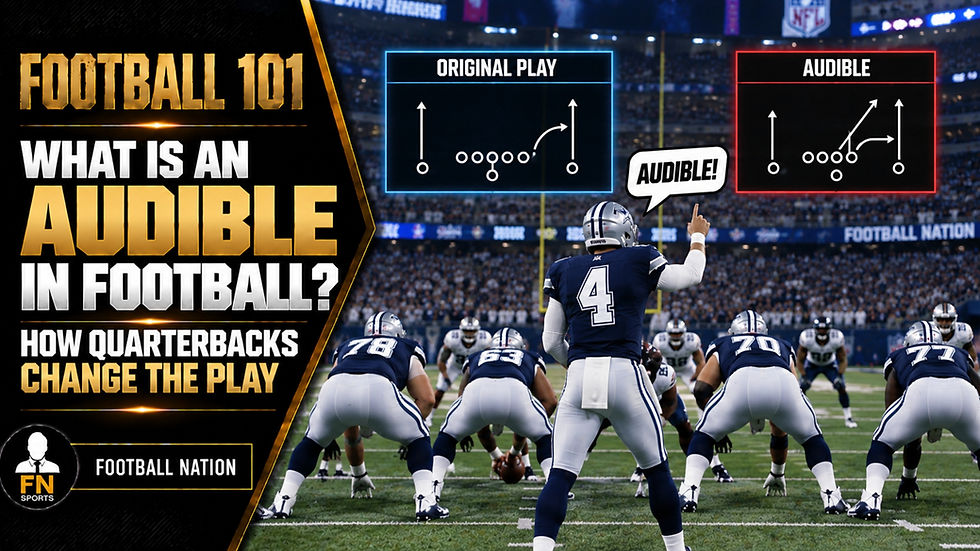
That is another reason centers are coached to trust the complete operation, not a stray noise. The same discipline applies when a quarterback is changing the play with an audible, identifying the Mike linebacker or waiting while an official stands over the ball. Every signal has to fit inside one shared timeline.


What to watch on the next play


Watch the center instead of staring only at the quarterback's hands. If the ball moves immediately on the first clap, the offense is using a direct trigger. If the center waits, the clap is probably only one step in the sequence. Then watch whether the quarterback changes that timing later. Variation is what keeps a useful signal from becoming a free jump for the pass rush.


Also notice the surrounding communication. The quarterback may hear the play through the helmet radio, but the radio shuts off before the snap and does not synchronize the center. The offense still needs its own on-field cadence.


The Football Nation takeaway


A clap before the snap is the football equivalent of a starting cue: simple on the surface, valuable only because everyone has rehearsed exactly what follows. It helps a shotgun offense communicate cleanly, but it does not remove the need for rhythm, variation or discipline. The best quarterbacks can move between clap, voice and silent systems without changing the offense's confidence.


Frequently asked questions


Does the center always snap the ball on the clap?

No. The offense decides what the clap means. It can trigger an immediate snap, begin a short sequence or be paired with another cue. The important part is that all 11 offensive players know the timing.

Is clapping before the snap legal in the NFL?

Yes. A rhythmic clap can be a legal snap signal. The problem is a quick, abrupt movement by the player receiving a shotgun snap when the ball is not snapped at the same time; officials may rule that a false start.

Why not just use a verbal cadence?

Teams often do, especially in the NFL. A clap is simple and easy for the center to recognize in shotgun, while a verbal cadence offers more tools for changing rhythm and testing the defense. Offenses choose the method that best fits their quarterback, center and environment.

Can a defense clap to make the center snap early?

A defender cannot legally simulate the offense's snap signal to induce a false start. Officials judge the act and its effect, so the offense still has to stay disciplined and the crew must determine whether a defensive signal crossed the line.

Is a clap cadence the same as a silent count?

Not exactly. A clap makes a sound, so it is not literally silent. A silent count is a broader system of visual and body cues used when the offense cannot rely on the quarterback's voice, although a team may combine several kinds of cues in one operation.

Comments


bottom of page